Japan Solidifies Male-Only Imperial Succession Amidst Public Dissent and Shrinking Royal Ranks
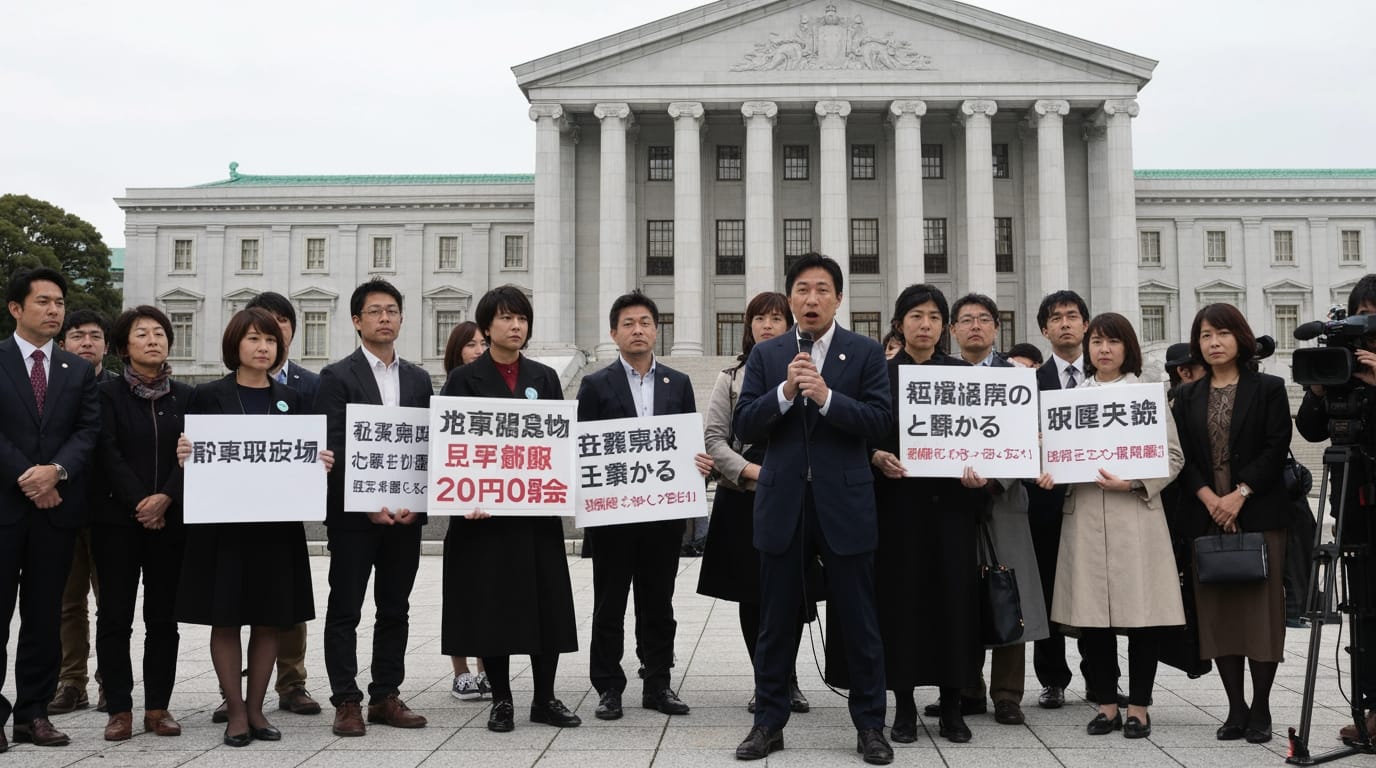
TOKYO, Japan – Japan’s Parliament on Friday enacted a significant revision to the Imperial House Law, a move designed to address the critical issue of the shrinking imperial family. However, the approved legislation conspicuously retains the long-standing male-only succession system, defying strong public support for a female emperor and sparking concerns among critics about the monarchy's long-term stability. The changes, approved by both houses of Parliament, allow for the adoption of males from former imperial branches and permit female imperial members to retain their royal status after marrying commoners, yet deliberately circumvent the fundamental question of female ascension to the Chrysanthemum Throne.
A Precarious Line of Succession Faces Limited Solutions
The Japanese imperial family, considered the world's oldest continuous hereditary monarchy, has faced a growing demographic challenge. With only three male heirs currently in the line of succession to 66-year-old Emperor Naruhito – Crown Prince Akishino, his 19-year-old son Prince Hisahito, and the Emperor's 90-year-old uncle Prince Hitachi – the future of the 1,500-year-old institution has been a pressing concern. Prince Hisahito stands as the sole young male heir, making the continuation of the male-only lineage precarious. This scarcity of heirs has compelled the government to seek solutions, culminating in the recent revisions to the 1947 Imperial House Law.
The revised law, approved on July 17, 2026, introduces two main provisions. Firstly, it allows for the adoption of males aged 15 and over from the 11 former imperial branch families (known as Kyu-miyake), which lost their royal status after World War II. While these adopted males cannot directly ascend the throne, their future male, patrilineal descendants would be eligible. Secondly, the revisions permit female imperial family members, such as the popular 24-year-old Princess Aiko, Emperor Naruhito's only child, to retain their imperial status even after marrying commoners. However, their spouses and children would remain commoners, a stipulation designed to prevent the emergence of a matrilineal emperor.
Public Opinion Versus Political Resolve
Despite the parliamentary action, the revisions highlight a significant divergence between public sentiment and the conservative political establishment's stance. Opinion polls consistently show overwhelming support for allowing female emperors. A Kyodo News poll in May 2026 indicated that 83% of respondents favored female emperors, while a Mainichi Shimbun poll in June 2026 found 73% in support. Furthermore, a substantial portion of the public also backs matrilineal succession, where a female emperor's son could inherit the throne. Many Japanese citizens view Princess Aiko as a legitimate and highly popular candidate for the throne.
The conservative ruling coalition, notably under Prime Minister Sanae Takaichi—Japan's first female prime minister—has been a driving force behind preserving the male-only succession. Takaichi's administration pushed for these revisions, facing criticism for limiting parliamentary debate and prioritizing adherence to traditional patriarchal systems over adapting to modern societal views. Critics argue that these measures are a clear attempt to prevent a female emperor from ever taking the throne.
Historical Precedent and the Weight of Tradition
The debate over female succession is not new to Japan. Historically, Japan has seen eight reigning empresses, with the last being Empress Gosakuramachi, who ruled from 1762 to 1770. However, these empresses were all part of the male imperial lineage. The principle of paternal-line male succession was formalized with the 1890 Imperial House Law, a framework largely carried over into the current 1947 law. This tradition is passionately defended by conservatives who argue that maintaining patrilineal succession is essential for preserving the imperial family's historical legitimacy.
Conversely, those advocating for female succession point to the historical precedent of empresses and argue that the current law, which forces princesses to leave the imperial family upon marriage to a commoner, is an outdated remnant of a patriarchal system. They contend that in an era championing gender equality, excluding women from the highest symbolic office is anachronistic and inconsistent with the broader societal shifts occurring in Japan.
Practicalities and Concerns for the Future
Beyond the ideological divide, practical concerns plague the newly revised system. The Imperial Household Agency is tasked with supporting the activities of the imperial family members, including the newly reintegrated males. However, questions remain about the willingness of former imperial branch members, who have lived as commoners, to re-enter a highly scrutinized public life. Some critics express skepticism, noting that individuals accustomed to freedom might find it difficult to adapt to the stringent life of an imperial family member. Concerns have also been raised that such adoptions could inflict suffering on potential adoptees and their families.
Moreover, the provision allowing princesses to retain their royal status after marrying commoners, while seemingly progressive, still positions them to perform imperial duties without the possibility of their children becoming heirs. This effectively sidelines them from the direct line of succession, reinforcing the male-only principle. The law now states that the new imperial system will be reviewed every 30 years, acknowledging the long-term nature of these challenges and the potential for future discussions.
An Unresolved Future for the Chrysanthemum Throne
The passage of these revisions marks a critical juncture for Japan's imperial family. While the government asserts that the changes aim to stabilize the imperial line and secure the family's future, critics argue they are short-sighted and merely postpone a necessary and inevitable reckoning with modernization. The fundamental issue of female succession remains unaddressed, a decision that leaves the imperial family's long-term sustainability subject to the birth of male heirs and the willingness of distant relatives to embrace a life of royal duty.
As the world's oldest monarchy navigates the complexities of tradition, public opinion, and demographic realities, the debate over who will eventually sit on the Chrysanthemum Throne continues to be a poignant symbol of Japan's struggle to balance its revered past with the demands of the 21st century.


