North America Chokes: Unprecedented Canadian Wildfires Engulf U.S. Cities in Historic Smoke Clouds
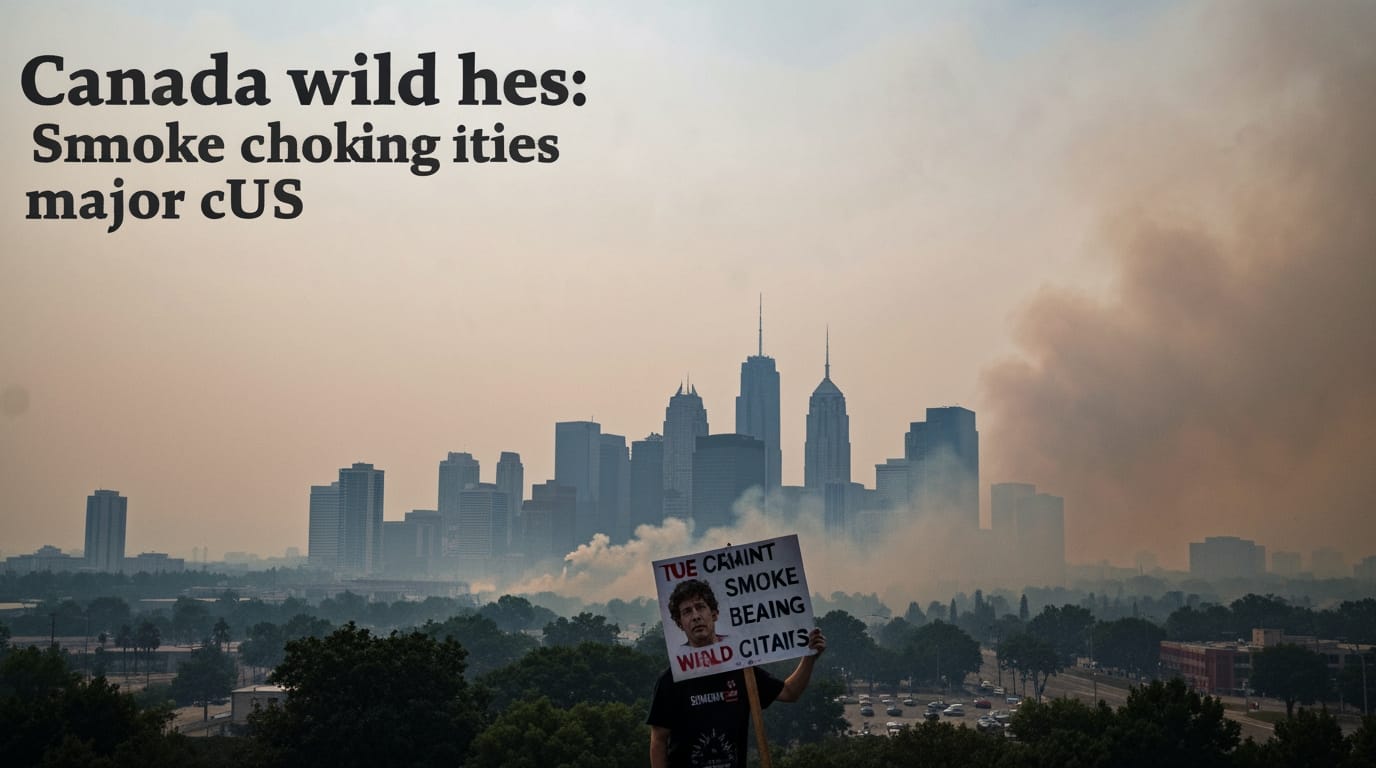
In an alarming display of climate volatility, the 2023 Canadian wildfire season unleashed a torrent of smoke that drifted thousands of miles, plunging major U.S. cities into hazardous air quality and disrupting the lives of millions. This record-setting environmental crisis, fueled by intensifying climate change, transformed once-clear skylines into dystopian hazes, prompting widespread health warnings and revealing the profound cross-border impacts of a rapidly warming world. From New York to Chicago, Americans found themselves contending with air quality levels typically associated with highly industrialized nations, signaling a stark new reality in the face of escalating extreme weather events.
A Smokescreen Across the Continent
The 2023 wildfire season in Canada was unprecedented in its scale and intensity, with blazes affecting all 13 provinces and territories and burning an area exceeding 18 million hectares – more than twice the size of any year since 1983 and over six times the long-term average. This colossal inferno injected an enormous volume of smoke and fine particulate matter into the atmosphere, creating vast plumes that, guided by specific meteorological conditions and jet stream patterns, embarked on an epic journey southward.
Beginning in May with significant fires in Alberta, and intensifying through June with widespread blazes in Quebec, the smoke soon blanketed large swathes of the United States. By June 7, New York City experienced some of the worst air quality globally, with its Air Quality Index (AQI) surpassing 350, casting an eerie orange glow over the metropolis and triggering widespread alarm. Later that month, the phenomenon shifted westward, with Chicago registering the world's worst air quality on June 27, reaching an AQI of 228. Cities like Detroit, Philadelphia, Baltimore, and Washington D.C. also faced "very unhealthy" to "hazardous" air quality readings, sometimes peaking in the 260-280 range. Air quality alerts were issued for an estimated 80 million people across the U.S., spanning regions from the Upper Midwest to the Northeast and even as far south as Virginia. The smoke's reach was so extensive that it crossed the Atlantic, reaching Europe by late June.
Health Under Haze: A Breathless Threat
The primary health concern emanating from wildfire smoke is fine particulate matter, known as PM2.5, tiny particles measuring 2.5 micrometers or less in diameter – roughly 30 times smaller than a human hair. These microscopic particles can bypass the body's natural defenses, penetrating deep into the lungs and even entering the bloodstream. Exposure to PM2.5 can lead to a range of immediate symptoms including coughing, wheezing, trouble breathing, stinging eyes, and headaches.
For vulnerable populations such as children, the elderly, pregnant individuals, and those with pre-existing heart or lung conditions like asthma or chronic obstructive pulmonary disease (COPD), the risks are significantly elevated. Studies have shown a direct correlation between smoky days and increased medical visits for respiratory and cardiovascular issues. For instance, an 18% increase in such medical visits was observed in Baltimore during the 2023 smoke events. Researchers also identified high concentrations of polycyclic aromatic hydrocarbons (PAHs), cancer-causing organic compounds, within the particulate matter reaching cities like New York, further underscoring the toxic nature of the air pollution. Beyond immediate effects, long-term exposure can lead to persistent reductions in lung function and increased risk of heart disease, cardiovascular disease, and lung cancer. Some effects, like changes in lung function, have been observed to persist for over a year following significant smoke exposure.
Economic Ripple Effects and Societal Strain
The pervasive smoke plumes brought not only health anxieties but also significant societal and economic disruption. Across affected U.S. cities, daily life was profoundly altered. Schools canceled outdoor activities and kept children indoors, while businesses in some areas encouraged or mandated remote work. Sporting events, concerts, and other outdoor gatherings were postponed or canceled, leading to economic losses in the entertainment and tourism sectors.
The financial toll extends beyond immediate disruptions. Research suggests that wildfire smoke contributes to a substantial loss in labor income. A Stanford study, mapping wildfire plumes across the U.S., estimated that workers lose $125 billion annually due to wildfire smoke, equivalent to approximately 2% of total labor income. This figure encompasses reduced productivity, increased sick days, and long-term health complications that impact the workforce. The healthcare system also bore a significant burden, with increased emergency room visits and hospitalizations for respiratory and cardiovascular conditions. In Canada alone, a single week of wildfire smoke in June 2023 was estimated to have cost Ontario over $1.2 billion in health impacts. The total economic impact of Canadian wildfire smoke crossing into the U.S. has been estimated to reach hundreds of billions of dollars annually.
The Climate Connection and Future Outlook
Experts largely attribute the unprecedented severity of the 2023 Canadian wildfire season, and the subsequent smoke inundation of the U.S., to anthropogenic climate change. Canada is warming at twice the global average rate, leading to hotter, drier summers and more erratic rainfall patterns. The 2023 season was characterized by mean May-October temperatures in Canada that were 2.2 °C higher than the 1991–2020 average, alongside persistent drought conditions in Western Canada and a rapid onset of drought in Eastern Canada. These factors created ideal conditions for wildfires to ignite and spread rapidly.
Lightning strikes, responsible for approximately half of Canada's wildfires and 85% of the land burned, are also becoming more frequent and intense as the climate warms, with projections indicating a doubling by the end of the century. This combination of increased fuel load, prolonged dry periods, higher temperatures, and more frequent ignition sources creates a "perfect storm" for megafires.
The 2023 season is not an isolated incident but rather a harbinger of future challenges. Climate model projections suggest that temperature conditions similar to those experienced in 2023 could become typical by the 2050s, even under moderate climate mitigation scenarios. This implies that severe wildfire seasons and the accompanying cross-border smoke impacts are likely to become more common, leading to prolonged smoke seasons and continued air quality degradation across North America.
A Shared Atmosphere, A Shared Challenge
The widespread smoke from Canada's 2023 wildfires served as a potent reminder of the interconnectedness of North America's environment and the far-reaching consequences of climate change. What begins as a local ecological disaster in one nation quickly transcends borders, impacting the health, economy, and daily lives of citizens in another. The experience underscored the urgent need for robust climate action and enhanced cross-border cooperation in wildfire management and public health preparedness. As warmer temperatures continue to alter landscapes and fire regimes, the haze of wildfire smoke is increasingly becoming a shared atmospheric reality, demanding a collective and sustained response.


