Japan's Prime Minister Buoyed by Summit, Securing Economic Ties Amid Geopolitical Shifts
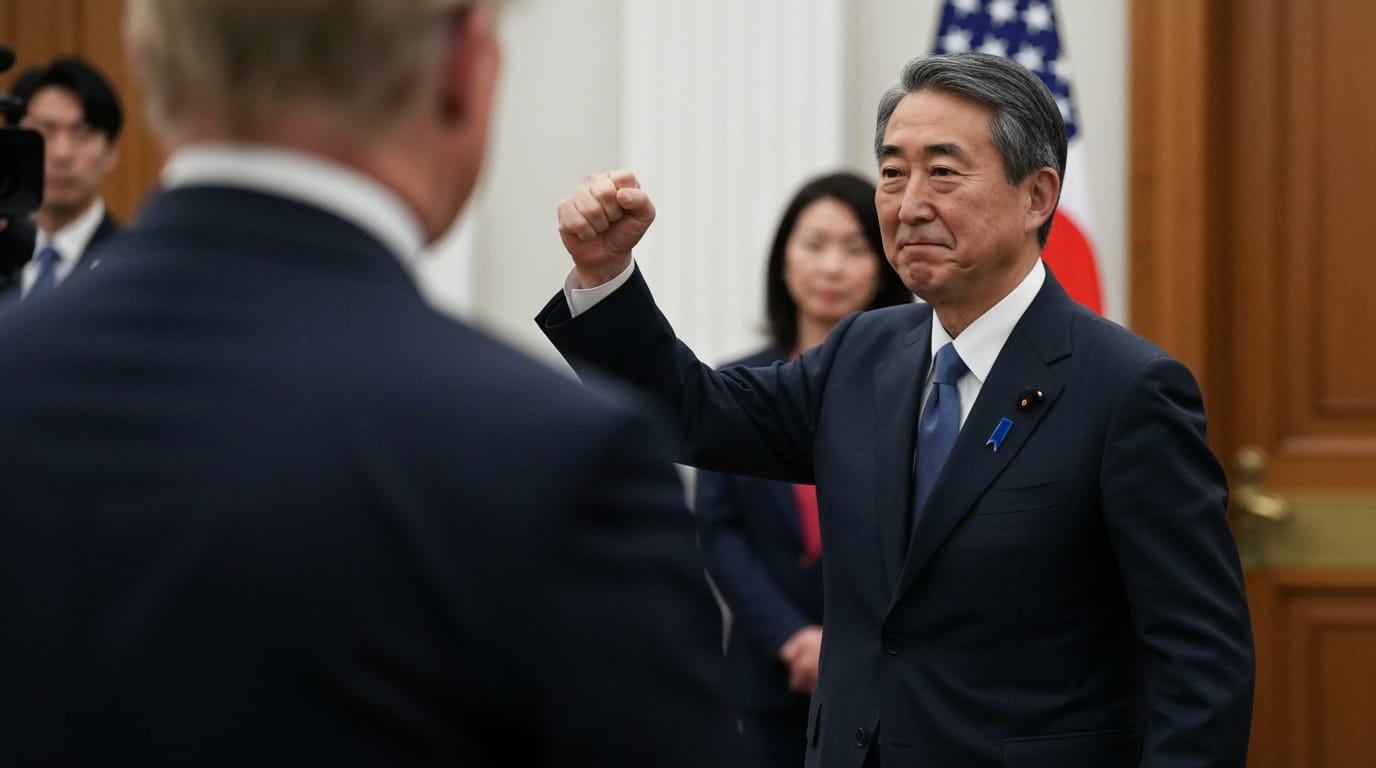
Washington D.C. – Japanese Prime Minister Sanae Takaichi has reportedly emerged from her recent summit with U.S. President Donald Trump seemingly buoyed, successfully navigating delicate geopolitical terrain to emphasize robust economic cooperation and reaffirm the enduring U.S.-Japan alliance. The high-stakes meeting, held last week in Washington, focused intensely on trade, investment, and strategic economic initiatives, largely sidestepping direct U.S. demands for Japanese military contributions in volatile regions like the Middle East. This outcome marks a crucial diplomatic win for Takaichi, Japan's first female prime minister, as she seeks to solidify her leadership on the international stage and advance Japan's interests amidst a complex global security and economic environment.
Navigating a Shifting Global Landscape
The summit took place against a backdrop of increasing global uncertainties, including ongoing conflicts and a U.S. administration often characterized by its "America First" approach to foreign policy and trade. Japan, a key U.S. ally in the Asia-Pacific, has consistently sought to maintain a strong bilateral relationship, recognizing the alliance as the cornerstone of peace and prosperity in the region. Historically, former Prime Minister Shinzo Abe made significant efforts to cultivate a close personal relationship with then-President Trump, often dubbed "golf diplomacy," to mitigate potential trade frictions and ensure unwavering U.S. security commitments. Takaichi's challenge was to demonstrate similar diplomatic acumen, ensuring continuity and stability in the alliance while addressing contemporary concerns. Japan arrived at the summit wary that President Trump might reiterate calls for Japanese military support in the Middle East, a sensitive issue given Japan's pacifist constitution and legal constraints on overseas naval deployments. Takaichi underscored the increasingly severe global security environment and expressed Japan's intention to support U.S. efforts, a move that seemingly reassured the U.S. side without committing to direct military action.
Economic Diplomacy Takes Center Stage
A central achievement of the summit for Japan was the emphatic focus on economic ties and mutual investment, which allowed Takaichi to demonstrate tangible benefits for both nations. The Japanese delegation arrived in Washington prepared with a robust agenda centered on trade, investment, and energy deals. President Trump, in turn, reiterated the importance of the U.S.-Japan relationship and refrained from pushing for Japanese warships in the Strait of Hormuz, a demand he had made to allies previously.
The discussions culminated in several significant economic agreements designed to bolster both economies and enhance supply chain resilience. Key documents signed included an "Implementation Document toward a New Golden Age for the U.S.–Japan Alliance," reaffirming a substantial investment-and-tariff framework. This framework highlighted an ongoing Japanese commitment to invest significantly in the U.S., with a reported $550 billion pledged by Japanese companies in the past year, and approximately $109 billion as part of the latest commitment. These investments are critical for creating jobs and fostering economic growth in the United States, aligning with the "America First" priorities.
Furthermore, a "Framework on Critical Minerals and Rare Earths" was established, outlining a joint action plan to diversify supply chains from extraction to refinement, with a ministerial meeting slated within 180 days. This initiative is particularly crucial for reducing dependence on single sources and enhancing economic security for both countries. A "Memorandum on Shipbuilding Cooperation" was also agreed upon, aimed at creating a working group to expand yard capacity and introduce advanced production technology. Lastly, a "Technology Prosperity" Memorandum of Cooperation covered crucial areas such as artificial intelligence, quantum computing, 6G technology, space, and fusion energy, emphasizing public-private research and development and standards coordination. These economic pillars provided a solid foundation for the perceived success of the summit, showcasing a strategic pivot towards economic statecraft by Japan.
Security Assurances Amidst Constitutional Constraints
While economic issues dominated the headlines, security remained an underlying theme, with both leaders reaffirming the strength of the U.S.-Japan alliance. The joint statement reiterated the shared vision of a free and open Indo-Pacific and reaffirmed the stability across the Taiwan Strait, along with the complete denuclearization of North Korea. The U.S. commitment to Japan's defense was once again underscored, providing crucial reassurance amidst regional challenges.
However, Japan's constitutional limitations regarding military deployments, particularly in response to U.S. requests for operations in the Strait of Hormuz, remained a point of nuanced discussion. While U.S. officials, including U.S. Ambassador to the UN Mike Waltz, initially claimed Japan had committed naval assets to the Strait, Japanese officials swiftly refuted these claims, emphasizing that no concrete promises were made due to strict constitutional and legal requirements for overseas deployments. Prime Minister Takaichi reportedly conveyed these constraints in detail to President Trump, highlighting that a ceasefire would be a prerequisite for any potential Self-Defense Force deployment, for instance, in mine-sweeping operations. This careful diplomatic maneuvering allowed Japan to maintain its sovereign position while still signaling support for U.S. objectives.
The summit was not entirely without its moments of tension, however. A brief, awkward instance occurred when President Trump made a remark perceived as a joke about Japan's 1941 attack on Pearl Harbor, prompting a visibly stiff reaction from Prime Minister Takaichi. Despite this, observers noted that the overall smooth conduct of the visit and the positive outcomes for Japan likely led to a collective sigh of relief among Japanese officials.
A New Era of Leadership and Alliance Dynamics
The summit served as a significant test for Prime Minister Takaichi, who became the country's first female leader shortly before the meeting. She displayed a concerted effort to build rapport with President Trump, drawing parallels to former Prime Minister Abe's successful "hug diplomacy." Takaichi made a point of talking baseball, gifting Trump a putter used by Abe, and highlighting her mentorship by the late former prime minister, who had forged a strong personal friendship with Trump through their shared interest in golf. This charm offensive, combined with the presentation of substantial economic cooperation, appears to have resonated positively with the U.S. president.
While some analysts suggested that the summit highlighted Japan's perceived dependence on the U.S. and the "hefty protection money" in the form of investments, others viewed the outcome as a pragmatic success for Takaichi. By anchoring the agenda in trade and investment, Tokyo was able to reassure Washington and advance Trump's economic priorities, thereby stabilizing ties and ensuring continuity in defense. This strategic approach has been interpreted as a demonstration of Takaichi's crisis-to-opportunity management, projecting a modern and confident Japan.
Conclusion
The recent summit between Prime Minister Sanae Takaichi and President Donald Trump marks a critical juncture in the U.S.-Japan alliance, underscoring Japan's diplomatic dexterity in navigating a potentially unpredictable international landscape. By prioritizing economic cooperation, securing significant investment commitments, and reaffirming the bedrock of their security alliance without yielding on constitutional constraints, Takaichi appears to have solidified Japan's position as a vital partner. The summit successfully reinforced the strategic alignment between the two nations, providing a framework for future collaboration on critical economic and security fronts and setting a course for a "New Golden Age" in U.S.-Japan relations. As both countries face evolving global challenges, the ability to maintain strong, pragmatic ties will be crucial for regional stability and prosperity.


