Jay Clayton Confirmed as Nation's Top Intelligence Chief Amid Political Turmoil
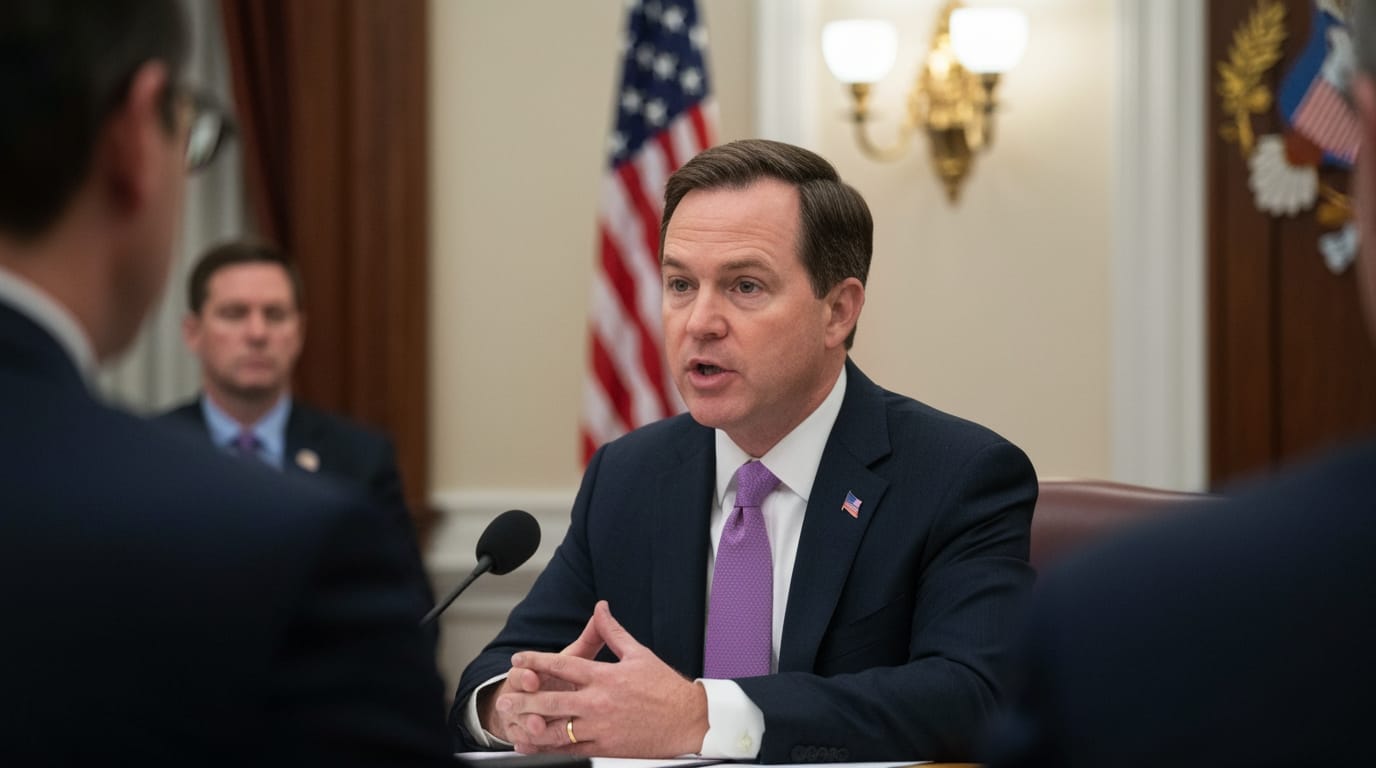
Washington D.C. — The United States Senate on Tuesday, July 28, 2026, confirmed Jay Clayton as the new Director of National Intelligence (DNI), placing a former Wall Street lawyer and federal prosecutor at the helm of the nation's sprawling intelligence apparatus. The 51-47 party-line vote concluded a contentious confirmation process, marking another significant appointment to President Donald Trump's cabinet and ending a period of temporary leadership within the intelligence community.
Clayton's confirmation follows a turbulent period for the Office of the Director of National Intelligence (ODNI), which saw the resignation of previous DNI Tulsi Gabbard earlier this year and the controversial interim leadership of Bill Pulte. His ascent to the DNI position is viewed by some as a move to stabilize the intelligence community, while others express deep concerns over his perceived lack of intelligence background and his sidestepping of questions regarding the 2020 presidential election during his confirmation hearing.
A Controversial Path to Confirmation
Jay Clayton's nomination and subsequent confirmation were anything but smooth. Initially, his selection in June had been met with a degree of cautious optimism by some Democrats, who viewed him as a more palatable choice than his interim predecessor, Bill Pulte. Pulte, a businessman with no national security experience, had drawn bipartisan criticism during his brief tenure as acting DNI, having overseen staff reductions and facing accusations of politicizing the intelligence office. Concerns were particularly high after Pulte reportedly released classified documents related to President Trump's unsubstantiated claims about the 2020 election.
However, the bipartisan goodwill towards Clayton quickly eroded following his July 15 confirmation hearing. During the proceedings, Clayton repeatedly declined to explicitly state that former President Joe Biden won the 2020 election, instead asserting that Biden was "certified" as the victor. He also expressed concerns about the integrity of U.S. elections and the ballot counting processes in states like California. These responses fueled Democratic fears that Clayton, despite his legal background, might align the intelligence community with President Trump's political narratives, mirroring concerns raised during Pulte's temporary leadership. Senator Mark Warner, a leading Democrat on the Senate Intelligence Committee, stated that he came away from the process with "serious reservations" about Clayton's willingness to resist political pressure.
From Wall Street to SEC to Intelligence Head
Jay Clayton brings a diverse, though untraditional, resume to the role of Director of National Intelligence. Prior to his DNI nomination, Clayton served as the U.S. Attorney for the Southern District of New York (SDNY) since April 2025, a position where he handled significant cases, including the indictment of Venezuela's former leader. Before his SDNY appointment, he gained prominence as the Chairman of the Securities and Exchange Commission (SEC) during President Trump's first term, from 2017 to 2020. In this role, he oversaw the regulation of financial markets and worked on major business and financial transactions.
His career began in private practice, spending over two decades at the prominent law firm Sullivan & Cromwell. While his legal career, including his time at SDNY, has involved elements related to national security, such as terrorism cases, he lacks direct, extensive experience within the intelligence community itself. Republicans, however, lauded his qualifications, with Senator Tom Cotton praising his "deep experience combatting a wide range of national security threats" and his work "hand in glove with our intelligence agencies and counterterrorism personnel" as U.S. attorney. President Trump himself described Clayton as "very Highly Respected" and predicted he would do a "spectacular job."
The Role of the Director of National Intelligence
The Director of National Intelligence position was established in the wake of the September 11, 2001, terrorist attacks to improve coordination and information sharing among the nation's 18 intelligence agencies. The DNI serves as the principal advisor to the President on intelligence matters and oversees the entire U.S. Intelligence Community. The position was elevated to a cabinet-level role during President Trump's first presidency.
Clayton assumes leadership at a time when the ODNI has faced scrutiny over its independence and its role in an increasingly polarized political environment. Under the previous acting director, Bill Pulte, the office saw significant staff reductions, with Pulte announcing a 30% cut in personnel, which he framed as necessary downsizing. Critics, however, warned that such cuts could weaken the intelligence community's capacity and politicize its functions, with some former officials suggesting the ODNI was "sinking slowly beneath the waves." Clayton has emphasized his commitment to upholding principles of decisive judgment, discipline, integrity, and effective communication across government branches.
Implications for National Security and Surveillance Powers
Clayton's confirmation holds significant implications beyond the immediate leadership change within the intelligence community. His approval by the Senate is widely seen as a crucial step towards potentially reauthorizing Section 702 of the Foreign Intelligence Surveillance Act (FISA). This warrantless surveillance tool, which allows the government to collect the communications of non-Americans located outside the U.S. for foreign intelligence purposes, had lapsed for the first time in June. Democrats had previously blocked its reauthorization, citing concerns arising from Bill Pulte's temporary appointment and fears of political misuse of intelligence powers.
With a permanent DNI in place, Republican Senate Majority Leader John Thune expressed hope that the confirmation would encourage colleagues to "stop blocking reauthorization of the Foreign Intelligence Surveillance Act." The debate over Section 702 highlights the delicate balance between national security needs and civil liberties, a challenge that will now fall squarely on Clayton's shoulders. His tenure will be closely watched for how he navigates these complex issues, particularly given the preceding controversies and the ongoing concerns about the politicization of intelligence. The intelligence community, grappling with low morale and a mandate often questioned, now looks to Clayton to restore stability and uphold its non-partisan mission.


