Jerusalem Holy Site Barricaded: Catholic Leaders Barred from Palm Sunday Mass in Unprecedented Move
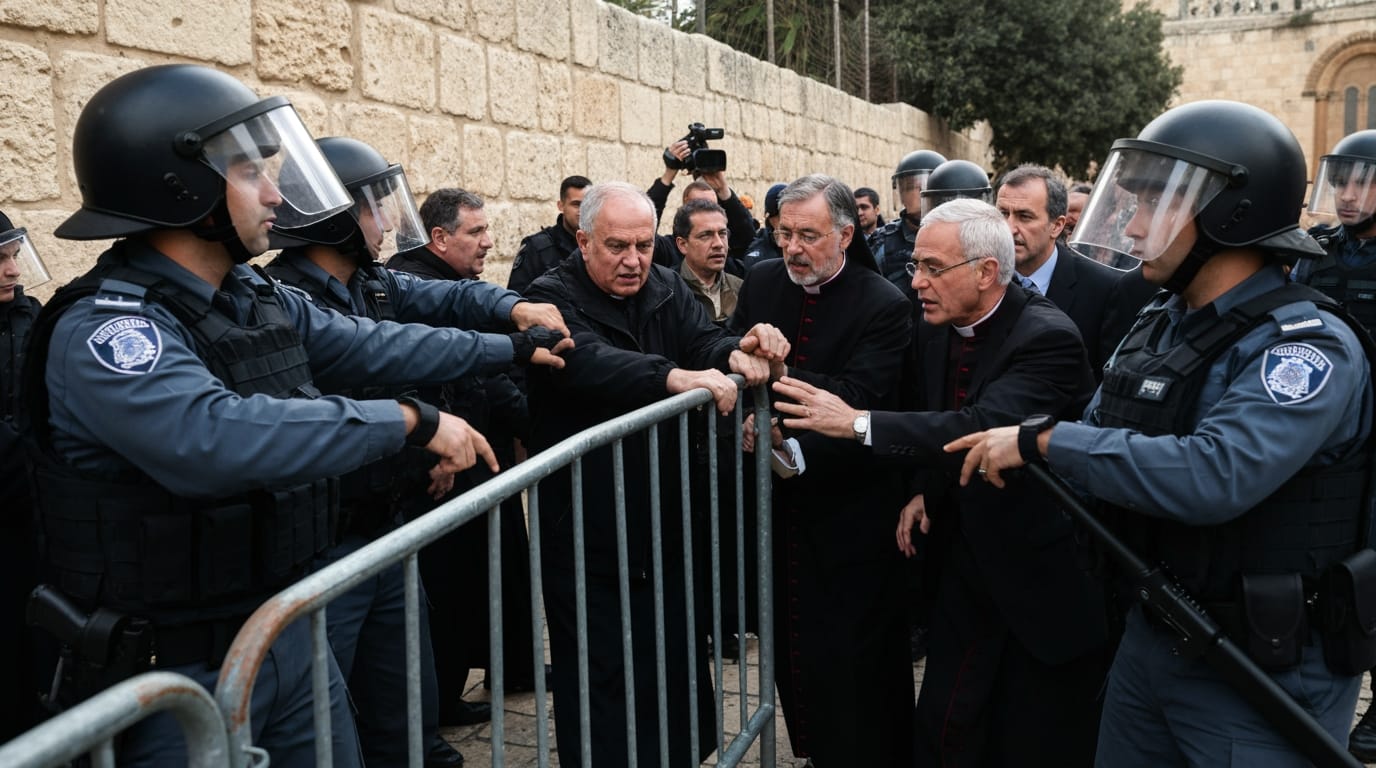
JERUSALEM — In an unprecedented move described by religious leaders as a grave departure from centuries-old tradition, Israeli police on Palm Sunday prevented senior Catholic clergy, including the Latin Patriarch of Jerusalem, Cardinal Pierbattista Pizzaballa, from entering the revered Church of the Holy Sepulchre to celebrate Mass. The incident, occurring on a day central to the Christian calendar, has ignited international condemnation and raised significant concerns about religious freedom and the delicate balance of Jerusalem's holy sites amidst escalating regional tensions.
The dramatic Sunday morning blockage at the heart of Christianity's holiest city marked the first time in centuries that the heads of the Catholic Church were denied access to the site where Christians believe Jesus was crucified, buried, and resurrected. The Latin Patriarchate of Jerusalem vehemently protested the decision, calling it "a manifestly unreasonable and grossly disproportionate measure" that disregards the spiritual sensibilities of billions of faithful worldwide.
The Palm Sunday Standoff
The incident unfolded as Cardinal Pizzaballa and Father Francesco Ielpo, the Custos of the Holy Land, attempted to reach the Church of the Holy Sepulchre for a private Palm Sunday Mass. Palm Sunday commemorates Jesus' triumphant entry into Jerusalem, initiating Holy Week, which culminates in Easter. While the traditional grand procession from the Mount of Olives had already been canceled due to broader security concerns, the church leaders had sought permission for a scaled-down, private service. Despite their efforts to proceed without any public display or ceremonial act, Israeli police intercepted the clergy, forcing them to turn back.
According to the Latin Patriarchate, their request to hold a private Mass with a limited number of religious leaders had been communicated to authorities. However, police maintained their stance, citing general security considerations, specifically pointing to the ongoing conflict with Iran and the closure of major holy sites in Jerusalem, particularly those lacking bomb shelters. They also highlighted the logistical challenges posed by the Old City's narrow alleys, which could impede emergency vehicle access and create risks in the event of a mass casualty incident. The police stated they had previously reviewed and denied the Patriarchate's request for an exemption.
Police Justification Versus Church Outcry
Israeli police officials defended their actions by emphasizing the volatile security landscape. They asserted that all holy sites in Jerusalem's Old City – including those sacred to Christians, Muslims, and Jews – have been subject to closures since the commencement of the "US-Israeli war on Iran," especially locations not equipped with bomb shelters. The Prime Minister's Office later issued a statement claiming "no malicious intent whatsoever" behind the police's actions, asserting that the decision was made "out of special concern for his safety" and promising to devise a plan for church leaders to worship at the site in the coming days. President Isaac Herzog reportedly called Cardinal Pizzaballa to express his "great sorrow" over the events.
However, the Catholic Church in Jerusalem strongly refuted the necessity of such extreme measures. The Patriarchate argued that blocking the most senior Catholic figures from their sacred duties, even for a private observance, was "tainted by improper considerations" and contradicted fundamental principles of freedom of worship and the long-standing "Status Quo" arrangements governing holy sites. These arrangements are internationally recognized and traditionally guarantee Christian authority over churches in Jerusalem. Church bodies noted that they had diligently complied with all restrictions for over a month, including canceling public gatherings and prohibiting attendance during the entirety of Easter week.
Historical Context and the Status Quo
The Church of the Holy Sepulchre is arguably the most significant Christian pilgrimage site globally, drawing millions of visitors annually. Its administration, along with several other key holy sites in Jerusalem, is governed by a delicate and complex set of understandings known as the Status Quo, established centuries ago and solidified during the Ottoman era. This intricate framework seeks to maintain peace and order among the various Christian denominations, as well as between religious communities and the state. Any perceived deviation from these norms is often met with intense scrutiny and protest.
Christian communities in Jerusalem have consistently voiced concerns over what they describe as increasing restrictions and challenges to their presence and freedom of worship. Incidents involving access to holy sites, particularly during major religious festivals, are highly sensitive and often escalate quickly into diplomatic issues. The current blockage is seen by many as a significant breach of these historical arrangements and an undermining of the Christian community's guaranteed rights.
International Repercussions and Future Implications
The international community reacted swiftly and critically to the incident. The United States and several European countries voiced strong objections. Italian Prime Minister Giorgia Meloni publicly criticized the police action, stating that denying entry to religious leaders "constitutes an offence not only to believers, but for every community that recognises religious freedom," leading Italy to summon Israel's ambassador. French President Emmanuel Macron condemned the decision, warning that it contributes to "a worrying series of violations" affecting holy sites and emphasizing the imperative to guarantee freedom of worship for all religions in Jerusalem.
This incident compounds an already fraught environment in the Old City, where Israeli authorities have also reportedly closed Al-Aqsa Mosque and other Christian churches since the start of the recent conflict. Critics argue that such closures, even if framed as security measures, tighten control over the occupied city and disproportionately impact the ability of religious communities to practice their faith.
The barring of Catholic leaders from their most sacred site on Palm Sunday represents a troubling development in the already tense landscape of Jerusalem. While Israeli authorities cite pressing security concerns related to regional conflict, the move has been widely condemned as an infringement on religious freedom and a violation of the long-established Status Quo. The incident not only alienates Christian communities worldwide but also underscores the enduring fragility of interfaith relations and the constant challenge of balancing security imperatives with the fundamental right to worship in the Holy Land. The repercussions of this decision may resonate far beyond this single Palm Sunday, potentially straining diplomatic ties and deepening anxieties among Jerusalem's diverse religious populations.


