Judge Orders White House to Reinstate Fired Workers, Citing Unlawful Tactics
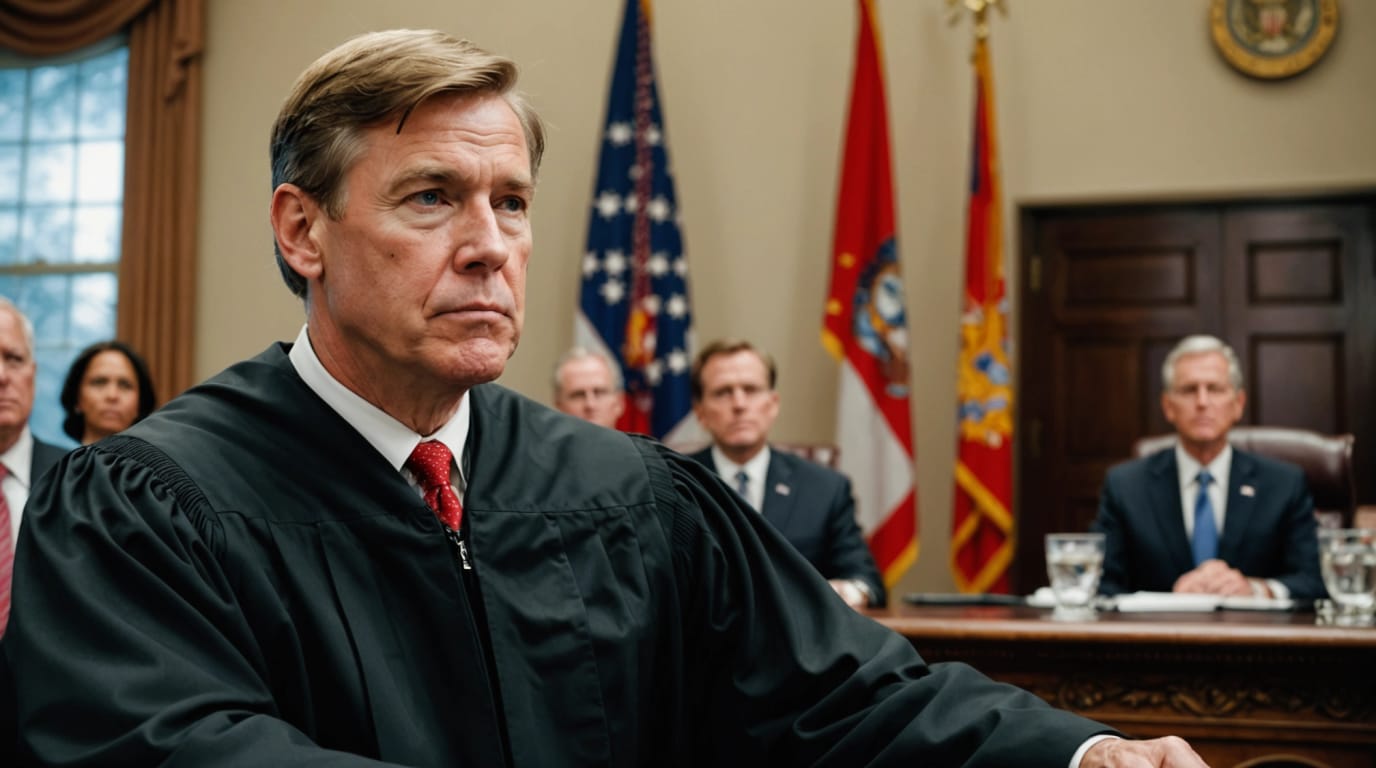
SAN FRANCISCO – A federal judge has ordered the Trump administration to reinstate thousands of probationary federal workers who were terminated in mass firings across multiple agencies last month. The ruling marks a significant setback for the administration's efforts to downsize the federal workforce and raises questions about the legality of the methods used.
U.S. District Judge William Alsup issued the order Thursday, stating that the firings were directed by the Office of Personnel Management (OPM) and its acting director, Charles Ezell, who lacked the authority to implement such sweeping personnel changes. The judge expressed strong disapproval of the administration's actions, suggesting they circumvented established procedures and potentially misrepresented the reasons for the terminations.
Details of the Order
Alsup's order specifically directs the departments of Veterans Affairs, Agriculture, Defense, Energy, the Interior, and the Treasury to immediately offer job reinstatement to employees who were terminated on or around Feb. 13 and 14. The agencies are also required to submit a report within seven days, detailing the steps taken to comply with the order for each affected employee.
The temporary restraining order stems from a lawsuit filed by a coalition of labor unions and organizations challenging the mass firings. The plaintiffs argue that the administration's actions violate the Administrative Procedure Act and congressional laws governing agency hiring and firing practices.
Administration's Response
The Trump administration has swiftly responded to the ruling, with White House Press Secretary Karoline Leavitt denouncing it as an encroachment on executive power. "The Trump Administration will immediately fight back against this absurd and unconstitutional order," Leavitt said in a statement. The administration has already filed an appeal with the Ninth Circuit Court.
Despite the administration's stance, Judge Alsup has encouraged them to appeal the decision.
Basis for the Judge's Decision
Judge Alsup's decision appears to be rooted in his assessment that the administration sidestepped established laws and regulations governing workforce reductions. He highlighted the fact that the OPM provided a template for termination letters, suggesting that employees were being fired for poor performance, even in cases where they had received positive evaluations.
In one instance, Alsup cited the example of an earth science employee at the Agriculture Department who was fired despite having received outstanding performance reviews. The judge characterized the government's justification for the firings as "a lie" and expressed frustration that no one from OPM was present to testify and provide further clarification.
Impact on Federal Workers
The judge's order could affect thousands of federal employees who were in their probationary periods, typically those hired within the last one or two years. These employees generally have fewer protections and can be more easily terminated for cause. Government Executive estimates that roughly 24,000 federal employees will regain their jobs as a result of the decision.
The American Federation of Government Employees (AFGE), a major labor union representing federal workers, praised the ruling. "AFGE is pleased with Judge Alsup's order to immediately reinstate tens of thousands of probationary federal employees who were illegally fired from their jobs by an administration hellbent on crippling federal agencies and their work on behalf of the American public," said Everett Kelley, National President of AFGE.
Broader Implications
Beyond the immediate impact on the affected employees, the case raises broader questions about the limits of executive power and the administration's approach to managing the federal workforce. The judge made it clear that while the administration has the right to reduce the size of the government, it must do so within the bounds of the law.
Erik Molvar, executive director of Western Watersheds Project, one of the plaintiffs in the lawsuit, argued that the mass firings were "not just an attack on government agencies and their ability to function, they were also a direct assault on public lands, wildlife, and the rule of law."
Future Proceedings
Judge Alsup has indicated that he may extend the injunction to other agencies in the future, depending on the outcome of further legal proceedings. He had previously issued a temporary restraining order forcing OPM to rescind its directive and guidance related to the probationary firings. The judge also ordered Noah Peters, a senior advisor at OPM, to submit to a deposition from the plaintiffs.
The case is likely to continue to be closely watched as it makes its way through the courts, with significant implications for the future of the federal workforce and the balance of power between the executive and judicial branches.


