Kallas Navigates Transatlantic Tensions as US Peace Plan Stirs European Unease
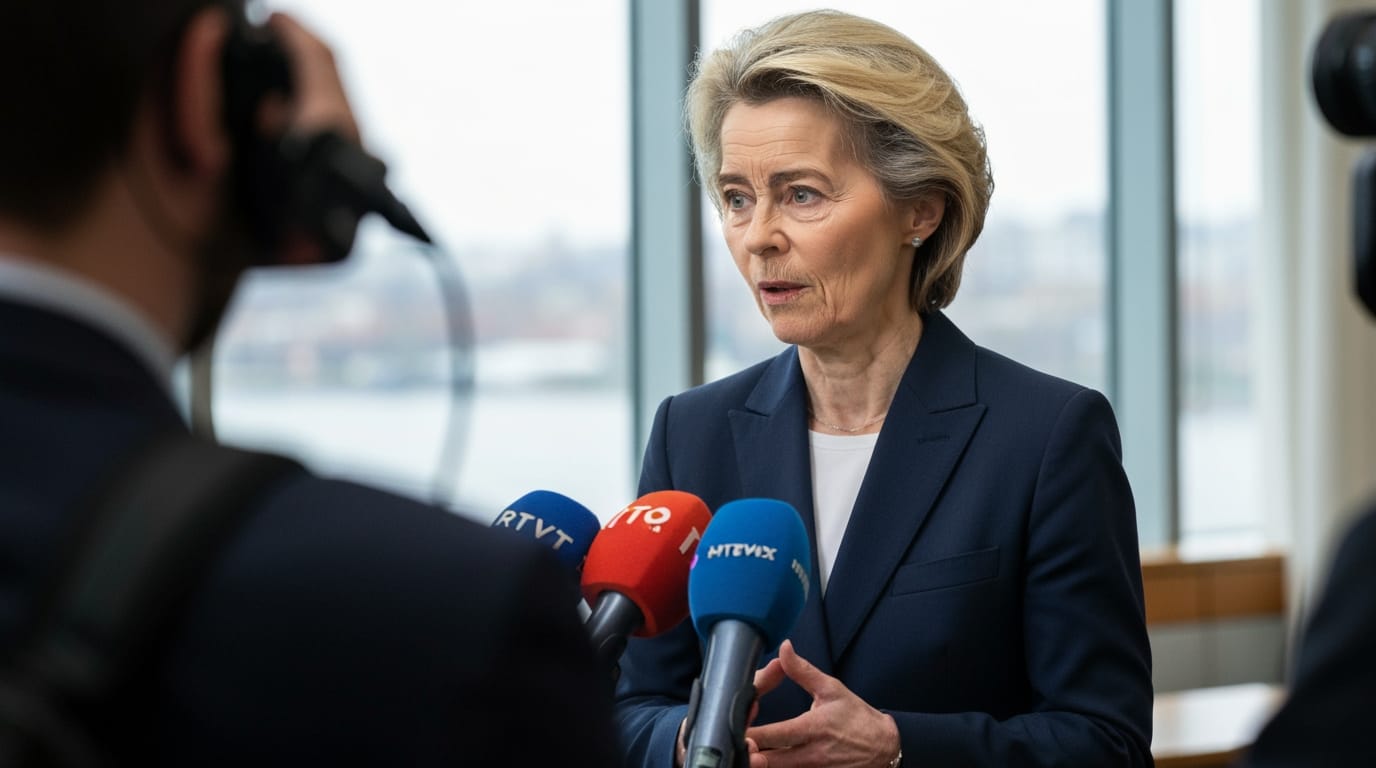
BRUSSELS — European Union foreign policy chief Kaja Kallas has moved to temper concerns of a deepening rift in transatlantic relations, even as a reported United States peace plan for Ukraine and recent US security strategy critiques have generated significant apprehension across Europe. Kallas, speaking amidst a backdrop of increasing scrutiny on US foreign policy, underscored the enduring importance of the US as Europe's primary partner, while simultaneously asserting the European Union's firm red lines regarding any resolution to the conflict in Ukraine.
The Controversial US Peace Proposal Takes Center Stage
At the heart of the recent transatlantic friction is a reported 28-point peace framework for Ukraine, allegedly put forth by the administration of President Donald Trump. Though details have not been officially disclosed, reports suggest the proposal contains terms widely perceived as pro-Russian, alarming both Kyiv and its European allies. The plan reportedly envisions US acceptance of Russian control over Crimea and the Donbass region, alongside conditions that would see Ukraine capping its military capabilities and refraining from pursuing NATO membership. Such concessions are viewed by Ukraine and many European nations as non-negotiable infringements on sovereignty and regional stability.
The timing and nature of this reported initiative have raised eyebrows, particularly as US and Russian officials are said to have discussed the draft bilaterally, potentially sidelining Europe from critical negotiations. High-ranking figures like Steve Witkoff, a special envoy reportedly tasked by President Trump, and Kirill Dmitriev, an influential Kremlin advisor, are believed to be instrumental in these discussions. European leaders have expressed a strong desire to be central to any peace process, insisting that the EU cannot be sidelined when discussing the future of the continent's security.
European Concerns Mount Amidst Critical US Posture
Beyond the specific Ukraine peace plan, a broader narrative of discontent has emerged from Washington, further straining transatlantic ties. A newly released US National Security Strategy reportedly critiques European institutions, describing the continent as "over-regulated," lacking in "self-confidence," and confronting "civilizational erasure" due to immigration. This document, viewed as an "offensive" against Europe, marks a significant departure from previous US policy and has been perceived as a radical shift in approach towards its traditional allies.
The implications of such rhetoric, combined with the controversial peace proposal, have fueled fears of a widening chasm in the US-EU relationship. Adding to these concerns, EU foreign policy chief Kaja Kallas reportedly faced a diplomatic setback when US Secretary of State Marco Rubio declined to meet her, underscoring the strained diplomatic channels at a critical juncture. There are also broader anxieties regarding a potential US pivot towards Asia and a reduction of its military presence on NATO's eastern flank, prompting European states to confront the possibility of facing Russian aggression with diminished US backing. This perceived disengagement has intensified calls for Europe to bolster its own defense capabilities and strategic autonomy.
Kallas's Balancing Act: Reassurance and Red Lines
Despite the mounting tensions, Kaja Kallas has worked to maintain a pragmatic outlook, downplaying the fears of an irreparable rift while firmly articulating Europe's non-negotiable positions. Speaking at the Doha Forum, Kallas acknowledged that while there has been "a lot of criticism" from the US, "some of it is also true". Crucially, she reaffirmed the United States as Europe's "biggest ally" and "foremost partner," emphasizing the enduring principle of their alliance.
However, her commitment to the principle of partnership is matched by an unwavering stance on the Ukrainian conflict. Kallas has repeatedly stressed that any viable peace plan must involve Ukraine and Europe, and critically, both must agree to its terms. She underscored that Russia is undeniably the aggressor, and Ukraine the victim, cautioning against any settlement that rewards aggression. "If aggression is rewarded," Kallas warned, "we will see it happen again, and not only in Ukraine or Gaza, but all around the world". She advocates for Europe to demonstrate greater self-confidence, particularly in its dealings with Russia, and to focus on strategies that weaken Russia and strengthen Ukraine. This includes continued restrictive measures against Moscow and unwavering support for Kyiv's defensive capabilities.
Kallas's diplomatic efforts reflect a delicate balance: acknowledging legitimate points of contention while seeking to preserve the foundational elements of transatlantic cooperation. Her message consistently highlights the necessity for a "long-lasting, sustainable and just peace" in Ukraine, which she believes can only be achieved with the full consent and participation of both Ukrainians and Europeans.
Defining the Future of Transatlantic Security
The ongoing discussions surrounding the US peace plan and the broader shifts in Washington's foreign policy present a critical juncture for transatlantic security. The current challenges underscore the need for continuous, robust dialogue between the US and its European partners to align strategies on global security issues, particularly regarding Russia and Ukraine. Europe's insistence on being an equal partner in these discussions, rather than a passive recipient of policy, signals a maturing approach to its own geopolitical role.
As the continent grapples with the implications of a potentially more disengaged United States, European leaders, including Kallas, are stressing the imperative for greater European unity and self-reliance in defense and foreign policy. The situation demands a nuanced understanding of shared values versus divergent tactical approaches, ensuring that while fundamental alliances remain intact, European interests are robustly represented and protected. The path forward for transatlantic relations will likely be defined by a concerted effort to bridge these differing perspectives, maintaining a united front against common threats while adapting to evolving global dynamics.
In conclusion, Kaja Kallas's efforts to downplay fears of a complete transatlantic rupture reflect a strategic imperative to preserve the core US-EU relationship. Yet, her simultaneous insistence on European and Ukrainian agency in shaping a just peace underscores a clear message from Brussels: while the alliance endures, European interests and values are non-negotiable in the face of aggression. The coming months will test the resilience of this partnership as both sides navigate complex geopolitical landscapes and define the contours of future global security.


