Kazakhstan Forges Future Amidst Geopolitical Tides: A Delicate Balancing Act Post-Elections
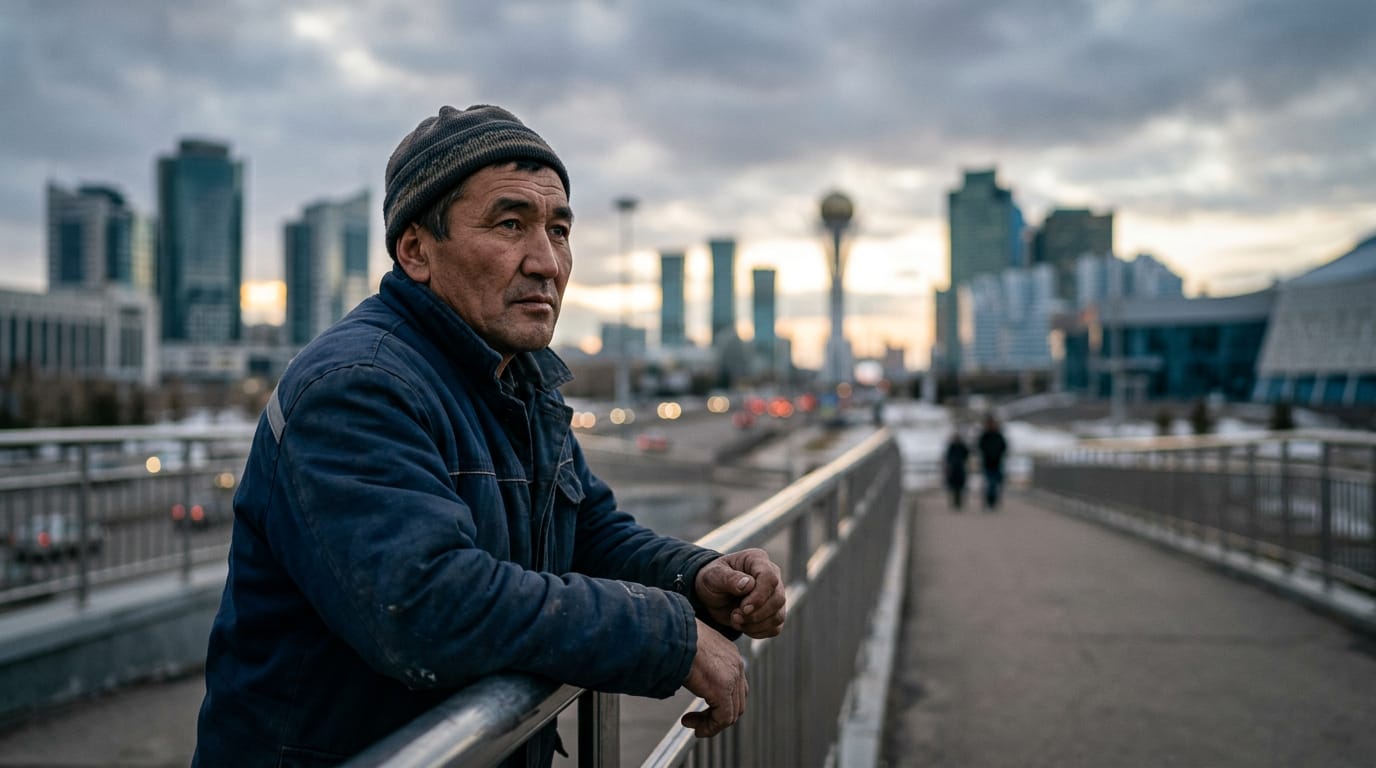
Kazakhstan, the largest and most economically powerful nation in Central Asia, finds itself at a critical juncture, meticulously recalibrating its foreign policy in the wake of recent transformative elections and a dramatically shifting global geopolitical landscape. Far from merely choosing between the historic gravitational pull of Russia, the rising economic might of China, or the soft power and investment allure of the European Union, Astana is doubling down on its long-standing "multi-vector" strategy. This nuanced approach, reinforced by a series of domestic political reforms, aims to safeguard sovereignty and foster economic resilience by maintaining strategic partnerships across diverse global powers. The country's future trajectory hinges on its ability to expertly navigate these complex and often competing interests, positioning itself as a crucial bridge in Eurasia.
The Evolving Domestic Landscape and its External Ramifications
The path to Kazakhstan's current foreign policy stance is deeply intertwined with recent internal political upheavals and reforms. January 2022 witnessed unprecedented unrest, initially triggered by fuel price hikes, which quickly escalated into broader public discontent against perceived corruption and the lingering influence of the Nazarbayev era. This turbulent period served as a powerful catalyst for President Kassym-Jomart Tokayev to initiate a series of significant political changes, signaling a departure towards a "New Kazakhstan."
A constitutional referendum in June 2022 approved amendments designed to reduce presidential powers, restore the Constitutional Court, and modify the electoral system, aiming for greater parliamentary authority and political pluralism. This was swiftly followed by a snap presidential election in November 2022, where President Tokayev was re-elected for a single, non-renewable seven-year term with over 81% of the vote. While observers from the Organization for Security and Cooperation in Europe (OSCE) noted a lack of competitiveness in the presidential race, these electoral maneuvers were largely seen as an effort by Tokayev to consolidate power and legitimize his reform agenda. The subsequent snap parliamentary elections in March 2023, held under revised electoral laws, allowed for increased participation of parties and independent candidates, though the ruling Amanat party retained its majority. These domestic shifts have created a renewed emphasis on national interests and resilience, directly influencing Kazakhstan's assertive and pragmatic foreign policy outlook.
Navigating the Russian Bear's Shadow
Historically, Kazakhstan's foreign policy has been deeply shaped by its extensive borders and long-standing ties with Russia. As a founding member of the Eurasian Economic Union (EAEU) and the Collective Security Treaty Organization (CSTO), Kazakhstan shares robust economic and security frameworks with its northern neighbor. However, Russia's full-scale invasion of Ukraine in February 2022 presented an existential challenge to Kazakhstan's delicate multi-vector approach, making its balancing act significantly more difficult.
In response to the conflict, Astana has pursued a strategy of "accelerated diversification," seeking to reduce its exposure to Russian-generated risks without directly antagonizing Moscow. This has involved enforcing sanctions-related trade restrictions, expanding non-Russian transit corridors, and intensifying economic engagement with other global partners. Despite these efforts, Russia remains a vital trading partner, and a significant portion of Kazakhstan's oil exports, approximately 80%, still flows through the Caspian Pipeline Consortium (CPC) pipeline across Russian territory to European markets. The vulnerability of these routes was highlighted by drone attacks on CPC infrastructure in 2025 and oil tankers in 2026, underscoring the ongoing challenges in achieving full energy independence from Russian transit. Kazakhstan’s updated Foreign Policy Concept, amended in August 2026, explicitly aims to protect its national interests, sovereignty, and territorial integrity amidst this complex geopolitical competition.
The Ascending Dragon: China's Growing Influence
As Kazakhstan seeks to diversify its partnerships, China has emerged as an increasingly dominant economic force and a crucial counterweight in Astana's multi-vector strategy. The two nations share a long border and have cultivated a robust economic relationship, driven largely by China's Belt and Road Initiative (BRI). Chinese investments in infrastructure, trade, and energy have surged, providing Kazakhstan with vital economic opportunities and helping to reduce its historical overreliance on Russia.
Kazakhstan views China as a benevolent regional power and a significant geographic neighbor, with shared perspectives on many global governance issues. This alignment is expected to deepen, as increased Chinese investment and trade have been a direct consequence of Kazakhstan's post-2022 strategy to hedge against Russian influence. The Kazakhstan-China oil pipeline offers a key alternative export route for Kazakh energy, further strengthening this economic bond. However, this growing economic interdependence also raises questions about potential overreliance on Beijing, necessitating a continued balancing act to maintain strategic flexibility.
European and Western Engagement: A Path to Diversification
The European Union and broader Western partners represent another critical "vector" in Kazakhstan's foreign policy, offering significant trade, investment, and technological cooperation opportunities. The EU is a major market for Kazakhstan's energy exports and a source of advanced technology and investment, making it a key partner in Astana's diversification efforts.
Kazakhstan is actively pursuing closer ties with the EU, the United States, and other Western countries to foster economic resilience and expand its diplomatic options. A cornerstone of this strategy is the development of the "Middle Corridor" (Trans-Caspian International Transport Route), which aims to establish a robust East-West trade route bypassing Russia and connecting China with Europe through Central Asia and the Caspian Sea. The World Bank's approval of support for rail improvements on the Kazakh section of this corridor, mobilizing over $1.41 billion, underscores its strategic importance. This initiative not only enhances Kazakhstan's role as a vital transit hub but also reinforces its commitment to reducing dependence on any single power. Economic projections indicate a positive outlook for Kazakhstan, with its GDP per capita expected to surpass that of both Russia and China, further enhancing its attractiveness as a stable and growing partner for the West.
A Delicate Balance in a Shifting World
Kazakhstan's post-election era is defined by an intensified commitment to its multi-vector foreign policy, a strategy born of necessity and refined by decades of navigating powerful neighbors. The political reforms under President Tokayev, coupled with the profound geopolitical shifts emanating from the war in Ukraine, have underscored the urgency of this approach. Astana is now engaged in what some analysts describe as a "double hedging" act: leaning more towards China to balance against Russia, while simultaneously expanding engagement with the EU, the United States, Turkey, and other partners to hedge against the influence of both Russia and China.
This sophisticated strategy aims to maximize strategic flexibility, mitigate external pressures, and secure national interests, particularly in economic diversification and energy security. Kazakhstan's ambition is to cement its position as a middle power and an indispensable bridge connecting diverse economic and political blocs across Eurasia. While challenges remain in balancing these competing interests and ensuring genuine democratic progress, Kazakhstan's adaptable and pragmatic foreign policy, continually updated to reflect a more complex international environment, remains its most potent tool in securing a stable and prosperous future.