Khamenei Vows Strong Retaliation if Trump Threatens Military Action
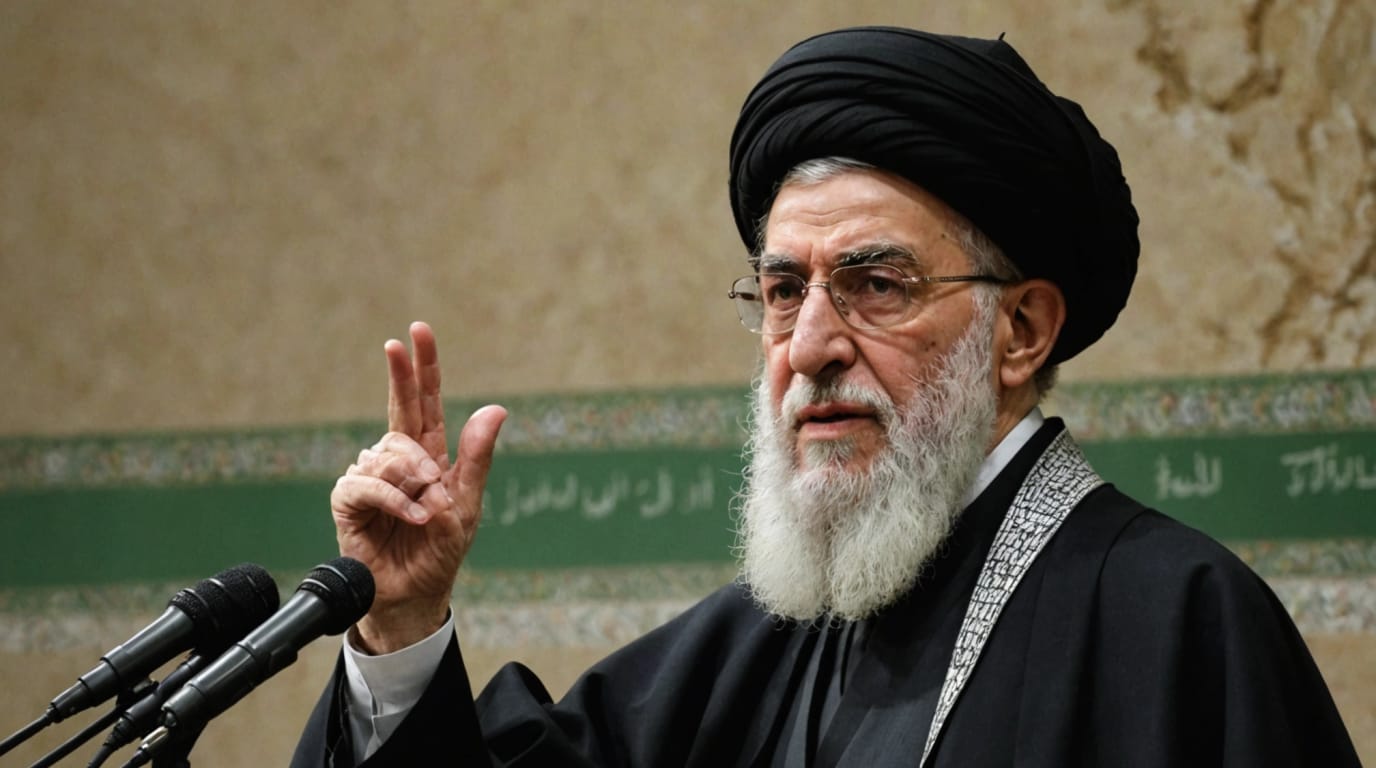
Tehran, Iran – Iranian Supreme Leader Ayatollah Ali Khamenei issued a stern warning Monday, stating that Iran would deliver a "strong counterattack" if the United States acts on President Donald Trump's threat to bomb the country. The statement marks a significant escalation in tensions between the two nations, already strained by disagreements over Iran's nuclear program.
Trump's Threat and Khamenei's Response
Khamenei's remarks came in response to Trump's recent comments made during an interview where he warned that if Iran does not agree to a new nuclear deal, the U.S. would resort to military action, including bombing. Trump stated the bombing would be "the likes of which they have never seen before." Khamenei, speaking during a speech on Eid al-Fitr, the holiday marking the end of Ramadan, dismissed the likelihood of a U.S. attack but asserted that any "mischief" would be met with a forceful response. "If evil is committed, the counterattack will definitely be mutually strong," Khamenei stressed.
The Stalled Nuclear Negotiations
The current standoff is rooted in the 2015 nuclear deal, formally known as the Joint Comprehensive Plan of Action (JCPOA), which Iran agreed to with the U.S., China, Russia, France, the United Kingdom, and Germany. The agreement limited Iran's nuclear program in exchange for the lifting of economic sanctions. However, in 2018, President Trump unilaterally withdrew the U.S. from the JCPOA and reimposed sanctions on Iran, arguing that the deal was too lenient. Since then, tensions have steadily risen, with Iran gradually rolling back its commitments under the agreement.
Trump has repeatedly called for a new nuclear deal with Iran, demanding stricter terms and broader restrictions on its nuclear activities, as well as its ballistic missile program and regional influence. Earlier in March, Trump sent a letter to Khamenei signaling openness to new nuclear negotiations, but threatened possible military action if Iran refuses to cooperate.
Iran's Position and Potential for Indirect Talks
Despite the threats, Iranian President Masoud Pezeshkian indicated a preference for avoiding direct talks with Washington. "The path of indirect negotiation is open," he said Sunday. This suggests that while Iran is unwilling to engage in direct negotiations under pressure, it may be open to discussions through intermediaries. Khamenei emphasized that Iran's positions remain unchanged toward the United States and Israel, as the hostility from both countries also remains the same.
Regional Implications and Internal Stability
Khamenei also addressed potential internal unrest, stating that if the U.S. is "thinking of inciting sedition within the country, like they did in previous years, the Iranian people themselves will respond, just as they have in the past." Iranian authorities have blamed Western interference for mass unrest, such as the widespread 2022 Jin Jiyan Azadi (Women Life Freedom) protests. This highlights the Iranian leadership's concern about internal stability and its perception of external threats aimed at destabilizing the country.
The Path Forward
The exchange of threats between Khamenei and Trump underscores the precarious state of U.S.-Iran relations. While Khamenei downplayed the probability of an actual attack, he asserted that any aggression would be met with a "strong reciprocal blow". The coming weeks will be crucial in determining whether a path toward de-escalation and negotiation can be found, or whether the two nations are headed for further confrontation. The international community is watching closely, as any conflict between the U.S. and Iran could have far-reaching consequences for the region and the world.


