Kosovo at the Crossroads: New Elections Hope to Break Year-Long Political Paralysis
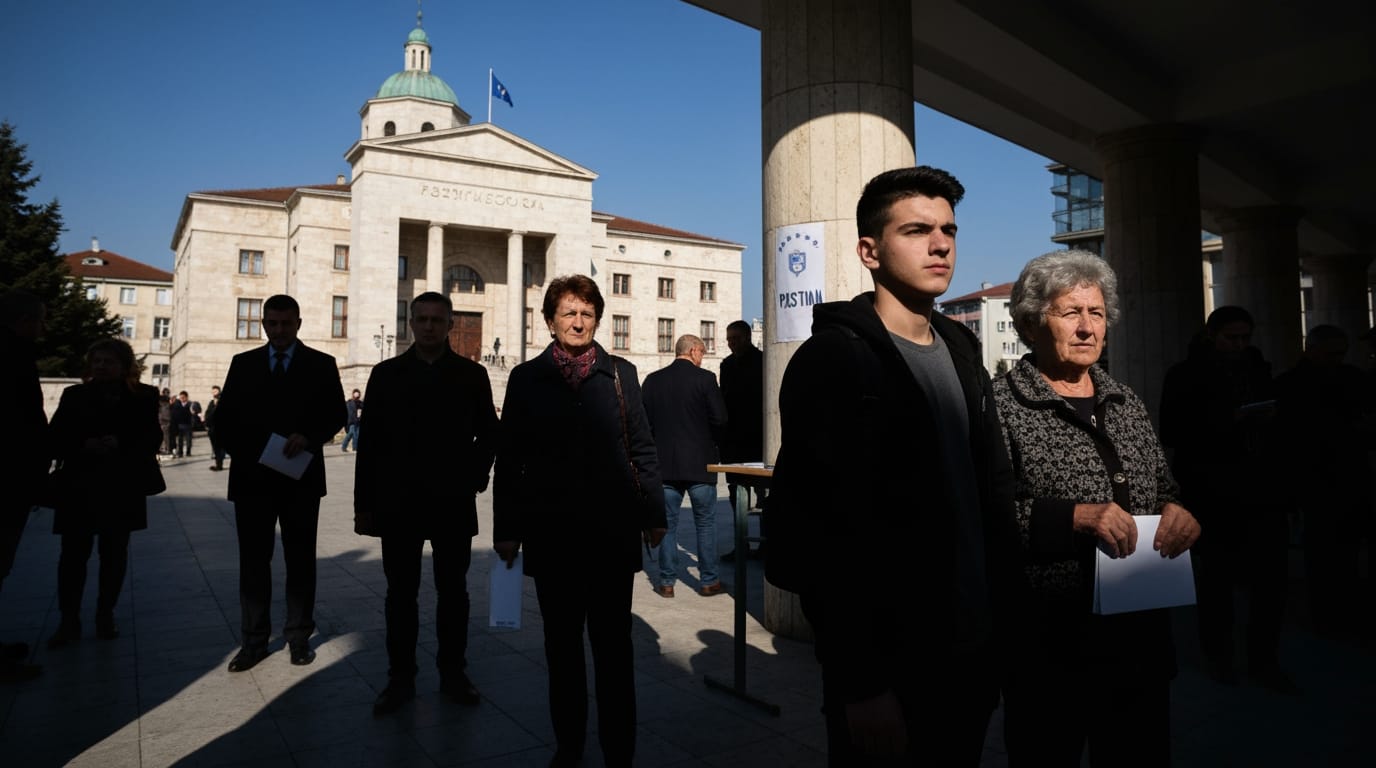
PRISTINA – Kosovo is poised to hold snap parliamentary elections on December 28, 2025, in a high-stakes bid to overcome a debilitating year-long political stalemate that has paralyzed governance, jeopardized economic stability, and stalled crucial integration with the European Union. This upcoming vote follows an inconclusive election in February 2025, which saw the winning party unable to form a government, plunging the young Balkan nation into its deepest institutional crisis since declaring independence. The persistent gridlock has left Kosovo reeling, with significant financial losses and a tarnished international standing underscoring the urgent need for a stable political resolution.
The Unraveling of Governance: A Year in Limbo
The current political crisis in Kosovo can be traced back to the parliamentary elections held on February 9, 2025. Prime Minister Albin Kurti's Vetëvendosje (LVV) party emerged as the frontrunner, securing 42.3% of the vote and 48 seats in the 120-member Assembly. While a plurality, this fell short of the 61 seats required for an outright majority, necessitating coalition negotiations. However, efforts to form a governing coalition proved futile, leading to an unprecedented institutional blockade.
The primary obstacle quickly became the election of a parliamentary speaker, a constitutional prerequisite for the Assembly to begin its work. Despite numerous attempts—reportedly over 40—lawmakers failed to elect a speaker for months, with LVV's nominee, Albulena Haxhiu, consistently falling short of the required 61 votes. This stalemate persisted, eventually leading to the dissolution of parliament and the scheduling of new elections. The prolonged paralysis meant that for much of 2025, Kosovo operated without a fully functional government, with the previous administration continuing in a technical mandate.
Economic Fallout and Stalled EU Ambitions
The repercussions of Kosovo's political gridlock have been severe, particularly for its struggling economy and its aspirations for closer European integration. The Kosovo Business Alliance warned that the institutional paralysis inflicted "unprecedented damage" on economic development, estimating direct losses of approximately €300 million. Furthermore, the country risked losing an estimated €600 million in potential international funding from early 2024 to mid-2025 across vital sectors like environment, energy, and culture. Daily economic losses due to weakened business confidence, reduced foreign investment, and stalled budget projects are estimated to exceed €1.2 million. Thousands of jobs have been lost, and numerous businesses face bankruptcy as a direct consequence of the instability.
Crucially, the political impasse has put a freeze on Kosovo's path towards European Union membership. Over €613.4 million in EU-funded projects spanning energy, digitalization, and infrastructure have been suspended. The EU has explicitly linked the release of significant funds, including those from the €880 million EU Growth Plan, to the formation of a functional government capable of ratifying international agreements and implementing reforms. Brussels has maintained punitive measures imposed in 2023 over tensions in northern Kosovo, further hindering diplomatic contacts and development aid, with these sanctions reportedly costing Kosovo's economy €3 million daily. The continued political uncertainty also deters foreign investment, with the US Embassy warning that American companies are reassessing plans due to the lack of institutional stability.
Deep-Rooted Divisions and International Pressures
Beyond the immediate failure to form a government, the protracted gridlock highlights deeper issues within Kosovo's political system. Analysts suggest that personal rivalries and animosities among party leaders, rather than fundamental ideological differences, significantly impede compromise and the formation of stable parliamentary majorities. Opposition parties have largely refused to cooperate with Prime Minister Kurti, accusing him of exacerbating tensions with the ethnic Serb minority and undermining Kosovo's international reputation.
The unresolved issue of the Association of Serb-Majority Municipalities (ASM) remains a significant point of contention, both domestically and in relations with Serbia and the international community. While the EU views the ASM's establishment as crucial for regional normalization and a condition for EU credibility, Kosovo's government has been reluctant to implement it. The ongoing dialogue with Serbia has effectively stalled, further complicating Kosovo's EU integration process, as progress is increasingly measured by readiness to implement dialogue agreements. Meanwhile, the "frozen seats" of the Srpska Lista (Serbian List) in the Assembly, and their absence from political life, also contribute to the complexity of coalition-building.
The Looming Elections: A Repeat Performance?
As Kosovo approaches its second general election within a year, scheduled for December 28, 2025, there is widespread apprehension that the vote might once again fail to produce a decisive outcome. Many fear a repeat of the inconclusive results from February, which would prolong the political and economic instability. Political analysts express skepticism that the new elections will significantly alter the distribution of mandates, particularly if Prime Minister Kurti's Vetëvendosje party wins again without securing an outright majority.
The stakes are exceptionally high. Beyond forming a stable government, the incoming administration will face immense pressure to address critical domestic priorities such as economic development, healthcare, education, and combating corruption. Crucially, it must also navigate the fraught dialogue with Serbia and work towards fulfilling conditions for EU integration. The current political inertia has not only caused economic harm but has also damaged Kosovo's international image, reinforcing revisionist narratives that question its statehood.
Conclusion: A Critical Juncture for Kosovo's Future
The upcoming December 28 elections represent a critical juncture for Kosovo. The nation's prolonged political gridlock has already inflicted substantial economic damage, jeopardized vital international funding, and put its European integration ambitions on hold. While elections offer the democratic mechanism to resolve political impasses, the underlying issues of fragmented political will, personal rivalries, and complex relations with Serbia suggest that a definitive solution may remain elusive.
For Kosovo to move forward, a stable and functional government is paramount. This requires not only a clear electoral mandate but also a renewed commitment from all political actors to prioritize national interests over partisan squabbles. The international community, particularly the EU and the US, continues to press for stability, emphasizing that Kosovo's ability to govern itself effectively is crucial for regional stability and its Euro-Atlantic future. The hope remains that the upcoming vote will finally usher in an era of political stability, allowing Kosovo to address its urgent challenges and resume its journey toward a more prosperous and integrated future.


