Kosovo Plunges into Fresh Political Crisis, Snap Elections Called for June 7
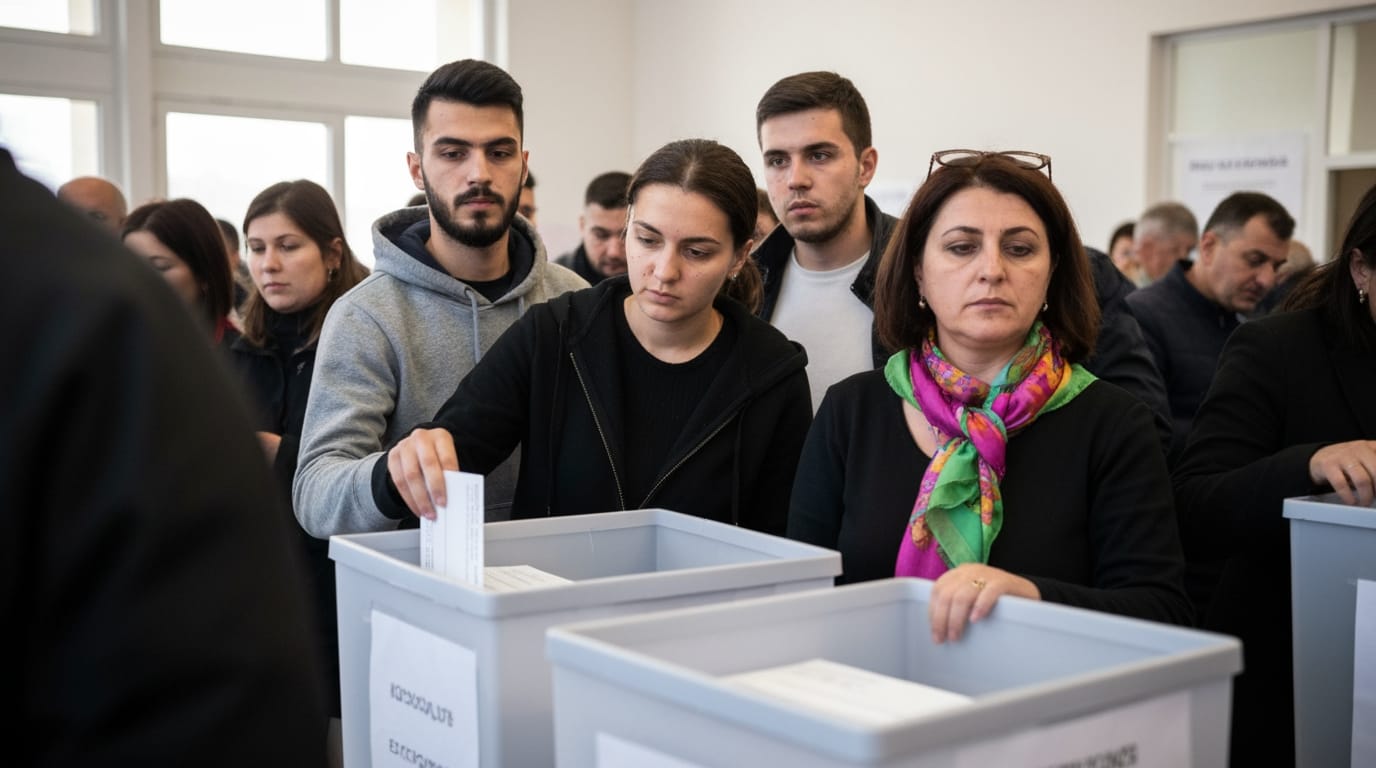
PRISTINA – Kosovo is once again headed to the polls on June 7, 2026, marking the third snap parliamentary election in just over a year. The latest political upheaval follows the failure of the country's 120-member Assembly to elect a new president by the constitutional deadline of April 28, plunging Europe's youngest nation deeper into a cycle of instability. Acting President and Assembly Speaker Albulena Haxhiu formally announced the election date, triggered by the automatic dissolution of parliament after an opposition boycott thwarted efforts to secure the necessary two-thirds majority for a presidential vote.
The repeated inability of political factions to forge consensus on key leadership positions underscores a profound fragmentation within Kosovo's political landscape, raising concerns about effective governance, economic progress, and the nation's aspirations for European integration. Voters are now tasked with navigating another critical election, hoping to break the recurring deadlock that has characterized much of the past year.
The Road to June 7: A Constitutional Impasse
The immediate catalyst for the upcoming snap election was the expiry of President Vjosa Osmani's term in early April 2026 and the subsequent legislative inability to elect her successor. According to Kosovo's constitution, the Assembly is mandated to elect a new president, requiring a quorum of at least 80 lawmakers present for the vote and a two-thirds majority of all 120 members to cast valid ballots. However, a united front of opposition parties, including the Democratic Party of Kosovo (PDK), the Democratic League of Kosovo (LDK), the Alliance for the Future of Kosovo (AAK), and the Serb List, boycotted the parliamentary sessions convened to elect the president.
This strategic withdrawal by the opposition effectively prevented the Assembly from reaching the necessary quorum, rendering any vote invalid. Prime Minister Albin Kurti, whose Vetëvendosje (Self-Determination) party holds a plurality but not a majority in parliament, had attempted to secure opposition support for his nominees, Foreign Minister Glauk Konjufca and MP Fatmire Mulhaxha Kollcaku. However, opposition leaders maintained that the process was being conducted in a "unilateral way and in flagrant violation of the Constitution of Kosovo," accusing the ruling party of failing to engage in genuine dialogue.
Acting President Haxhiu, alongside Prime Minister Kurti, repeatedly urged opposition MPs to fulfill their "constitutional obligation" to participate, describing the boycott as "unethical and anti-institutional." Despite these appeals, the impasse persisted, leading to the April 28 deadline passing without a successful presidential election and thus necessitating the dissolution of parliament.
A Cycle of Instability: Third Election in Just Over a Year
The June 7 snap election is not an isolated event but rather the latest chapter in a protracted period of political turbulence for Kosovo. This will be the third general election in just over 12 months, a frequency that highlights deep-seated political divisions and difficulties in forming stable governing coalitions.
The current government, led by Prime Minister Kurti, was itself formed after an early vote on December 28, 2025. That election followed an inconclusive general election in February 2025, which also failed to produce a clear mandate. In the December 2025 snap poll, Vetëvendosje secured 51.1 percent of the vote, translating to 57 seats in the 120-member assembly. While a strong showing, it was insufficient to govern alone, necessitating a fragile coalition and constant reliance on the support of minority community representatives.
This recurring cycle of elections, often triggered by an inability to agree on presidential candidates or form stable governments, has drawn criticism from within Kosovo and from international partners. Political analysts like Ilir Deda suggest that these frequent votes will test "whether people are willing to hold politicians accountable" for the ongoing instability. The constant campaigning and government transitions divert attention and resources from critical reforms and long-term strategic planning.
Constitutional Mechanisms and Political Deadlock
Kosovo's constitutional framework for presidential elections has proven to be a recurring point of contention. The president serves as the head of state and plays a crucial, albeit largely ceremonial, role in ensuring the functioning of institutions and representing the country internationally. The requirement for a supermajority in parliament to elect the president is designed to foster broad political consensus, but in a deeply polarized environment, it can become a tool for obstruction.
In an earlier attempt to resolve a similar crisis, former President Vjosa Osmani had dissolved parliament on March 6, 2026, after an initial failure to elect a successor. However, the Constitutional Court intervened, ruling that Osmani's decree to dissolve the Assembly had "no legal effect" and granting lawmakers an additional 34 days to elect a president. The Court's decision underscored the strict constitutional timeline and the automatic dissolution of parliament as the consequence of failing to meet the presidential election deadline. When the extended deadline of April 28 also passed without a resolution, the Assembly was automatically dissolved, paving the way for the June 7 snap elections.
The Central Election Commission (CEC) now faces the challenging task of organizing the elections within the constitutionally mandated timeframe of 45 days from the dissolution of the Assembly. The tight schedule adds pressure on the electoral administration and political parties alike.
Implications for Kosovo's Future
The prolonged political uncertainty has significant implications for Kosovo across various sectors. Economically, the constant turmoil can deter foreign investment, slow down reform processes, and exacerbate existing challenges in a nation striving for economic growth and stability. Critically, it also undermines the faith of citizens in their democratic institutions and the ability of their elected representatives to govern effectively.
Moreover, the political deadlock directly impacts Kosovo's efforts to advance on its path toward European Union integration. The EU has consistently emphasized the importance of political stability, rule of law, and a functioning democratic system for candidate countries. The recurring crises in Pristina send mixed signals to Brussels and member states, potentially hindering progress in vital accession talks and reforms. The unresolved relationship with Serbia, which does not recognize Kosovo's independence, remains another significant concern in the volatile Western Balkans, and political instability within Kosovo complicates efforts to mend ties, a prerequisite for both countries' EU aspirations.
Looking ahead to the June 7 elections, political analysts anticipate broadly similar results to the previous votes, with some predictions even suggesting a potential slight decline in support for Prime Minister Kurti's Vetëvendosje party. Such an outcome would likely mean another fragmented parliament, making the formation of a stable government dependent on complex coalition negotiations and, crucially, a renewed willingness among political parties to compromise. The success of the upcoming elections in delivering a more stable and functional government will be pivotal for Kosovo to address its domestic challenges and pursue its long-term strategic goals.
The upcoming vote on June 7 will not only determine the composition of the next parliament but also serve as a crucial test of Kosovo's democratic resilience and its leaders' capacity to overcome deep-seated political divisions for the betterment of the nation. The electorate faces the challenging task of choosing representatives who can break the cycle of instability and steer the country towards a more stable and prosperous future.


