Kyiv Endures Renewed Barrage Amidst Deep Winter Freeze
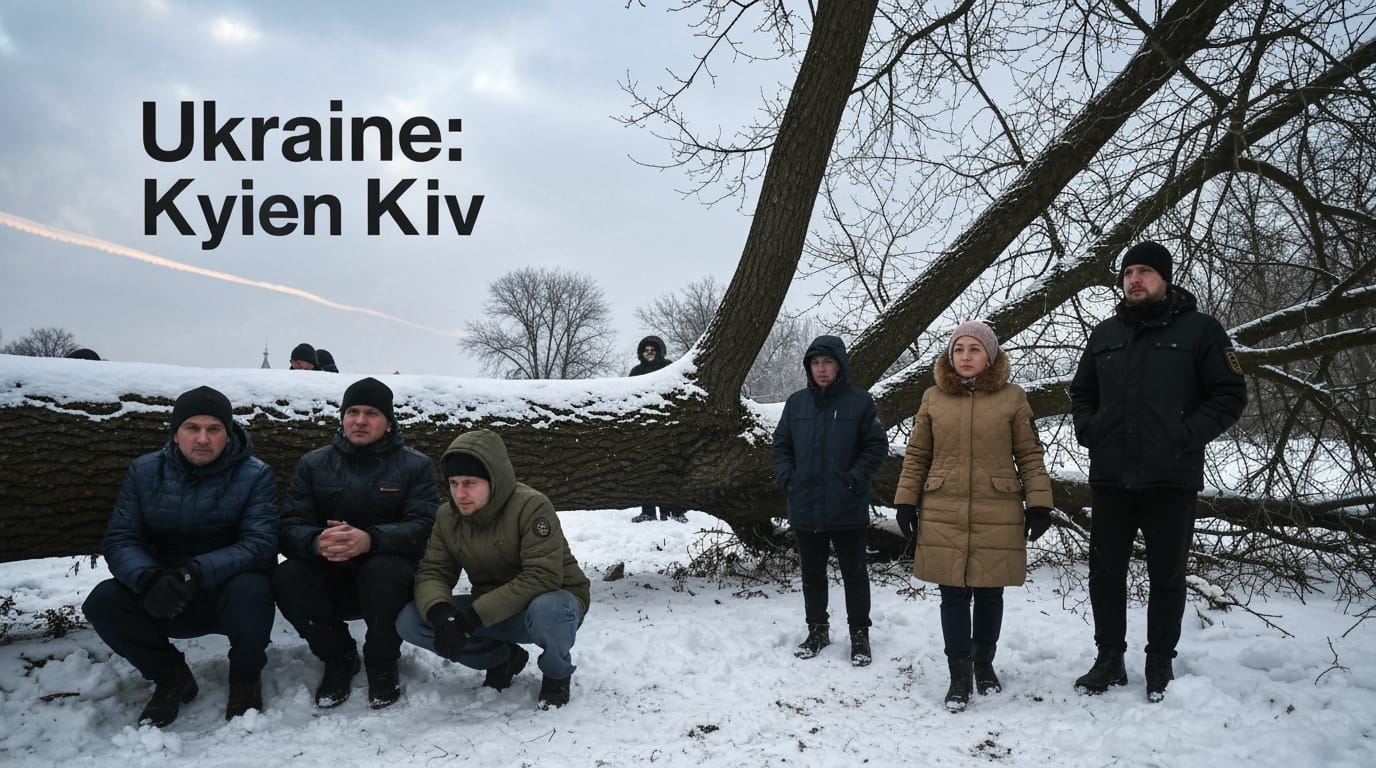
Kyiv, Ukraine – Russia launched a fresh wave of missile and drone strikes against Ukraine's capital, Kyiv, and other major cities on February 3, 2026, ending a brief period of reduced attacks and once again plunging residents into crisis amidst sub-zero temperatures. The coordinated assault targeted residential areas and vital infrastructure, inflicting damage and injuries as the harsh winter conditions continue to test the resilience of the Ukrainian population.
The attacks, involving ballistic missiles, Kh-22/32 cruise missiles, and various attack drones, struck Kyiv in the early hours, with explosions reported across the city. Several apartment buildings sustained damage, and an educational institution in the Dniprovskyi district was hit. Emergency services reported at least three people wounded in the capital following the overnight offensive. Beyond Kyiv, cities such as Kharkiv, Dnipro, and Sumy also came under attack, with reports indicating deliberate targeting of energy infrastructure. This resurgence in hostilities marks the end of a reported temporary reprieve in strikes on Kyiv, which had been in place until February 1.
The Resumed Onslaught: A Freezing February Night
The night of February 3 saw Kyiv rocked by a "massive combined attack" as Russian forces utilized a mix of advanced weaponry. Witnesses described loud explosions as air defense systems engaged incoming threats. Residential high-rise buildings and an educational facility in Kyiv's Dniprovskyi district were among the structures damaged, alongside an outbuilding in the Desnyanskyi district. Images and reports detailed flames consuming an apartment on an upper floor of a Kyiv block, while a fire was also reported at a gas station. The head of Kyiv's military administration, Tymur Tkachenko, noted the deliberate timing, stating that "Russians chose a freezing February night to launch another massive strike on Kyiv." Temperatures in Kyiv were anticipated to drop to approximately -24°C (-11°F) by morning, intensifying the threat posed by damaged heating systems. In Kharkiv, where temperatures plunged to -23°C, similar attacks targeted energy infrastructure, resulting in heating cuts for more than 800 high-rise buildings. The mayor of Kharkiv, Ihor Terekhov, stated the objective was "to cause maximum destruction and leave the city without heat in severe cold."
Weaponizing Winter: A Sustained Strategy
The renewed strikes underscore a consistent pattern of Russian forces targeting Ukraine's critical energy infrastructure, a strategy observers have described as "weaponizing winter." This tactic aims to undermine civilian morale and inflict severe hardship by disrupting essential services during the coldest months. Throughout January 2026, temperatures in Ukraine fluctuated between -15°C and -20°C (five to -4°F), creating a perilous environment for those without reliable heating and electricity.
Ukraine's energy grid has been significantly degraded by systematic attacks since the start of the full-scale invasion in February 2022. As of Fall 2025, the country's energy infrastructure was operating at roughly one-third of its pre-invasion generation capacity. This has led to widespread power outages, with Kyiv residents previously experiencing up to 16 hours a day without electricity. A single attack on January 20, 2026, left over 5,600 buildings in Kyiv without heating, and the recent February 3 attacks left almost 1,200 high-rise buildings in two districts without heat. The International Energy Agency warned in October 2025 that Ukraine's energy resilience was fragile, making the current winter "particularly perilous."
Civilian Resilience and Humanitarian Response
Despite the relentless attacks and severe weather, Ukrainian civilians have consistently demonstrated remarkable resilience. Efforts to cope with the disrupted services include utilizing "invincibility points" – community resilience hubs and heating tents providing warmth, power, and food during blackouts. Humanitarian organizations are actively distributing winter supplies and supporting heating systems across the country.
The humanitarian situation remains a critical concern, with international bodies stepping up aid efforts. The United Nations' 2026 Humanitarian Needs and Response Plan aims to provide essential assistance to over 4.1 million people. The European Union has also mobilized substantial financial support, providing an additional €50 million to Ukraine's state-owned energy company, Naftogaz, to support the country's energy system. This recent funding brings the EU's total support for emergency gas purchases for the winter of 2025-2026 to €977 million. UN officials highlighted the dire humanitarian impacts, noting that large-scale strikes push "the very means of winter survival to the brink." The absence of heating, electricity, and often water for extended periods has forced nearly half a million residents to flee Kyiv, further exacerbating displacement challenges.
Geopolitical Context and Ongoing Conflict
The resumption of intense strikes on Kyiv follows a period during which Russian President Vladimir Putin reportedly agreed to a temporary halt at the request of former U.S. President Donald Trump, effective until February 1. This brief "truce" coincided with ongoing trilateral talks between Russia, Ukraine, and the U.S. aimed at finding a diplomatic resolution to the conflict. However, the February 3 attacks signaled the unequivocal end of any such pause, reinforcing the volatile nature of the conflict.
The broader conflict continues to exact a heavy toll, with a recent study from the Center for Strategic and International Studies (CSIS) indicating that combined Russian and Ukrainian military casualties could reach 2 million by spring 2026. While the direct civilian death toll is estimated to be nearly 15,000 since February 2022, UN monitors acknowledge the actual figure is likely much higher. Despite the immense pressure, public opinion in Ukraine, as of late January 2026, shows that Russian attempts to create a humanitarian catastrophe have not significantly impacted the will to resist, with a majority determined to continue fighting.
As Ukraine navigates its fourth winter of full-scale war, the renewed missile and drone attacks on Kyiv and other cities serve as a stark reminder of the ongoing humanitarian crisis. The deliberate targeting of civilian infrastructure during extreme cold presents a severe challenge, yet the collective efforts of the Ukrainian people and international support aim to mitigate the devastating impact and maintain essential services. The coming weeks of winter will undoubtedly continue to test the endurance of a nation striving to survive and recover amidst relentless aggression.


