Left Party Stages Unexpected Comeback in German Elections
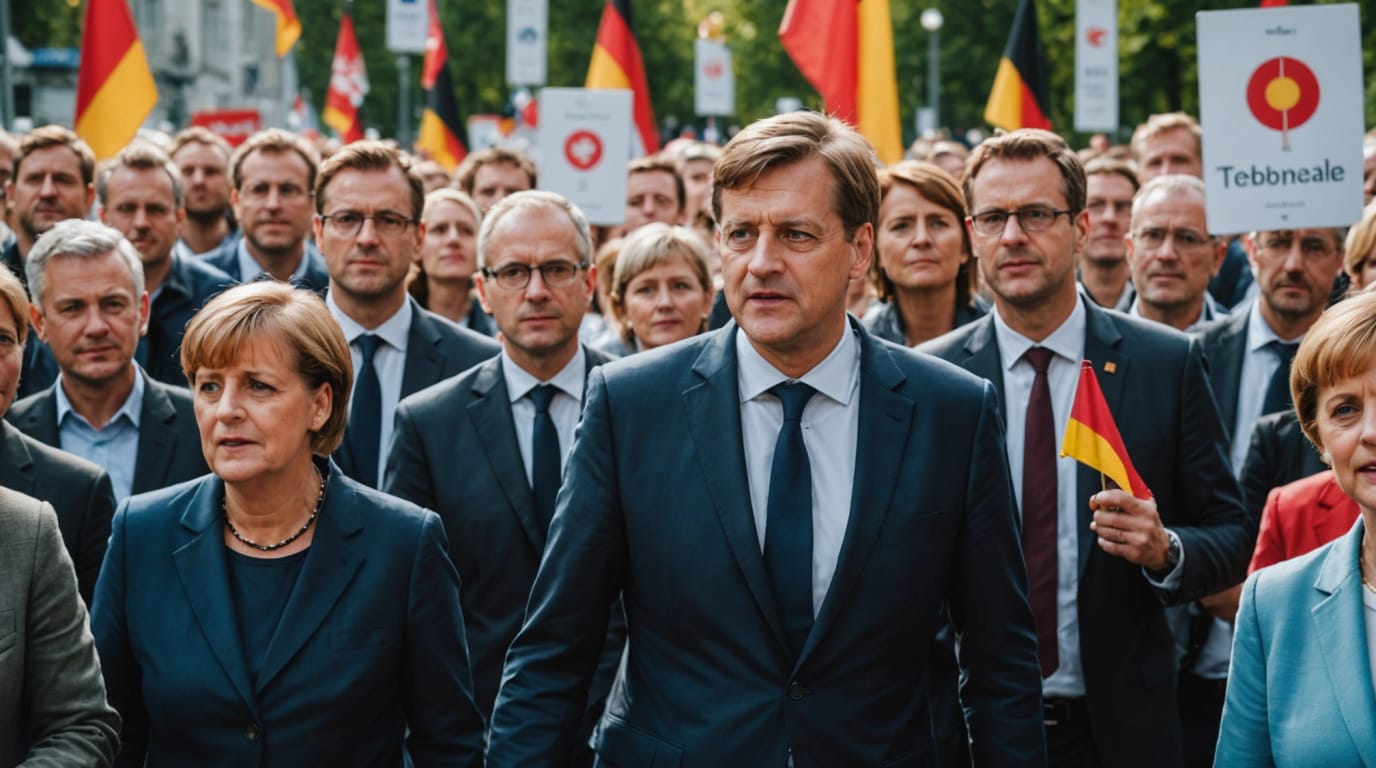
BERLIN – In a surprising turn of events, Germany's Left Party (Die Linke) defied expectations and achieved a significant resurgence in the recent national elections. After teetering on the brink of political irrelevance, the party garnered enough votes to secure representation in parliament, exceeding initial forecasts and injecting a renewed sense of purpose into the German left-wing political landscape.
The Left Party's comeback is particularly noteworthy considering the broader political context of the election. While the far-right Alternative for Germany (AfD) made substantial gains, solidifying its position as a major force, the Left Party's resurgence demonstrates a more complex picture of the German electorate. The party's success highlights the enduring appeal of left-wing policies, particularly among younger voters, and signals a potential shift in the dynamics of German politics.
A Surge Against the Odds
Heading into the election, many observers predicted a dismal outcome for the Left Party. Beset by internal divisions and struggling to connect with voters, the party faced an uphill battle to clear the 5% threshold required for parliamentary representation. However, in the final weeks of the campaign, the Left Party experienced a surge in support, fueled by a combination of factors.
One key element was the party's appeal to young voters. With its progressive stance on social issues, migration, and economic inequality, the Left Party resonated with a demographic increasingly concerned about these issues. A savvy social media campaign further amplified the party's message, allowing it to reach a wider audience and mobilize young supporters.
Capitalizing on Political Polarization
The Left Party also benefited from the increasing polarization of German politics. As the AfD gained traction with its anti-immigration rhetoric and nationalist agenda, the Left Party positioned itself as a clear alternative, championing inclusivity, social justice, and international cooperation. This strategy proved effective in attracting voters disillusioned with the mainstream parties and seeking a more radical vision for the future.
Furthermore, a controversial parliamentary motion put forward by the Christian Democratic Union (CDU), calling for stricter border controls and the rejection of migrants, inadvertently boosted the Left Party's standing. The AfD's support for the motion allowed the Left Party to paint their political rivals as being aligned with the far right, further solidifying its position as the primary voice of opposition to anti-immigrant sentiment.
Policy Positions and Voter Appeal
The Left Party's platform centers on a number of key policy positions that appeal to specific segments of the German electorate. These include:
- Social Justice: The party advocates for policies aimed at reducing income inequality, strengthening social safety nets, and expanding access to education and healthcare.
- Migration: The Left Party supports a welcoming approach to immigration, advocating for the rights of refugees and asylum seekers.
- Economic Reform: The party calls for increased taxes on corporations and wealthy individuals, as well as greater regulation of the financial sector.
- Peace and Disarmament: The Left Party is critical of Germany's military spending and advocates for a more peaceful foreign policy.
These positions, combined with the party's focus on issues such as climate change and affordable housing, have helped it to attract a diverse coalition of voters, including young people, students, low-income workers, and social activists.
Implications for German Politics
The Left Party's comeback has significant implications for the future of German politics. With a renewed presence in parliament, the party will be able to exert greater influence on policy debates and hold the government accountable. It is likely to focus on issues such as social inequality, climate change, and migration, pushing for more progressive policies and challenging the status quo.
The party's resurgence also raises questions about the future of the German left. The Social Democrats (SPD), traditionally the dominant force on the left, have seen their support erode in recent years. The Left Party's success suggests that there is still a significant demand for left-wing policies in Germany, but that the SPD may need to adapt its platform and strategy to remain competitive.
Challenges Ahead
Despite its recent success, the Left Party still faces significant challenges. Internal divisions remain a persistent problem, and the party will need to find ways to bridge the gap between its various factions if it is to maintain its momentum. The party also faces the challenge of appealing to a broader range of voters beyond its traditional base.
Furthermore, the rise of the AfD poses a significant threat to the Left Party's position as the primary voice of opposition to right-wing extremism. The two parties hold fundamentally different views on issues such as immigration and national identity, and the Left Party will need to effectively counter the AfD's narrative if it is to win over voters who are concerned about these issues.
A New Chapter for the German Left
The Left Party's unexpected comeback marks a new chapter for the German left. While the challenges ahead are considerable, the party has demonstrated its resilience and its ability to connect with voters who are seeking a more progressive vision for the future. Whether the Left Party can capitalize on this momentum and establish itself as a major force in German politics remains to be seen, but its resurgence has undoubtedly injected a new sense of hope and possibility into the country's political landscape.


