London Streets Witness Massive Anti-Immigration Demonstration Amid Heightened Tensions
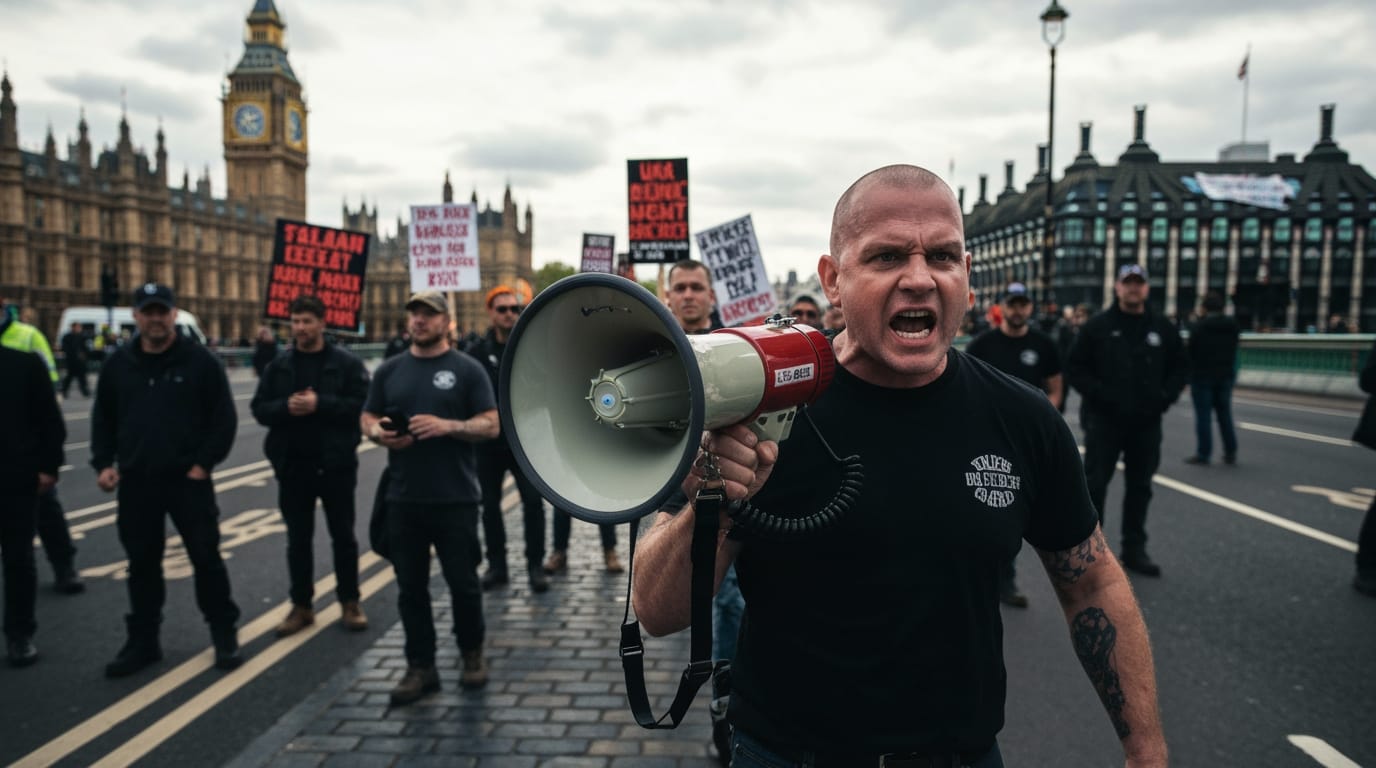
Central London today became the focal point of a significant anti-immigration protest, organized by far-right activist Stephen Yaxley-Lennon, widely known as Tommy Robinson, under the banner of "Unite the Kingdom." The demonstration, which saw thousands converge on the capital, unfolded amidst a heavy police presence and concurrent counter-protests, underscoring deep divisions within British society regarding immigration policy and national identity. The event follows a similar large-scale rally in September 2025, which drew an estimated 150,000 participants and led to clashes and multiple police injuries.
Thousands Converge in Central London
Thousands of demonstrators, many waving Union Jack flags and St. George's Crosses, marched through central London on Saturday, May 16, 2026, as part of the "Unite the Kingdom" rally. The protest, organized by prominent far-right figure Tommy Robinson, primarily voiced strong anti-immigration sentiments, with participants carrying placards featuring slogans such as "Stop the boats" and "Send them home". The marchers, who journeyed to London by various means including trains and coaches, gathered to express their discontent with current immigration levels and government policies. The route took them through key areas of the city, culminating near significant governmental landmarks. Organizers had encouraged a peaceful demonstration, though concerns over potential disorder remained high, especially given past incidents. Some attendees also displayed American and Israeli flags and wore "Make America Great Again" hats, signaling broader alliances and ideological influences.
The Driving Force: Tommy Robinson and the Far-Right Agenda
At the heart of today's demonstration was Stephen Yaxley-Lennon, also known as Tommy Robinson, a figure long associated with anti-Islam and anti-immigrant activism in Britain. Robinson, a co-founder and former leader of the English Defence League, has consistently framed his activism as a defense of free speech and British patriotism, often rejecting the "far-right" label attributed to him. His "Unite the Kingdom" rallies serve as a platform to amplify concerns about migration, which he argues threatens national identity and existing social structures.
The rhetoric at these events often includes claims that migrants possess more legal rights than British citizens and that the nation's cultural values are under threat. Influencers and far-right politicians from across Europe have also lent support, with some articulating "great replacement" theories, suggesting that European populations are being supplanted by people from other cultures. This narrative resonates with a segment of the British population expressing public anger over the significant number of migrants crossing the English Channel in small boats annually and broader immigration policies. While other far-right groups, such as Patriotic Alternative, also promote white nationalist ideologies and actively campaign against what they term the "replacement and displacement" of white British people, Robinson's rallies often attract a wider array of individuals who may not identify with specific extremist factions but share anti-immigration sentiments.
A Divided City: Counter-Protests and Public Response
The anti-immigration rally did not proceed without opposition. Counter-protests, primarily organized by groups like Stand Up To Racism, gathered concurrently, expressing solidarity with refugees and condemning far-right ideology. These counter-demonstrators carried signs advocating for "refugees welcome" and "smash the far right," often chanting to express their opposing views. Police maintained a significant presence to keep the two groups separated and prevent clashes, a measure deemed essential given the potential for conflict.
Beyond the immediate protests, the event stirred considerable political and community reactions. Prime Minister Keir Starmer accused the organizers of "peddling hate and division, plain and simple," underscoring the political sensitivity surrounding such demonstrations. Britain's largest Muslim group issued warnings to its community members to avoid central London, citing concerns that previous events had featured "anti-Muslim rhetoric and incidents of offensive chanting". The concurrent presence of a pro-Palestinian rally on the same day further complicated the policing operation and highlighted the multifaceted nature of public dissent in London. The broader societal context includes an ongoing debate over migration, with concerns over asylum seekers significantly impacting public opinion and boosting the profile of parties like Reform UK, despite their leader Nigel Farage distancing himself from Robinson.
Policing a Tense Day
Law enforcement authorities prepared for one of their most extensive public order operations in recent memory to manage today's events. The Metropolitan Police deployed approximately 4,000 officers, including reinforcements from outside the capital, utilizing resources such as horses, dogs, drones, and helicopters. Police officials emphasized their commitment to upholding lawful protest rights while asserting a robust approach to any incidents or offenses.
The preparations were informed by the experience of previous rallies, particularly the September 2025 "Unite the Kingdom" event, where police estimated turnout between 110,000 and 150,000 people. That protest saw clashes with officers, resulting in 26 police injuries and 24 arrests, with further suspects sought after the event. Authorities also took pre-emptive measures, including barring 11 individuals described as "foreign far-right agitators" from entering the UK to address the protest. By early afternoon today, police reported making 11 arrests for various offenses, as the operation continued to unfold. The sheer scale of the policing effort underscored the potential for unrest and the complexities of managing competing demonstrations in a densely populated urban environment.
Conclusion: Britain's Enduring Immigration Debate
Today's large-scale anti-immigration protest in London serves as a potent reminder of the deep and often volatile divisions shaping contemporary British society. Organized by Tommy Robinson, the "Unite the Kingdom" rally brought thousands to the streets, giving voice to anxieties over immigration levels and a perceived erosion of national identity. The event, while emphasizing "patriotic" themes, also highlighted the presence of underlying extremist narratives and the potential for public disorder.
The significant police deployment and the presence of organized counter-protests underscore the ongoing tension between differing visions for Britain's future. The political landscape, marked by public anger over irregular migration and the rising influence of anti-immigration parties, indicates that this debate is far from settled. As the UK navigates complex demographic shifts and economic pressures, events such as today's demonstration not only reflect existing societal fractures but also contribute to the ongoing national conversation about identity, community, and the fundamental values that define modern Britain. The call from some for a "cultural revolution" and the Prime Minister's assertion that the rise of the far-right represents "a fight for the soul of this country" illustrate the profound stakes involved.


