Long Island Rail Road Grinds to Halt as Workers Initiate Historic Strike, Crippling Region
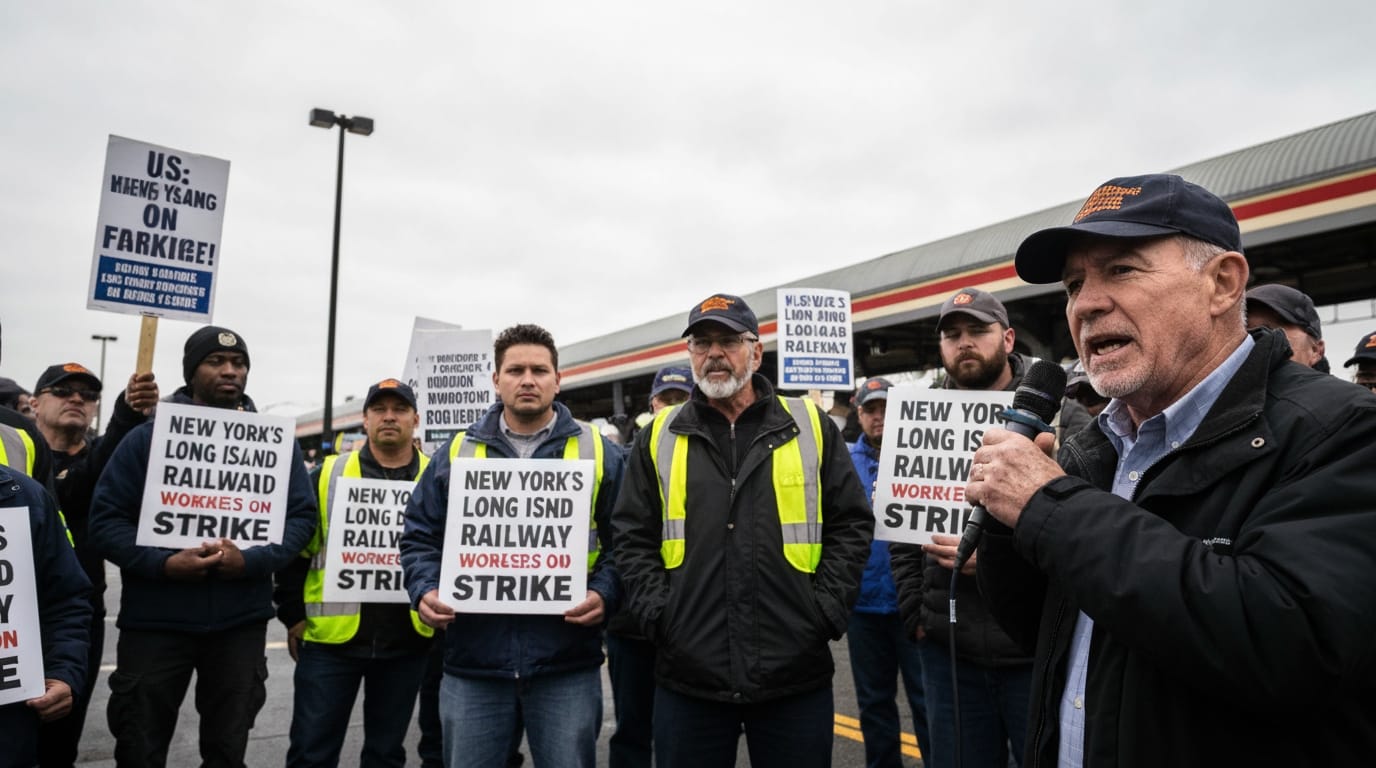
NEW YORK, NY – Long Island Rail Road (LIRR) operations, serving as the lifeblood for hundreds of thousands of daily commuters, ceased early Saturday morning as five labor unions representing approximately 3,500 workers initiated a strike after failing to reach a new contract agreement with the Metropolitan Transportation Authority (MTA). This walkout marks the first such widespread disruption for the nation's busiest commuter rail system in 32 years, plunging the New York metropolitan area into an unprecedented transportation crisis.
The strike commenced at 12:01 a.m. Saturday, May 16, following the breakdown of marathon negotiations that extended late into Friday night. Both sides emerged from talks pointing fingers, with union officials stating they remained "far apart" and the MTA accusing unions of prioritizing excessive demands over public service. The immediate impact is the paralysis of a system that transports nearly 300,000 passengers each weekday, leaving commuters scrambling for alternative, often inadequate, transportation options.
Standoff Over Wage Hikes and the Crucial Fourth Year
At the heart of the contentious dispute lies a disagreement over wage increases, specifically for the fourth year of a proposed new contract. While the MTA and the unions had reportedly agreed on terms for the first three years, the sticking point centered on the final year's pay hike. Unions involved in the strike, including the Brotherhood of Locomotive Engineers and Trainmen, Brotherhood of Railroad Signalmen, International Association of Machinists, International Brotherhood of Electrical Workers, and Transportation Communications Union, demanded a 5% raise for this critical year. In contrast, the MTA offered a 3% increase, with the possibility of reaching 4.5% if the unions conceded on certain work rule changes.
MTA officials have argued that accepting the unions' 5% demand would set a costly precedent for other union contracts, potentially necessitating an increase in systemwide fares, including for subways and buses, by as much as 8% in 2027. MTA Chairman Janno Lieber stated that the agency had offered "everything they said they wanted in terms of pay," implying the unions were predetermined to strike. Union representatives, however, have countered that the proposed 3% raise is insufficient given the rising cost of living on Long Island and highlighted that their members have gone years without raises during the bargaining process. They dismissed the MTA's alternative proposals as a "gimmick."
Commuter Chaos: A Region Scrambles for Alternatives
The cessation of LIRR service has immediate and far-reaching consequences for the vast number of individuals who rely on the railway for their daily commute. With 126 stations spanning Nassau and Suffolk counties, Queens, Brooklyn, and Manhattan, the LIRR is an indispensable link for suburban residents traveling into New York City for work, appointments, and leisure.
The MTA has activated contingency plans, which include limited shuttle bus services from select Long Island stations to subway transfer points in Queens. These shuttle buses are operating during peak commuting hours, connecting locations like Bay Shore, Hempstead Lake State Park, Hicksville, Mineola, Huntington, and Ronkonkoma to the A and F subway lines. Additionally, commuters are encouraged to utilize NICE Bus services in Nassau County for connections to subway stations.
Despite these efforts, officials acknowledge that there is no substitute for the full capacity of the LIRR. The Metropolitan Transportation Authority (MTA) and Governor Kathy Hochul have urged Long Islanders to work remotely if possible, warning of severe traffic congestion on already-choked highways and significantly longer commute times. Many commuters express apprehension, with one electrician noting, "It's gonna be such a nightmare trying to get in." Rob Perez, a Long Beach resident, voiced concerns about unused multi-trip tickets, while Miles Cary, who commutes to Manhattan four days a week, admitted he had "no idea" how he would get to work. The strike's timing also impacts sports fans attempting to attend NBA playoff games or MLB matchups in Manhattan over the weekend.
Economic Fallout: Millions Lost Daily
The economic ramifications of the LIRR strike are substantial and immediate. New York State Comptroller Thomas P. DiNapoli estimated that a work stoppage could cost the metropolitan area's economy up to $61 million per day. The Long Island Association business group provided an even higher estimate, suggesting daily losses could reach $70 million. These figures underscore the LIRR's critical role as an "economic lifeline for Long Island and a critical artery for the entire downstate economy."
The financial impact is expected to be wide-ranging, affecting worker productivity, retail sales, and the vital tourism sector. Businesses, both large and small, that rely on commuter traffic and access to Manhattan are bracing for significant losses. Diana Lazo, a retail manager near an LIRR station, expressed concerns about decreased sales and the ability to cover overhead costs, noting that half of her customers are commuters. The tourism industry, particularly destinations like Long Beach and Fire Island that attract visitors via train, is also expected to suffer, especially as the summer season approaches.
A History of Labor Disputes: Echoes of the Past
While the current strike marks a significant event, the LIRR has a history of labor disputes. The last LIRR strike occurred in 1994 and lasted for two days, stemming from disagreements over work rules and pay rates. Prior to that, an 11-day shutdown took place in 1987.
In the lead-up to the current situation, President Donald Trump's administration intervened in September 2025 and again in January 2026, establishing emergency boards to mediate negotiations and avert a work stoppage. These interventions temporarily delayed the strike, providing a window for an agreement that ultimately proved elusive.
Accusations, Uncertainties, and the Path Forward
As the strike begins, both the unions and MTA management have traded accusations of bad faith bargaining. Kevin Sexton, National Vice President of the Brotherhood of Locomotive Engineers and Trainmen, stated that unions showed willingness to "move down a little bit" from their demands, but the MTA introduced an "eleventh hour" proposal concerning healthcare contributions for new employees. Meanwhile, MTA Chairman Janno Lieber accused unions of always intending to strike.
Further complicating the situation, the LIRR had warned unions that probationary employees who participate in the strike would face termination. Union leaders called this a "troubling" threat, with an MTA board member acknowledging it as an "escalation of tactics."
With no new negotiations currently scheduled and both sides stating they are "far apart," the duration of the strike remains uncertain. Governor Kathy Hochul has publicly criticized the unions' decision, calling it "reckless" and highlighting the potential for higher fares and internal conflict among workers. The unprecedented disruption leaves hundreds of thousands of New Yorkers in limbo, hoping for a swift resolution to restore essential commuter services.


