Lufthansa Faces Renewed Pilot Strikes as Labor Tensions Mount
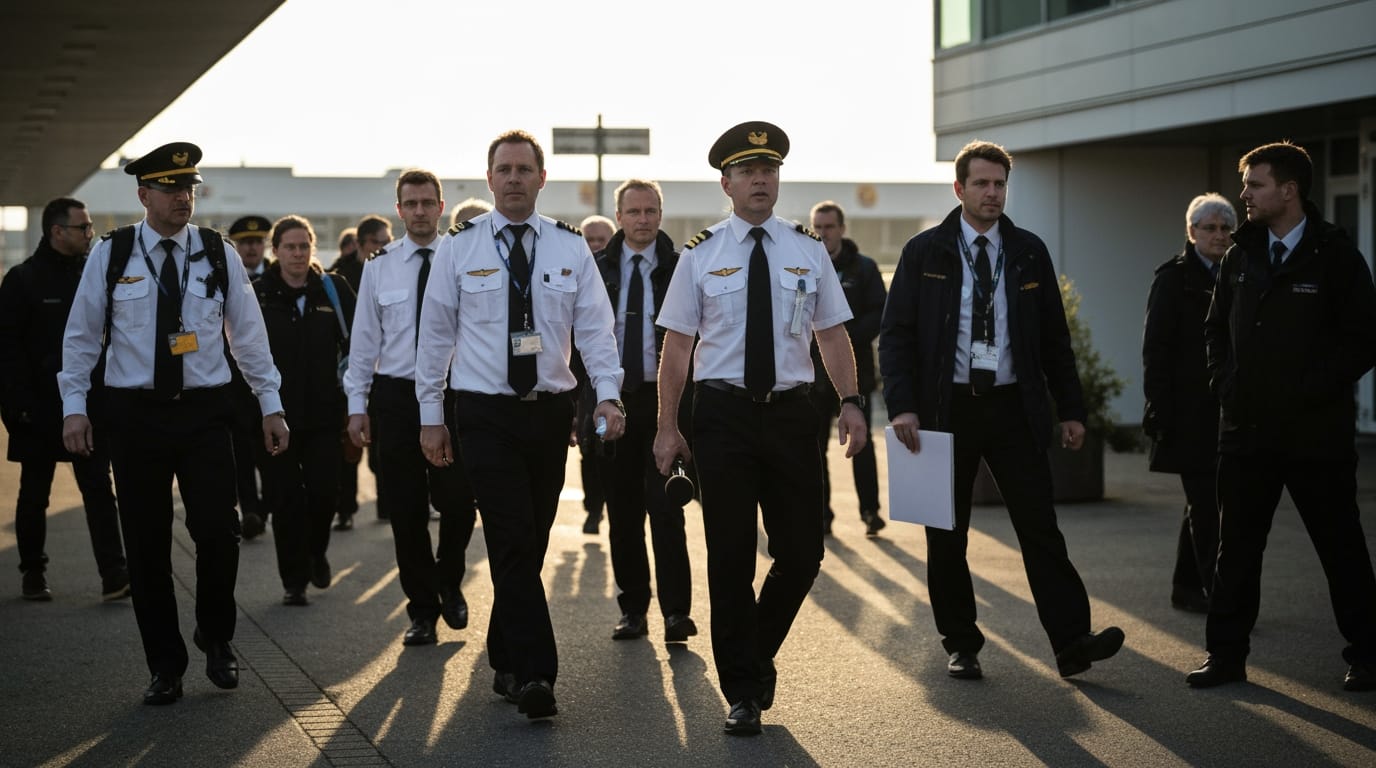
Frankfurt, Germany – German airline giant Lufthansa is once again grappling with significant industrial action as its pilots' union, Vereinigung Cockpit (VC), has orchestrated and threatened multiple two-day strikes, exacerbating travel chaos for passengers and placing immense pressure on the carrier's operations. The latest such action by VC pilots took place from March 12 to March 13, 2026, following a "warning strike" in February, and another two-day walkout is announced for April 13-14, 2026, underscoring deeply entrenched disagreements over pay, pension schemes, and working conditions that continue to plague the airline.
The repeated disruptions highlight a period of sustained labor unrest across the Lufthansa Group, challenging the airline's stability and its ability to fully capitalize on a recovering travel market. With tens of thousands of passengers affected, these strikes have far-reaching implications for individual travel plans, Germany's economic supply chains, and the broader aviation industry.
Escalating Tensions and the March Walkout
The 48-hour pilot strike that commenced on March 12, 2026, impacted departures from major German airports, including Lufthansa's critical hubs in Frankfurt and Munich. The industrial action, called by the Vereinigung Cockpit (VC) union, specifically targeted the mainline passenger airline, Lufthansa Cargo, and the regional subsidiary Lufthansa CityLine, although CityLine pilots participated for only one day of the strike. This particular stoppage marked a significant escalation in the ongoing dispute, following a one-day "warning strike" on February 12, 2026, which led to the cancellation of approximately 800 flights and stranded an estimated 130,000 passengers.
Lufthansa responded by implementing a special flight schedule, managing to operate more than 50% of its planned services and around 60% of its long-haul flights during the March 12-13 strike. Efforts to mitigate disruption included deploying larger aircraft on select routes and utilizing support from other airlines within the broader Lufthansa Group, such as Austrian Airlines, SWISS, and Eurowings, which were not affected by the pilots' action. Lufthansa Cargo operations also aimed to reach over 80% of normal capacity. Despite these measures, significant cancellations and delays were unavoidable, particularly at the Frankfurt and Munich hubs, with thousands of travelers forced to alter their plans.
A Recurring Pattern of Industrial Action
The current wave of pilot strikes is not an isolated incident but rather part of a longer history of labor disputes between Lufthansa and its pilot unions. In September 2022, a similar two-day strike called by VC led to the cancellation of around 800 flights from Frankfurt and Munich in a single day, affecting numerous passengers at the end of the summer vacation period. At that time, the union sought a 5.5% pay raise and an automatic above-inflation increase in 2023, along with a new pay and holiday structure that Lufthansa estimated would increase staffing costs by approximately 40%.
The airline has faced multiple industrial actions from various employee groups in 2026 alone. Just prior to the most recent pilot strike, cabin crew represented by the UFO union staged a walkout on April 10, 2026, impacting flights from Frankfurt and Munich and causing hundreds of cancellations. This series of strikes underscores a challenging environment for Lufthansa, as different employee segments voice their dissatisfaction with current compensation and working conditions.
Core Grievances and Stalled Negotiations
At the heart of the current pilots' dispute are fundamental disagreements over pension provisions and overall compensation. For mainline Lufthansa and Lufthansa Cargo pilots, VC's primary concern revolves around employer pension contributions. The union criticizes Lufthansa's transition from a guaranteed payout pension system to a capital market-financed model, arguing that it significantly reduces the promised pension levels and transfers financial risks to employees. CityLine pilots, meanwhile, are engaged in a separate, but related, pay-related dispute, having previously rejected what they deemed an unacceptable offer from management.
Negotiations between VC and Lufthansa have been ongoing for months, with the union asserting that management has failed to present a "negotiable offer." VC President Andreas Pinheiro stated that while the union would have preferred to avoid further escalation, a strike remains a "last resort" when negotiations fail to yield satisfactory progress. Lufthansa, for its part, has labeled the strikes as "incomprehensible" and "disproportionate," urging a return to dialogue to find lasting solutions. A key point of contention in recent negotiations was Lufthansa's demand for an absolute no-strike clause for other collective bargaining issues if salary increases were agreed upon, a condition rejected by the union.
Broader Implications for Travel and the Airline Industry
The repeated strikes by Lufthansa pilots carry substantial implications beyond immediate flight cancellations. For passengers, the disruption means significant inconvenience, missed connections, and altered travel plans, often occurring at short notice. Under EU Regulation 261/2004, strikes by an airline's own staff are generally not considered extraordinary circumstances, meaning affected passengers may be entitled to compensation in addition to rebooking or refunds.
Economically, the strikes disrupt crucial supply chains, especially through the grounding of Lufthansa Cargo flights, which are vital for Germany's just-in-time production industries, such as automotive and electronics. The costs associated with rebookings, hotel accommodations, and potential compensation payments also place a direct financial burden on Lufthansa's balance sheet.
Conclusion: A Volatile Future for Lufthansa's Labor Relations
The ongoing disputes between Lufthansa and its pilots, as well as other employee groups, paint a picture of volatile labor relations within one of Europe's largest airline groups. While Lufthansa continues to implement contingency plans to mitigate the impact of strikes, the fundamental disagreements over compensation, pensions, and working conditions persist. The call for another two-day pilot strike in mid-April signals that a swift resolution remains elusive. Both the airline and its unions face the challenge of finding common ground to ensure long-term stability and minimize the recurring disruption to passengers and operations, as the ripple effects of each strike extend across the aviation sector and beyond.


