UK Halts Historic Chagos Islands Deal Amid U.S. Opposition, Jeopardizing Decades-Long Dispute Resolution
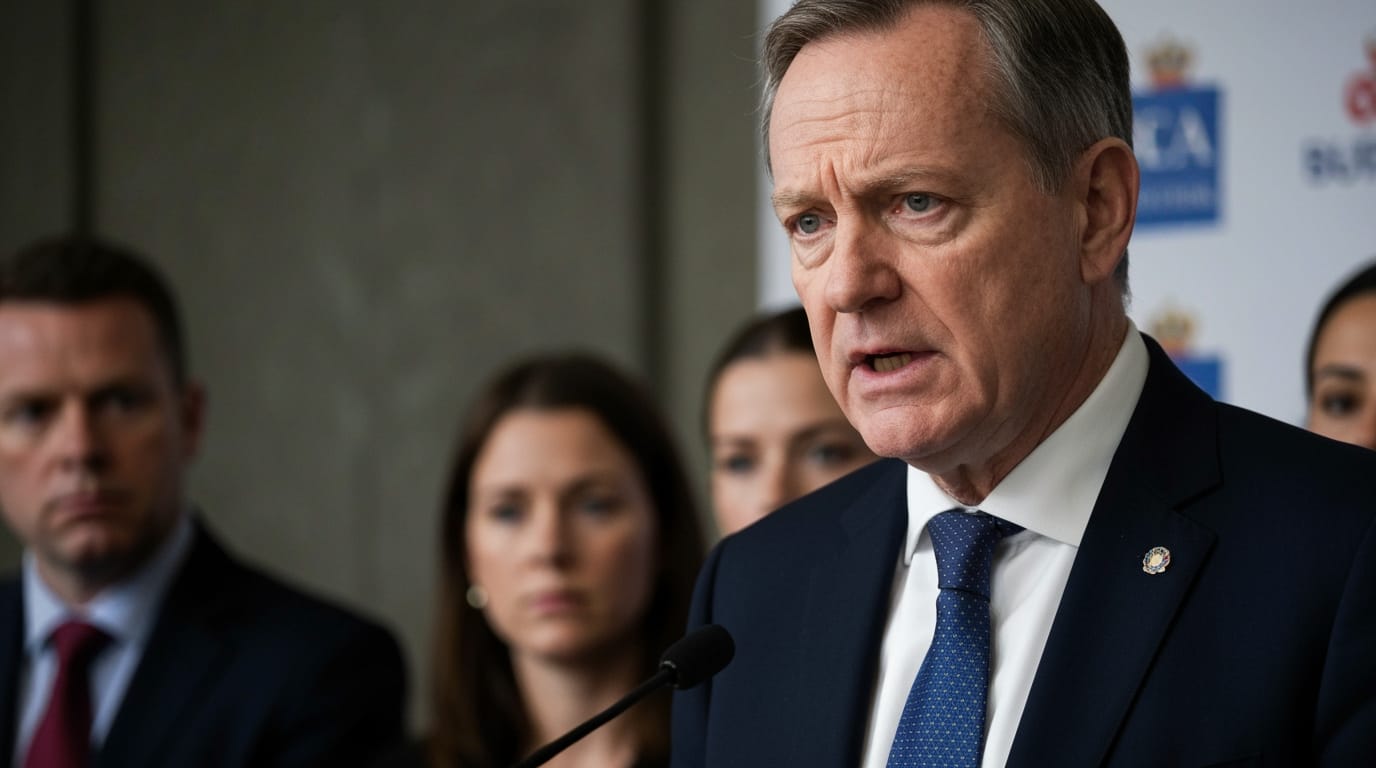
London, UK – A landmark agreement intended to resolve the protracted dispute over the Chagos Islands and pave the way for their return to Mauritius has been placed on an "indefinite hold" by the United Kingdom government, primarily due to the sudden withdrawal of support from the United States. The legislative process to ratify the treaty in the UK Parliament reportedly ran out of time, a direct consequence of a shift in stance by U.S. President Donald Trump, who initially backed the deal but later denounced it as "an act of GREAT STUPIDITY." This latest development casts significant doubt on the future of the archipelago, including the crucial U.S. military base on Diego Garcia, and leaves the aspirations of displaced Chagossian islanders once again in precarious limbo.
The frozen deal, reached after years of intricate negotiations, aimed to transfer sovereignty of the Chagos Archipelago from the UK to Mauritius while safeguarding the continued operation of the joint UK-U.S. military facility on Diego Garcia through a 99-year lease. Proponents argued the agreement offered a pragmatic solution, acknowledging international legal judgments while preserving vital strategic interests. However, the unexpected U.S. withdrawal has forced London to pause the ratification process, underscoring the enduring geopolitical sensitivities surrounding this remote Indian Ocean territory.
A Deal Derailed by Shifting Sands
The agreement, formally signed on May 22, 2025, by then-UK Prime Minister Keir Starmer and Mauritian Prime Minister Navin Ramgoolam, represented a significant diplomatic achievement. Under its terms, Mauritius would assume sovereignty over the Chagos Islands, with the UK retaining a long-term lease for Diego Garcia, estimated to cost £101 million annually and a total projected cost of £3.4 billion over the initial 99-year period. Crucially, the deal also included provisions for a £40 million resettlement fund and the theoretical right for Chagossians to return to all islands except Diego Garcia.
However, the delicate balance struck in the negotiations crumbled following a public reversal by President Trump. After initially signaling his approval for the agreement in a meeting with Prime Minister Starmer in February 2025, Trump dramatically changed course in January 2026, publicly criticizing the deal. Reports suggest this abrupt shift may have been influenced by British reluctance to allow the U.S. to use the Diego Garcia base for preemptive strikes against Iran, leading to escalating tensions between Washington and London.
The UK government confirmed that the legislation required to enact the treaty was consequently stalled and will not be included in the next session of Parliament, which commences on May 13. While expressing frustration, British officials emphasized that ensuring the "long-term operational security" of the Diego Garcia base remains their paramount priority and articulated a desire to revive the agreement. This pause, however, has drawn a swift and critical response from Mauritius, which has reportedly threatened legal action against the UK over the delay, highlighting the deepening uncertainty surrounding the archipelago's future.
Decades of Displacement and Contested Sovereignty
The roots of the Chagos Islands dispute trace back to 1965, when the United Kingdom unilaterally detached the archipelago from Mauritius, then a British colony, to create the British Indian Ocean Territory (BIOT). This move, occurring three years before Mauritius gained independence, was undertaken to facilitate the establishment of a strategic joint UK-U.S. military base on Diego Garcia. The creation of BIOT directly contradicted United Nations resolutions prohibiting the dismemberment of colonial territories prior to independence.
Between 1967 and 1973, nearly 2,000 native Chagossians were forcibly removed from their homes on the islands, primarily Diego Garcia, and exiled to Mauritius and Seychelles to clear the way for the military installation. British officials initially denied that the islands had a permanent population, a claim later revealed to be false. The displacement of the Chagossians has been widely condemned as a grave human rights violation, leaving a legacy of intergenerational trauma and a persistent demand for the right of return.
International Scrutiny and Strategic Imperatives
Mauritius has consistently challenged the UK's sovereignty over the Chagos Archipelago since the 1980s, escalating its campaign through international legal and political forums. A pivotal moment arrived on February 25, 2019, when the International Court of Justice (ICJ) delivered an advisory opinion ruling, with 13 votes to 1, that the UK's administration of the Chagos Archipelago was unlawful. The ICJ concluded that the UK was obligated to end its administration "as rapidly as possible." This was followed by a United Nations General Assembly resolution in May 2019, which affirmed the Chagos Archipelago as an "integral part of the territory of Mauritius" and demanded the UK withdraw its colonial administration within six months. The resolution passed with overwhelming support, 116 states voting in favor, while only six, including the UK and U.S., voted against.
Despite these international pronouncements, the strategic importance of Diego Garcia to both the UK and the U.S. has remained a central factor in the dispute. The island serves as a critical military asset due to its unparalleled central location in the Indian Ocean, enabling power projection across the Middle East, South Asia, East Africa, and the Indo-Pacific. The base boasts an extensive airfield, a deep-water port, and advanced communication facilities, making it an indispensable hub for naval and air operations in various conflicts, including the Persian Gulf War, the wars in Afghanistan and Iraq, and recent strikes against Houthi targets in Yemen. Both London and Washington view its continued, unhindered operation as essential for regional and global security.
The Human Toll and Geopolitical Crossroads
For the Chagossian community, the indefinite halt to the deal prolongs decades of uncertainty and injustice. Many Chagossians, who were forced to live in "abject poverty" after their displacement, have ceaselessly campaigned for their right to return to their ancestral homeland and receive compensation. While the now-frozen deal offered the prospect of return to the outer islands, the logistics and feasibility of such resettlement remained subjects of considerable debate and concern, with the UK government itself admitting "very significant logistical challenges."
The community itself is not monolithic in its views. Some Chagossian groups, like those represented by Olivier Bancoult, supported the Mauritian government's efforts. However, others have expressed skepticism and even opposition to the agreement, accusing Mauritius of historical neglect and feeling excluded from the negotiating process. A recent attempt by four Chagossians to establish a permanent settlement on Île du Coin in February 2026, aimed at complicating the transfer, underscores the community's deep-seated desire for self-determination and recognition. The UN Committee on the Elimination of Racial Discrimination has also urged both the UK and Mauritius against ratifying the 2025 agreement, fearing it could "perpetuat[e] historical rights violations."
The political ramifications extend beyond the immediate parties. In the UK, opposition parties, including the Conservative Party and Reform UK, had voiced strong objections to the deal, citing concerns over the cost and potential security risks, particularly the prospect of increased Chinese and Russian influence in the region should the UK relinquish full control. The U.S. reversal, therefore, aligns with some of these domestic critiques.
The current impasse leaves the Chagos Islands entangled in a complex web of historical grievances, international legal obligations, critical strategic interests, and the profound human rights concerns of a displaced people. While the UK government hopes for a revival of negotiations, the future of the archipelago, the military base, and the Chagossians' long-awaited return remains profoundly uncertain, subject to the unpredictable currents of geopolitical shifts and domestic political will.


