Lula Upholds Rule of Law, Vetoes Bill Reducing Sentences for Coup Convicts
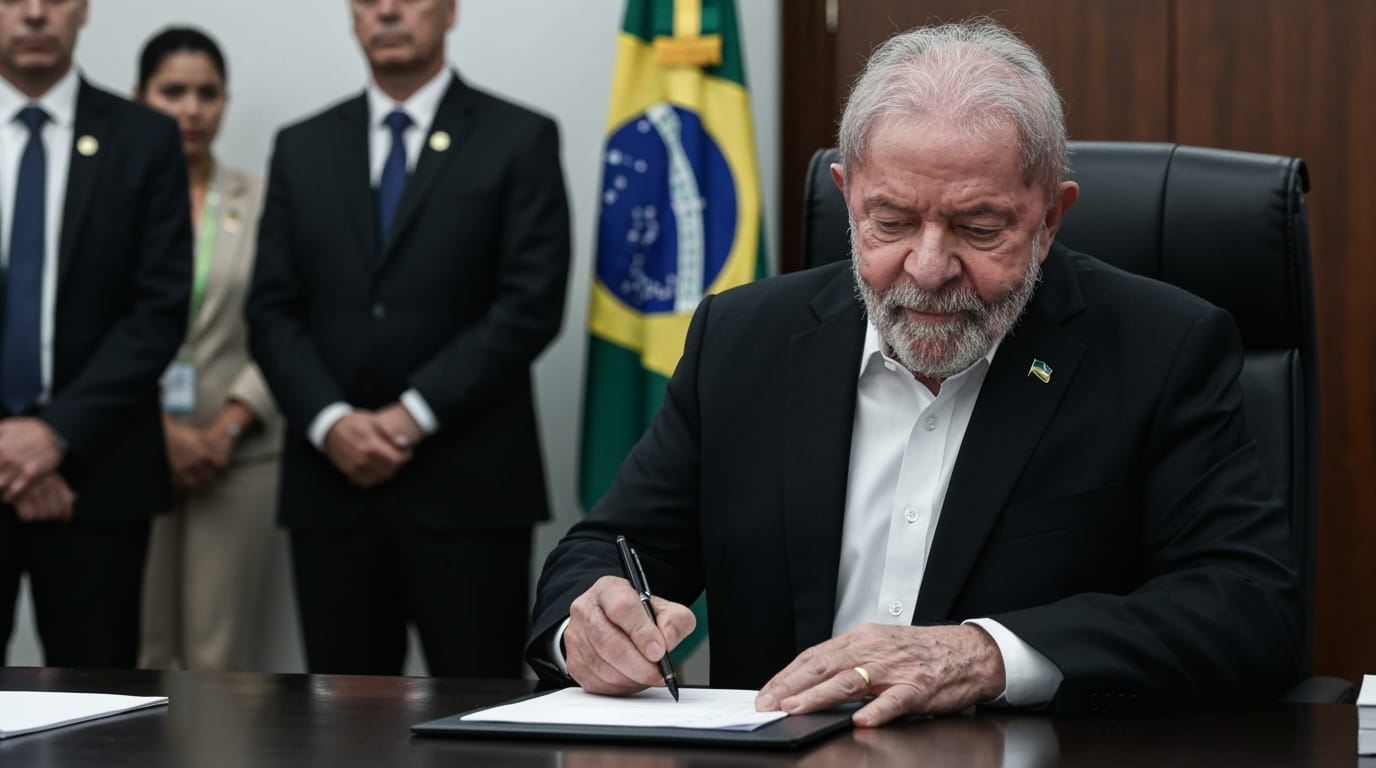
BRASÍLIA, Brazil – In a pivotal move underscoring his commitment to democratic integrity, Brazilian President Luiz Inácio Lula da Silva on Thursday vetoed a congressional bill that would have significantly reduced the prison sentences for individuals convicted of crimes against the nation's democratic institutions, including former President Jair Bolsonaro. The veto, announced on the third anniversary of the January 8, 2023, riots in Brasília, reaffirms the government's stance that those who sought to undermine Brazil's democracy must face the full weight of justice. The decision sets the stage for a potential legislative showdown, as Brazil's polarized Congress retains the power to override the presidential veto.
A Firm Stance on Democratic Accountability
President Lula's veto of the "dosimetry" bill (PL 2.162/2023) was delivered during a solemn ceremony commemorating the January 8, 2023, attacks, which saw thousands of Bolsonaro supporters invade and vandalize the presidential palace, Supreme Court, and Congress. Lula emphasized that the date is "etched in our history as the day of our democracy's victory" and a triumph "against those who tried to seize power through force, ignoring popular will expressed in the polls." He declared that "people who committed crimes against the Brazilian democracy will have to pay for their acts," explicitly rejecting any softening of penalties for such offenses. The President underscored the transparency and evidence-based nature of the Supreme Court's prosecutions, which have led to convictions for numerous participants in the attempted coup. This resolute action signals the government's determination to hold accountable those involved in efforts to subvert the democratic process, drawing a clear line against impunity.
The bill, which passed both the Chamber of Deputies and the Senate in December 2025, aimed to modify how criminal sentences are calculated and enforced. Its provisions would have altered sentencing rules for crimes against the democratic rule of law and coup attempts. Specifically, it sought to prevent courts from stacking penalties for crimes such as "coup d'état" and "violent abolition of the democratic rule of law" if committed in the same context, opting instead to apply only the harsher sentence with a variable increase. Furthermore, the legislation proposed reducing the minimum time prisoners would need to serve before qualifying for transfer to less restrictive facilities—from one-quarter to one-sixth of their sentence—and expanding opportunities for sentence reduction through activities like work and study, even for those under house arrest. For individuals not identified as orchestrators or financiers of the January 8 acts, the bill offered potential sentence reductions of one-third to two-thirds. Critics widely perceived these mechanics as designed to specifically benefit individuals already sentenced by the Supreme Court for their roles in the January 8 events, most notably former President Jair Bolsonaro.
Bolsonaro's Conviction and the Veto's Direct Impact
The veto carries significant weight for former President Jair Bolsonaro, who was convicted in September 2025 and sentenced to 27 years and three months in prison for plotting a coup aimed at overturning the results of the 2022 presidential election. Bolsonaro began serving his sentence in November 2025. Under the existing legal framework, he would be required to serve nearly seven years in a maximum-security facility before becoming eligible for transfer.
Had the vetoed bill become law, its impact on Bolsonaro's sentence would have been substantial. Legal analyses suggested it could reduce his overall prison term to approximately 20 years and eight months, with the period in the most restrictive facility potentially dropping to around two years and four months. Some estimates even projected his time in a closed regime could be cut to just over two years. Bolsonaro's legal team had already appealed his conviction, arguing the sentence was excessive and that the charges of abolishing the rule of law and attempting a coup should not be cumulative, as they arose from a single episode. His lawyers have also unsuccessfully sought house arrest on health grounds, citing various medical issues. Lula's veto eliminates this legislative avenue for a reduced sentence, ensuring Bolsonaro, and other convicted individuals, remain subject to the existing, stricter sentencing guidelines.
Political Chessboard: Congressional Maneuvers and Public Opinion
The journey of the "dosimetry" bill through Congress was marked by political contention, reflecting the deep divisions that continue to characterize Brazilian politics. Bolsonaro's allies and some centrist parties championed the bill, viewing it as a means to address what they described as "excessively harsh" sentences imposed by the judiciary. They argued that the legislation sought to correct perceived disproportionality in the penalties.
However, the bill faced strong opposition from the Lula government and the Supreme Court. Government-aligned lawmakers attempted to delay the vote in the Lower House, but their efforts were defeated. The Senate rapidly advanced the bill, prompting left-wing parties to challenge the legality of the process before the Supreme Court. Outside Congress, the bill's progression ignited protests in several major Brazilian cities, with social movements, labor unions, and leftist parties condemning it as an attempt to "rewrite Supreme Court convictions" and undermine accountability for the January 8 attacks.
With Lula's veto, the legislative process is not necessarily concluded. Brazil's Congress holds the authority to override a presidential veto with an absolute majority vote—requiring 257 votes in the Chamber of Deputies and 41 in the Senate. While such an override is plausible, analysts suggest it could be a risky political maneuver for lawmakers, particularly with general elections on the horizon. Even if Congress were to overturn the veto, legal experts, including Antonio José Teixeira Martins, an associate professor of criminal law at Rio de Janeiro State University, believe the Supreme Court could still strike down the law, a possibility he described as "quite significant." This complex interplay between the executive, legislative, and judicial branches highlights the ongoing institutional struggle in Brazil.
The Enduring Political Rift and Future Implications
The recent legislative battle is the latest chapter in the intense and often acrimonious political rivalry between Luiz Inácio Lula da Silva and Jair Bolsonaro, a dynamic that has profoundly shaped Brazil's recent history. Lula's narrow victory in the 2022 presidential election against Bolsonaro, who initially questioned the electoral results, exacerbated an already deeply polarized nation. Bolsonaro's subsequent actions, including allegations of trying to cling to power and his role leading up to the January 8, 2023, riots, led to his current legal challenges and conviction.
Lula's return to the presidency has focused on unifying the divided nation and rebuilding democratic institutions, often in direct opposition to policies and narratives promoted by the previous administration. The veto of the "dosimetry" bill stands as a powerful symbol of his government's commitment to safeguarding Brazil's democratic norms and ensuring accountability for past transgressions. The ongoing political struggle is expected to continue, particularly as Bolsonaro's son, Senator Flávio Bolsonaro, is anticipated to be a leading contender against Lula in the 2026 presidential race, further entrenching the rivalry.
In conclusion, President Lula's veto serves as a clear affirmation of judicial rulings and a strong message against political maneuvers perceived as attempts to dilute accountability for attacks on democratic institutions. While the possibility of a congressional override looms, the potential for Supreme Court intervention suggests that the legal and political saga surrounding the January 8 events and their perpetrators is far from over. This ongoing struggle reflects Brazil's foundational efforts to solidify its democratic principles and ensure that the rule of law prevails in the face of significant political challenges.


