Macron Makes Historic Visit to Post-Assad Syria Amid Fragile Transition
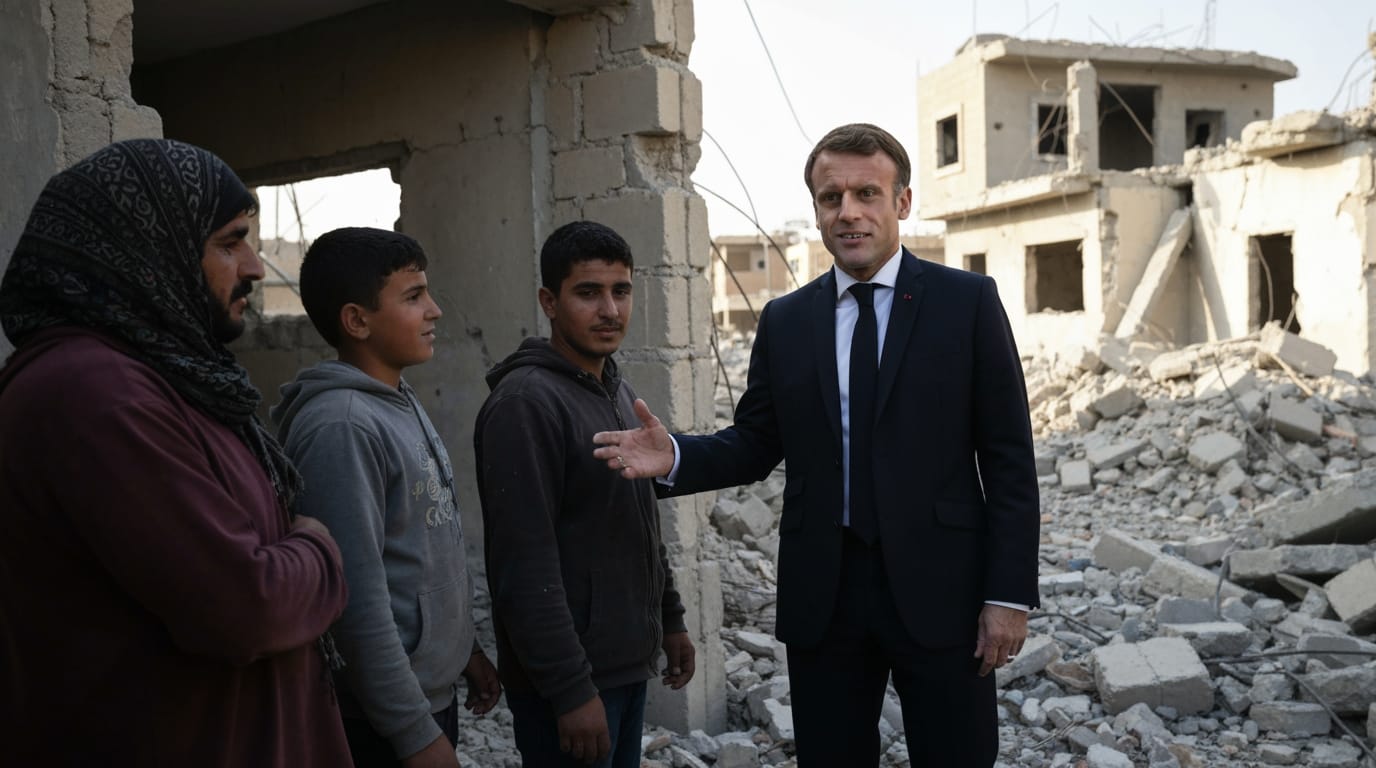
DAMASCUS, SYRIA – French President Emmanuel Macron arrived in Damascus on Monday, marking a landmark visit as the first major Western leader to step foot in Syria since the ouster of Bashar al-Assad some 18 months ago. The diplomatic overture signals a pivotal moment for a nation grappling with the immense challenges of reconstruction and reconciliation after more than a decade of civil war and a recent, dramatic shift in power. Macron's presence underscores a renewed international engagement with Syria’s interim government, led by President Ahmed al-Sharaa, whose administration is navigating a complex path toward stability and international recognition.
A New Chapter for Franco-Syrian Relations
President Macron’s arrival on July 6, 2026, follows the collapse of the Assad regime in December 2024, a development that irrevocably altered Syria’s political landscape. Macron was greeted at Damascus International Airport by Syrian Foreign Minister Asaad al-Shibani, signaling the official nature of the visit. The French President stated France's commitment to the Syrian people, expressing a desire for a sovereign, united, and diverse Syria that lives in peace with its neighbors. He emphasized the opening of a new chapter of stability and peace for the war-torn country. Macron's agenda includes high-level meetings with President al-Sharaa at the presidential palace, aimed at discussing regional security and exploring opportunities for business and investment. Accompanying Macron is a significant business delegation, including CEOs from major French companies like TotalEnergies and CMA CGM, highlighting the economic focus of the trip and potential French involvement in Syria’s arduous reconstruction efforts.
This visit is not Macron's first engagement with Syria's new leadership. In May 2025, Macron hosted President al-Sharaa in Paris, advocating for the lifting of longstanding sanctions on Damascus. Most of these sanctions have since been removed, paving the way for increased international interaction and potential economic partnerships.
Syria: Eighteen Months Post-Assad
The fall of Bashar al-Assad on December 8, 2024, following a swift offensive by rebel forces, ended over five decades of Ba'athist rule and ushered in a period of profound uncertainty and cautious hope. Ahmed al-Sharaa, formerly a leader within the Hayat Tahrir al-Sham (HTS) group, was appointed interim president in January 2025, and a new constitutional declaration followed in March 2025. While the interim government has made strides in establishing new authorities, Syria remains a nation in delicate transition. Territorial control remains disputed, with the interim forces primarily securing the west and major urban centers, while Kurdish-led Syrian Democratic Forces (SDF) and Turkish-backed Syrian National Army (SNA) retain influence in other regions.
The post-Assad era has been marked by a complex interplay of progress and persistent challenges. Humanitarian needs are immense, with a 2026 humanitarian appeal only 20 percent funded, impacting millions affected by ongoing displacement and infrastructure damage. Moreover, concerns persist regarding the nature of the new government. Reports indicate patterns of patrimonial governance under President al-Sharaa, reminiscent of the former regime, with appointments often based on loyalty rather than merit and a concentration of economic power within his family. Sectarian violence has also resurfaced, with deadly incidents targeting Alawite communities in March 2025, demonstrating the fragility of the peace. Despite these difficulties, the international community, including the UN, has recognized the momentum for change, with over a million refugees returning and efforts underway to rebuild local governance and broaden civic participation.
France's Strategic Re-engagement and Global Implications
France’s decision to re-engage directly with Syria under al-Sharaa’s leadership reflects a broader strategic shift among some Western powers. For years, Bashar al-Assad’s regime was a pariah in Western capitals. Macron's visit signals a pragmatic approach, aiming to foster stability and open channels for dialogue in a region still reeling from prolonged conflict. France's involvement in Syria's reconstruction could be substantial, particularly given the business delegation accompanying the President. The discussions on regional security are crucial, especially considering ongoing tensions in the broader Middle East, including a month-long war in Iran and Lebanon that has recently concluded.
The visit also carries significant geopolitical weight. Macron's presence precedes the upcoming NATO summit in Ankara, Turkey, where President al-Sharaa is also expected to meet with U.S. President Donald Trump. This convergence of diplomatic efforts suggests a coordinated international push to integrate the new Syrian leadership into global frameworks, despite lingering questions about the transitional government's long-term trajectory and past affiliations. The focus is on rebuilding a functional state and addressing issues like counter-terrorism, which remains a persistent threat from groups like ISIS.
The Path Ahead: Hopes and Hurdles
The journey for Syria is far from over, and the road to a stable, prosperous future is fraught with hurdles. While the initial euphoria following Assad's fall brought a sense of liberation to many Syrians, including those who endured decades of imprisonment, the realities of post-conflict governance are complex. The interim government faces challenges in consolidating control, addressing ongoing internal conflicts, particularly with Kurdish groups, and developing a new constitution that ensures rights and representation for all Syrians.
Macron's visit serves as a powerful symbol of potential renewed hope and international support for Syria's recovery. It signifies a willingness from a key European power to invest diplomatically and economically in the country's future. However, the true measure of success will lie in the ability of Syria's interim government to address internal divisions, implement genuine reforms, and ensure an inclusive future for all its citizens, moving beyond the shadow of its authoritarian past. The international community, with France playing a leading role, now watches closely to see if this historic engagement can indeed lay the groundwork for lasting peace and stability in a region desperate for both.


