Maduro, Wife Face Landmark Narco-Terrorism Trial in U.S. in June 2027
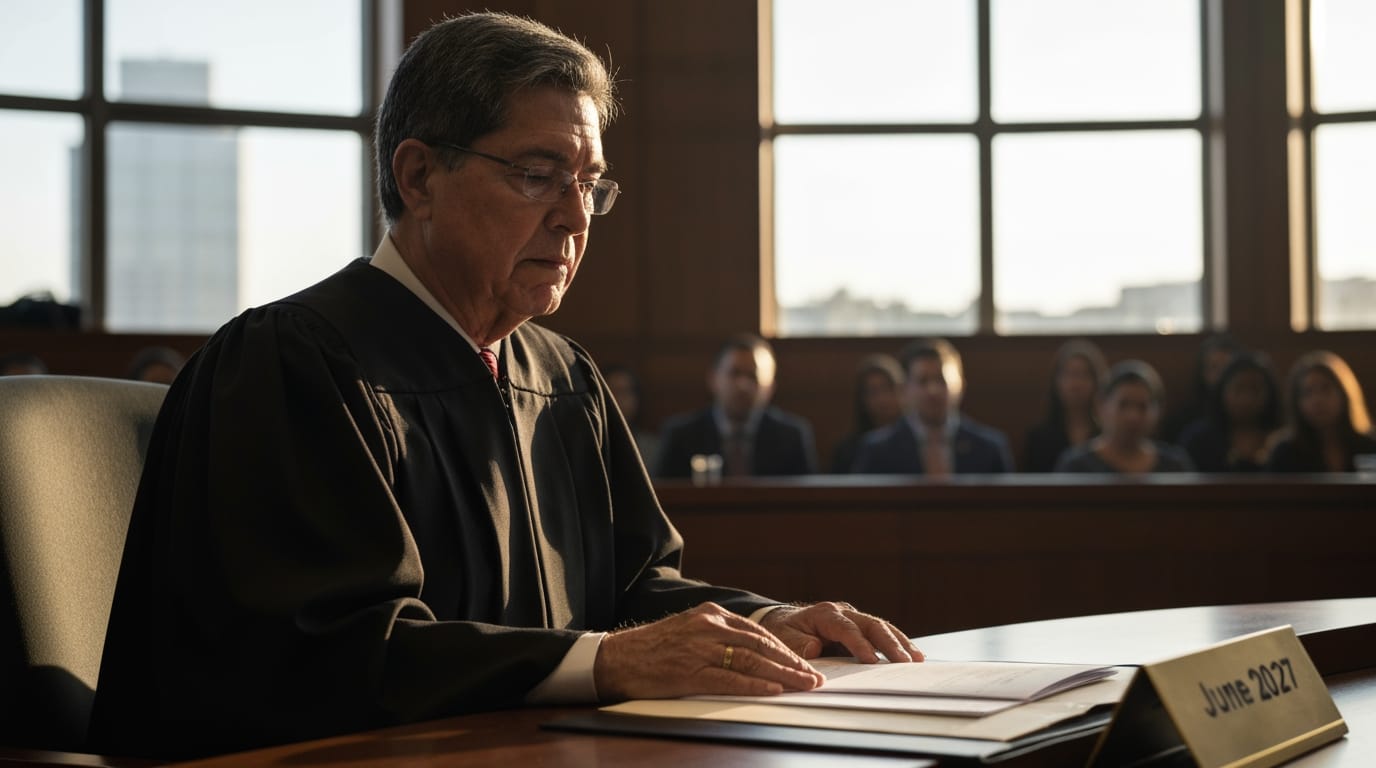
NEW YORK, NY – Nicolás Maduro, the former Venezuelan leader, and his wife, Cilia Flores, are slated to stand trial on June 1, 2027, in a landmark narco-terrorism and drug trafficking case in a New York federal court. U.S. District Judge Alvin Hellerstein set the date on Wednesday, launching what is anticipated to be one of the most significant criminal proceedings in recent American history. The case unfolds against a backdrop of complex international relations and contentious claims of sovereign immunity, following the dramatic U.S. military operation that led to their capture in Caracas earlier this year.
The Indictment and a Daring Capture
The charges against Maduro and Flores stem from a long-standing U.S. investigation that culminated in a federal indictment initially unsealed in March 2020. That indictment accused Maduro of orchestrating a vast "narco-terrorism partnership" with the Revolutionary Armed Forces of Colombia (FARC) for two decades, alleging that he and his top lieutenants corrupted Venezuelan institutions to facilitate large-scale cocaine trafficking into the United States.
The legal pursuit escalated dramatically in January when U.S. military forces executed a nighttime raid on Maduro's heavily guarded residence in Caracas. Both Maduro, 63, and Flores, 69, were apprehended and subsequently transported to New York to face the charges. This capture, reportedly ordered by then-President Donald Trump, ignited immediate international controversy. Upon their arraignment in January, both pleaded not guilty to the four felony counts, which include narco-terrorism conspiracy, conspiring to import cocaine, and weapons-related offenses involving machine guns and destructive devices. Maduro, appearing in beige prison garb, declared himself a "decent man" and insisted he remained the constitutional president of Venezuela, referring to his capture as a "kidnapping" and himself as a "prisoner of war."
Navigating the Complex Legal Terrain
The path to the June 2027 trial date is fraught with formidable legal challenges, particularly concerning claims of head-of-state immunity and the legality of Maduro's capture. Defense attorney Barry Pollack has indicated plans to seek dismissal of the case, arguing that Maduro, as a sitting head of a sovereign state, should be immune from prosecution in foreign courts. This argument is central to the defense's strategy, which also intends to contest the legality of what they term Maduro's "military abduction."
However, U.S. authorities have consistently stated that they do not recognize Maduro as Venezuela's legitimate head of state, thereby undermining the foundation of his immunity claims. Since 2019, more than 50 countries, including the United States, have refused to acknowledge Maduro's legitimacy, citing irregularities in Venezuelan elections. Legal experts also point to the "Ker-Frisbie Doctrine," a principle holding that the means by which a defendant is brought to court, even if illegal, do not affect the court's jurisdiction to try them. The precedent set by the 1990 trial of Panama's Manuel Noriega, who was similarly captured and tried in the U.S. despite objections to his arrest, is frequently cited in this context.
Judge Hellerstein has set a tight schedule for pretrial motions, with defense motions to dismiss due by September 2, and a hearing on those motions scheduled for November 17. Both the prosecution and defense lawyers have acknowledged that the June 2027 trial date presents a realistic timeline for preparation, considering the extensive evidence and complex legal arguments involved. Maduro and Flores are currently detained without bail at the Metropolitan Detention Center in Brooklyn, with Maduro reportedly held in a special administrative measures (SAMs) unit, a high-security area reserved for high-risk detainees.
Geopolitical Ramifications and the "Cartel of Suns"
The prosecution of Nicolás Maduro carries immense geopolitical weight, impacting the already strained relations between the United States and Venezuela. U.S. prosecutors allege that Maduro led a sophisticated network known as the "Cartel of Suns," composed of high-ranking Venezuelan military and government officials. This organization, they contend, facilitated the movement of thousands of tons of cocaine into the U.S. by collaborating with notorious drug trafficking organizations, including the FARC, the Sinaloa Cartel, and the Tren de Aragua gang.
The indictment portrays a Venezuela whose state apparatus was allegedly co-opted to serve this criminal enterprise, providing "political and military protection for the rampant narco-terrorism crimes." Prosecutors claim Maduro "very deliberately deployed cocaine as a weapon" to undermine the health and well-being of the United States. Furthermore, Cilia Flores is accused of active participation in the trafficking enterprise, including allegedly accepting bribes to arrange meetings between drug traffickers and Venezuelan anti-drug officials.
This case underscores the U.S. government's aggressive stance against what it perceives as state-sponsored criminality and narco-terrorism. The trial's outcome could set a powerful precedent for how international law addresses leaders accused of such crimes, particularly when questions of head-of-state immunity and controversial captures are at play. It also reflects the enduring political crisis in Venezuela, where the U.S. and many other nations have long challenged the legitimacy of Maduro's rule.
A Trial with Far-Reaching Implications
The forthcoming trial of Nicolás Maduro and Cilia Flores is not merely a criminal proceeding; it is a profound event with the potential to reshape international legal norms and diplomatic relations. If convicted, Maduro faces a potential life sentence, a stark consequence for a figure who, until recently, held the reins of power in Venezuela. The proceedings in the Southern District of New York will delve into allegations of deep-seated corruption and drug trafficking at the highest echelons of a national government, offering a rare look into the mechanisms of such alleged illicit operations.
Beyond the courtroom, the trial's implications extend to the delicate balance of sovereignty and international justice. The defense's challenge to the legality of Maduro's capture and his immunity will test established legal doctrines and prompt renewed debate on the boundaries of jurisdiction over foreign leaders. For the United States, the trial represents a pursuit of accountability for crimes it alleges have directly threatened its national security and public health. For Venezuela, it is viewed by many as a contentious act of foreign intervention, further polarizing a nation already grappling with profound political and economic divisions. As June 2027 approaches, the world will watch as a U.S. courtroom grapples with charges that transcend borders, promising a legal battle of historic proportions.


