Mali Plunges Deeper into Crisis as Tuareg Separatists Claim Kidal Amid Coordinated Nationwide Attacks
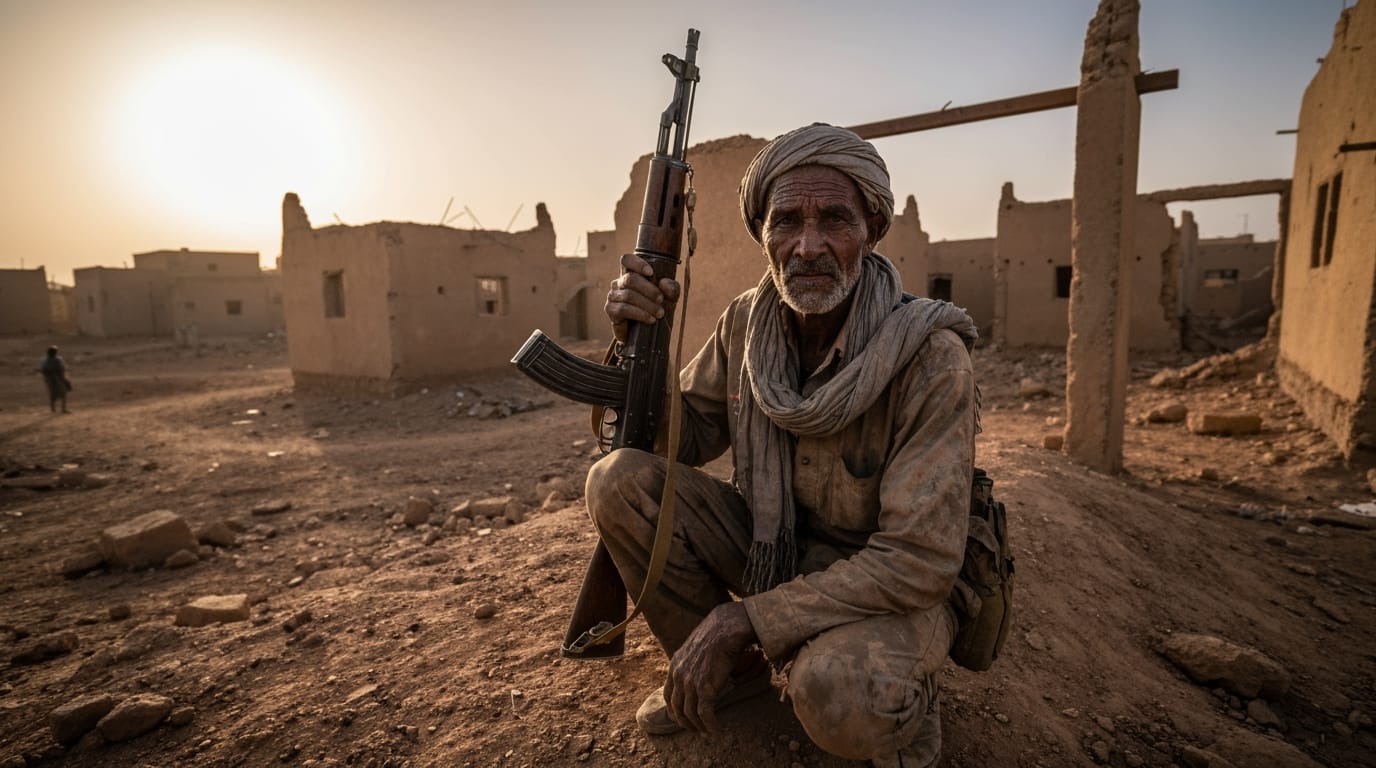
BAMAKO, Mali – Mali is once again gripped by escalating conflict as Tuareg separatists, operating under the banner of the Azawad Liberation Front (FLA), claim to have seized full control of the strategically vital northern city of Kidal. This assertion comes amidst a series of highly coordinated attacks across the West African nation on April 25 and 26, 2026, targeting the capital Bamako, the central town of Sevare, and the northern cities of Gao and Kidal. The dramatic escalation marks a severe blow to the Malian transitional government and its Russian allies, challenging their narrative of territorial reconquest.
Renewed Front in the North: Kidal's Symbolic Fall
The latest offensive has seen the Azawad Liberation Front (FLA), a Tuareg-led rebel alliance, declare "total control" over Kidal, a city that holds immense symbolic and strategic importance as a historical stronghold for Tuareg independence movements. Reports from the FLA indicate that only a small pocket of resistance, comprised of Russian mercenaries from the Africa Corps and Malian soldiers, remains entrenched within a former United Nations peacekeeping mission (MINUSMA) camp. This development is particularly significant as the Malian army, backed by Russia's Wagner Group (now rebranded as Africa Corps), had only recaptured Kidal in November 2023, after nearly a decade of rebel dominance, marking what was then celebrated as a major victory for the junta.
However, the FLA's claims regarding Kidal and positions taken in northern Gao have not been independently verified by news organizations such as Al Jazeera or the Associated Press. The Malian transitional government acknowledged coordinated attacks across several cities, reporting 16 civilian and military injuries. They maintained that security forces had contained the assaults and that the situation was "totally under control" in all affected areas. The FLA's statement further revealed a troubling alliance, asserting that the operation was conducted "in partnership with the JNIM," an al-Qaeda-affiliated militant group, underscoring the complex and often opportunistic nature of alliances in Mali's protracted conflict.
Kidal: A Crucible of Malian History
Kidal's contested status is deeply rooted in Mali's post-independence history. The city, along with the broader Kidal Region, is predominantly populated by Tuaregs, a nomadic Berber ethnic group with a long history of seeking greater autonomy or independence for the northern territory they refer to as Azawad. This pursuit has fueled multiple rebellions since Mali gained independence from France in 1960.
The current cycle of intense conflict traces back to January 2012, when a significant Tuareg rebellion erupted, with groups like the National Movement for the Liberation of Azawad (MNLA) initially seizing control of key northern cities, including Kidal, Gao, and Timbuktu. The MNLA unilaterally declared Azawad an independent state in April 2012, though this declaration received no international recognition. However, the secular aspirations of the Tuareg rebels were quickly overshadowed as jihadist groups, some with ties to al-Qaeda, seized control from them and imposed strict Sharia law across much of the north.
The international community intervened in 2013, with French-led forces dislodging the jihadists, but Kidal remained largely outside direct Malian government control, often managed by various Tuareg-led armed groups. The United Nations Multidimensional Integrated Stabilization Mission in Mali (MINUSMA) was deployed, operating in the region for a decade, though it struggled to stabilize the vast and volatile territory.
A critical turning point occurred in 2023 with the withdrawal of MINUSMA at the insistence of Mali's military junta. The mission's departure created a security vacuum, intensifying the race among various armed groups – including the Malian army, separatists, and jihadists – to control former UN bases. This vacuum allowed the Malian army, bolstered by Russian support, to launch its offensive in late 2023, culminating in the recapture of Kidal in November of that year.
Shifting Sands: Actors and Alliances
The current landscape of the Malian conflict is defined by a complex interplay of state actors, separatist movements, and transnational jihadist groups, often forming fluid and opportunistic alliances. The Malian military junta, which seized power in coups in 2020 and 2021, has prioritized national sovereignty and territorial integrity, seeking to reassert control over all of Mali's territory. To achieve this, they have increasingly relied on military cooperation with Russia, bringing in what was initially the Wagner Group, now formalized as the Africa Corps. While the Malian authorities view the Russian forces as crucial for combating armed groups, their presence has complicated international relations and is unpopular among some Tuareg communities.
On the other side are the Tuareg separatist groups, such as the FLA (which includes elements of the former MNLA and other alliances), whose primary motivation remains the pursuit of autonomy or independence for Azawad. Their long-standing grievances stem from perceived marginalization by the central government. The recent FLA claim of Kidal's capture, particularly its stated "partnership with the JNIM," highlights a tactical alignment with jihadist elements. This cooperation, though potentially driven by a shared adversary (the Malian state and its Russian allies), raises concerns about the further entrenchment of extremist groups in the region.
The 2015 Algiers Accord, a peace deal aimed at integrating former rebels and granting greater autonomy, effectively broke down in September 2023, and was officially terminated by Bamako in January 2024, exacerbating tensions and paving the way for renewed hostilities.
Regional Instability and a Deepening Humanitarian Crisis
The resurgence of fighting in Mali, particularly the coordinated nature of the recent attacks, has profound implications for regional stability. The Sahel region, already struggling with widespread insecurity, terrorism, and political instability, faces the prospect of further destabilization. The simultaneous strikes on multiple urban centers, including the capital, demonstrate an unprecedented level of coordination and capability among the armed groups, posing a significant threat to the Malian military authorities.
Moreover, the renewed conflict exacerbates an already dire humanitarian crisis. Approximately 7.1 million people in Mali are in need of humanitarian assistance, with nearly 400,000 internally displaced. The fighting drives forced displacement, deepens poverty, and hinders access to essential goods and services, with armed groups often blockading cities and towns. The United Nations has warned of a severe risk of acute malnutrition, particularly among young children, as humanitarian aid efforts are continuously undermined by violence and access restrictions.
The international community, including the UN Secretary-General, has condemned the latest acts of violence and called for coordinated global support to address the evolving threat of violent extremism and terrorism in the Sahel, alongside urgent humanitarian needs. However, with Mali's military rulers having severed ties with former colonial power France and other Western nations, moving closer to Russia, the path to a comprehensive solution remains fraught with challenges.
The ongoing struggle for Kidal exemplifies the deep-seated grievances and complex dynamics that continue to plague Mali. The city's uncertain fate reflects the broader challenges of asserting state sovereignty, managing diverse ethnic aspirations, and countering the persistent threat of extremist groups in a region yearning for peace and stability. The latest events underscore a conflict that remains far from resolved, with human cost mounting and a stable future increasingly elusive.


