Deadly Highway Bombing Rocks Colombia, Killing 14 and Injuring Dozens
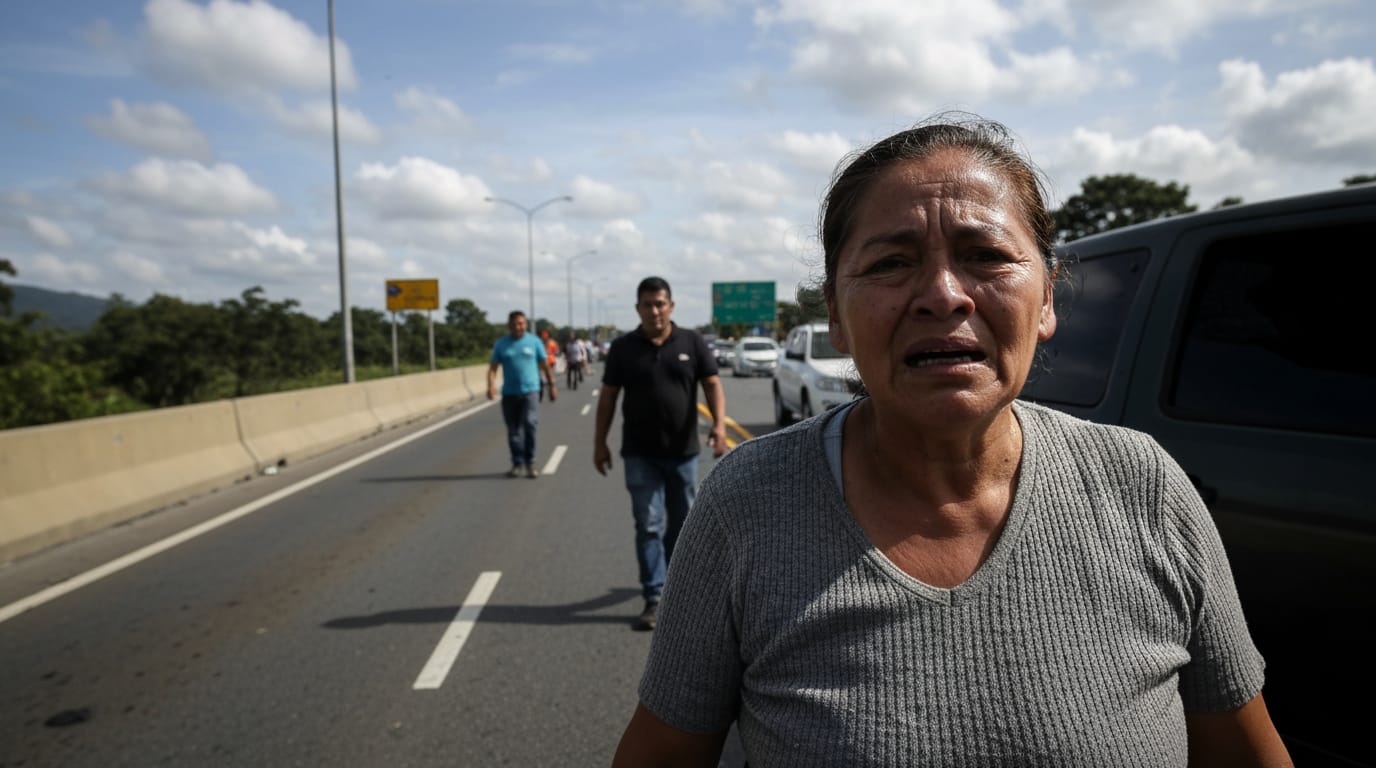
Cajibío, Colombia – A brutal highway bomb attack in southwestern Colombia on Saturday claimed the lives of at least 14 people, including five children, and left 38 wounded, plunging the nation into renewed grief and escalating fears of resurgent violence. The indiscriminate blast tore through a busy stretch of the Pan-American Highway in the El Túnel sector of Cajibío, Cauca department, leaving a trail of mangled vehicles, a gaping crater, and a community in shock. Authorities swiftly condemned the act as terrorism, blaming dissident factions of the Revolutionary Armed Forces of Colombia (FARC) for the heinous assault, which marks a significant escalation in a recent wave of violence ahead of next month's presidential election.
A Scene of Devastation on the Pan-American Highway
The attack unfolded on the vital Pan-American Highway, a key artery connecting Cali and Popayán, on Saturday, April 25, 2026. According to initial reports, assailants reportedly stopped traffic by blocking the road with a bus and another vehicle before detonating an explosive device. Other accounts suggest the explosive, described as a bomb or a cylinder bomb, was either planted in a culvert or launched at a passenger bus as it traversed the busy roadway. The sheer force of the explosion ripped through the highway, creating a massive crater and overturning or mangling several cars, trucks, and buses caught in the vicinity. Emergency responders, military personnel, and rescue teams rushed to the chaotic scene, where bodies lay amidst the wreckage and debris, underscoring the indiscriminate nature of the assault.
The death toll, initially reported at seven, tragically climbed to 14 as rescue efforts continued and more casualties were confirmed. Among the dozens injured were at least five children, a detail that amplified the national outrage. Cauca Governor Octavio Guzmán, in a post on social media, described the incident as an "indiscriminate attack against the civilian population" and a "tragedy that tears us apart as a department and deeply mourns our families." The human toll extended beyond the immediate fatalities and injuries; coffee grower Francisco Javier Betancourt, a witness to the carnage, articulated the profound fear gripping the region, stating, "I'm scared. We're in a country that's finished. Where else does something like this happen?"
Blame Appointed: FARC Dissidents and a Broader Pattern of Violence
Colombian authorities were quick to assign responsibility for the attack, pointing fingers at dissident factions of the FARC, specifically those operating under the command of Néstor Gregorio Vera Fernández, better known by his alias “Iván Mordisco.” President Gustavo Petro, visibly angered by the atrocity, publicly condemned the perpetrators, labeling them "terrorists, fascists, and drug traffickers," and calling for their "maximum worldwide pursuit."
The FARC, which had waged a brutal insurgency against the Colombian state for over five decades, formally disbanded after signing a landmark peace agreement with the government in 2016. However, certain elements refused to demobilize, forming dissident groups that continue to engage in armed conflict. These factions, often involved in illicit economies such as drug trafficking, illegal mining, and extortion, frequently use violence to assert control over territories and disrupt government efforts. Cauca, the department where the bombing occurred, is a particularly conflict-ridden and coca-growing region, making it a hotspot for such activities.
This highway bombing is not an isolated incident but rather part of a disturbing pattern. Military chief Hugo Lopez noted that the attack was part of a "wave" of terror attacks in the region, with 26 attacks recorded in the Valle del Cauca and Cauca departments over the preceding two days alone. Just the day before the highway bombing, a bomb attack on a military base in Cali, Colombia's third-largest city, had injured two people. This surge in violence is particularly concerning given the impending presidential election next month, with armed groups historically attempting to influence political outcomes through intimidation and force.
Government Response and the Unsettled Path to Peace
In the immediate aftermath of the attack, the Colombian government mobilized significant resources and pledged a robust response. Defense Minister Pedro Sánchez promptly arrived at the scene to oversee rescue operations and coordinate the state's efforts. A national-level security council was convened to address the grave situation, and authorities increased military and police presence across the affected areas. President Petro's strong condemnation and call for intensified military operations signal a determined stance against those seeking to destabilize the country.
The attack underscores the fragile security situation in many parts of Colombia, despite the 2016 peace accord. The continued activity of armed groups, particularly FARC dissidents, poses a persistent challenge to the government's efforts to achieve "total peace" and consolidate state control across the national territory. Delays in the implementation of the peace agreement and the ongoing power struggles over lucrative illegal economies contribute to the perpetuation of violence, particularly in rural and strategic corridors like the Pan-American Highway.
A Nation Grapples with Unfinished Conflict
The devastating highway bombing serves as a grim reminder that while the formal conflict with the FARC ended years ago, Colombia's path to lasting peace remains fraught with peril. The loss of 14 lives, including innocent children, on a civilian highway is a stark illustration of the human cost of this protracted struggle. As the nation mourns, the government faces renewed pressure to protect its citizens and dismantle the remaining armed groups that continue to sow terror and instability. The incident not only casts a shadow over the upcoming elections but also highlights the urgent need for a comprehensive strategy to address the root causes of violence, secure vital infrastructure, and ensure that the gains made in peacebuilding are not undone by those who profit from conflict.


