Mexico Asserts Sovereignty After Alleged CIA Agent Deaths on Its Soil
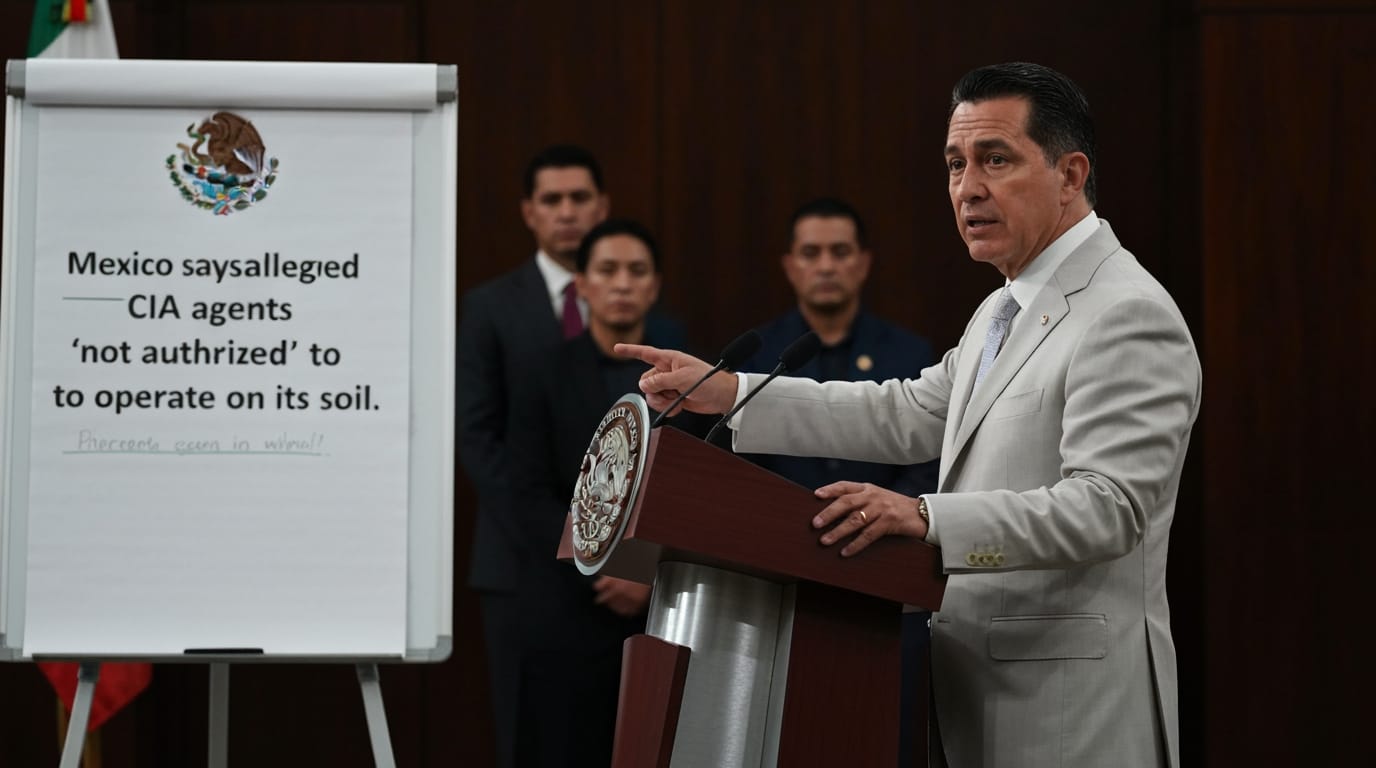
MEXICO CITY – A fatal car crash in Mexico's northern state of Chihuahua has ignited a diplomatic firestorm between Mexico and the United States, following revelations that two deceased U.S. federal agents involved in a counter-narcotics operation were allegedly operatives for the Central Intelligence Agency (CIA). Mexican President Claudia Sheinbaum has emphatically stated that these agents were not authorized to operate on Mexican soil, demanding a full explanation from the U.S. government and underscoring Mexico's unwavering commitment to national sovereignty and legal protocols governing foreign intelligence activities. The incident not only highlights the inherent risks of transnational anti-drug efforts but also exposes deep-seated tensions and divergent approaches to security cooperation between the two nations.
The Chihuahua Incident and Immediate Diplomatic Repercussions
The controversy began with a tragic accident in Chihuahua, where two U.S. federal agents and two Mexican officers were killed when their vehicle crashed after an operation to dismantle a clandestine drug laboratory. While the CIA has officially declined to comment, multiple U.S. officials familiar with the matter confirmed that the American agents were indeed CIA operatives. This confirmation immediately drew a sharp rebuke from Mexico City. President Claudia Sheinbaum, addressing the nation, asserted that the Mexican federal government had no prior knowledge of the U.S. agents' participation in the operation. She confirmed that Mexico's Ministry of Foreign Affairs had sent a diplomatic note to the U.S. Embassy, requesting full information and an explanation, emphasizing that such unauthorized actions are not aligned with established security protocols. The Mexican government's position is clear: Mexican law strictly prohibits foreign agents from engaging in operational activities within its territory without explicit authorization.
Mexico's Legal Framework and Assertion of Sovereignty
At the heart of Mexico's forceful response lies its National Security Law, particularly Article 71, which stipulates that foreign agents must obtain explicit authorization from the Mexican government to operate within the country. This law mandates that such agents must submit monthly reports and are subject to the authority of Mexican agencies. Furthermore, a significant legal reform passed in 2020 significantly restricted the activities of foreign law enforcement officers, including stripping them of diplomatic immunity and requiring them to share any intelligence obtained with Mexican officials. This legislative action followed a period of strained relations, notably the U.S. arrest of Mexico's former Defense Secretary, General Salvador Cienfuegos, which fueled a nationalist sentiment regarding foreign intervention. President Sheinbaum has consistently reiterated that any security collaboration with the U.S. must be approved by Mexico's federal government and strictly adhere to constitutional and legal frameworks. Her stance serves as a potent message, not only to Washington but also to Mexican state governors, ensuring that security cooperation flows exclusively through federal channels.
A Complex History of Covert Operations and Shifting Alliances
The presence of alleged CIA agents operating without federal Mexican oversight taps into a long and intricate history of U.S. intelligence activities in Mexico. Declassified documents reveal a substantial, and often clandestine, CIA presence in Mexico dating back to the Cold War era, with some operations even initiated or deeply collaborated on by the Mexican state itself. Historically, Mexico's proximity to the U.S. has made it a crucial, albeit sensitive, arena for intelligence gathering, with both overt and covert operations conducted by various foreign powers, including the U.S. and former Soviet Union.
While cooperation frameworks like the U.S.-Mexico Bicentennial Framework for Security, Public Health, and Safe Communities, launched in 2021, aim to foster a "new era" of security cooperation based on partnership and shared responsibility, the operational realities often prove more complicated. Mexican security experts suggest that while intelligence sharing and training are generally accepted, direct operational involvement by foreign agents, particularly without explicit federal approval, constitutes a significant red line. The recent incident underscores a prevailing sentiment within Mexico that any unilateral actions by the U.S. risk undermining trust and infringing upon national sovereignty.
Implications for Future Bilateral Security Cooperation
The deaths of the alleged CIA agents and Mexico's subsequent firm stance are poised to significantly impact future bilateral security cooperation. The incident intensifies scrutiny on the mechanisms and transparency of U.S. intelligence activities in Mexico and could lead to a more constrained environment for intelligence sharing and operational access for U.S. agencies. President Sheinbaum's strong condemnation signals a potential shift towards a harder line, where the Mexican government will prioritize its sovereignty and legal framework above previous, potentially more informal, arrangements. This approach is particularly relevant under the Trump administration, which has designated Mexican drug cartels as foreign terrorist organizations and has been perceived as pushing for more aggressive, even military, action against them within Mexico. Such policies, while aimed at combating transnational crime, risk escalating tensions and eroding the cooperative spirit that both nations nominally seek to maintain. The discrepancies in public accounts from U.S. and Mexican officials further highlight the challenges in managing complex cross-border security operations.
The current situation presents a critical juncture for U.S.-Mexico relations. While both nations share a vested interest in combating organized crime and drug trafficking, the path forward will require a delicate balance of operational needs with strict adherence to sovereignty and mutual respect. The Mexican government's insistence on federal approval for all foreign agent activities will likely necessitate a re-evaluation of existing security protocols and a renewed commitment to transparent and legally sanctioned cooperation channels. Without such measures, the trust essential for effective binational security efforts risks further erosion, potentially hindering collective efforts against the very threats both countries aim to neutralize.


