Mali Rocked by Coordinated Rebel Assaults on Military Bases and Prison
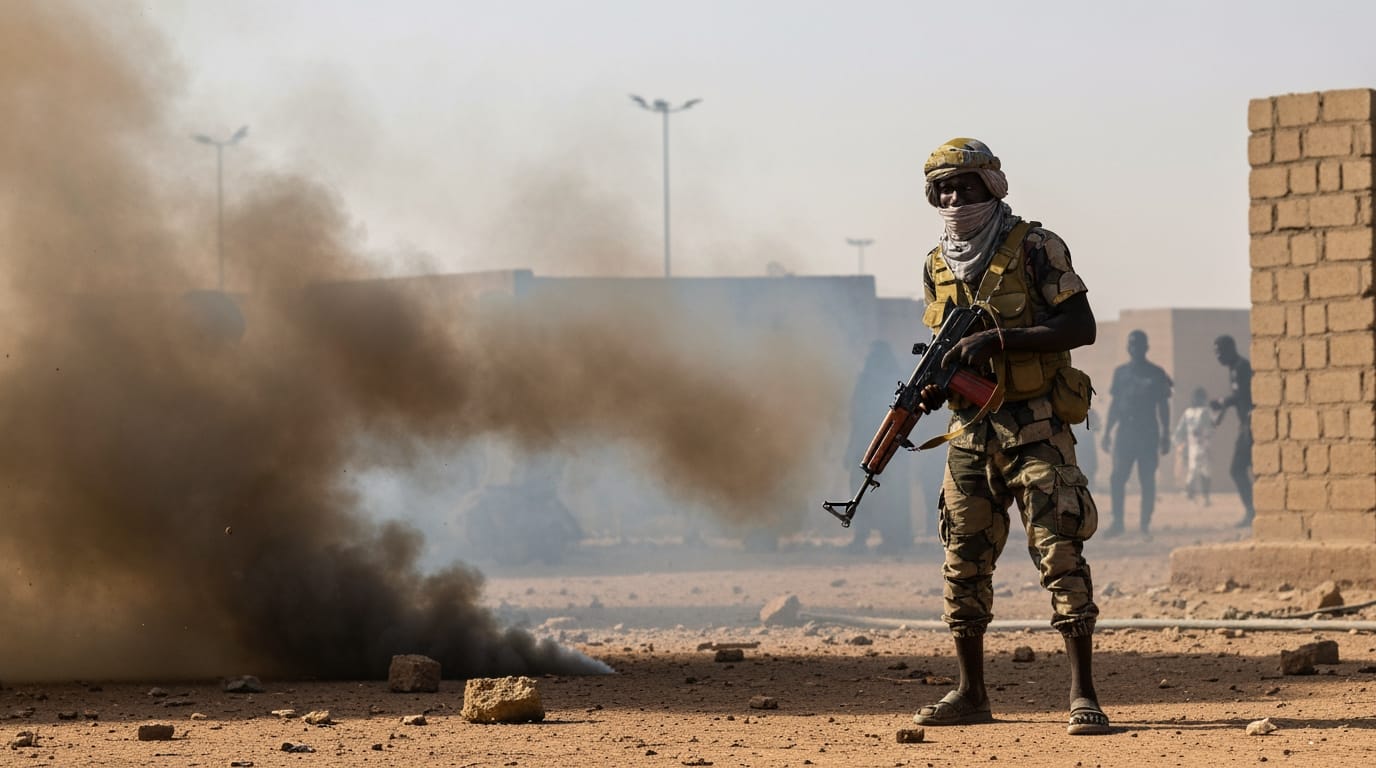
BAMAKO, Mali – Mali is once again gripped by a wave of coordinated attacks, as jihadist groups and Tuareg separatists launched fresh offensives across multiple towns, military installations, and a prison on Saturday, July 4, 2026, intensifying the nation's decade-long security crisis. The latest assaults, which began around 5:00 AM GMT, struck key locations including Gao, Anefis, Aguelhok, and Sevare, along with a prison near the capital in Kenieroba, marking a significant escalation in the ongoing conflict that challenges the authority of Mali's military junta. These operations follow a similar, large-scale offensive in late April that resulted in the capture of a strategic northern town and the death of Mali’s defense minister, highlighting the rebels' expanding reach and operational sophistication.
A New Front in an Enduring Conflict
Saturday's attacks saw fighters from the Al-Qaeda-linked Jama'at Nusrat al-Islam wal-Muslimin (JNIM) and the Tuareg separatist Azawad Liberation Front (FLA) target government positions across a wide geographical area. While the Malian army asserted on Facebook that these attacks were "vigorously repelled" and the "situation is completely under control," reports from local sources suggested ongoing fighting throughout the day. An Anefis resident confirmed the presence of armed groups in the town, and a spokesperson for the FLA, Mohamed Elmaouloud Ramadane, claimed that "several positions have fallen" in Anefis, further stating that the town was under FLA control. The Malian army reported neutralizing 20 terrorists on motorcycles and in vehicles in Sevare. The breach of a high-security detention center near the capital, Kenieroba, located 70 kilometers from Bamako, signals a troubling expansion of insurgent capabilities and underscores the fragility of the security landscape near the nation's administrative heart.
These recent actions are not isolated incidents but rather the latest manifestation of a steadily deteriorating security environment since military coups in 2020 and 2021 ushered in the current junta. The Malian military, supported by the Moscow-controlled paramilitary Africa Corps (formerly the Wagner Group), has intensified its operations in response, but the coordinated nature of the rebel assaults demonstrates their persistent ability to challenge state authority.
Anatomy of the Rebel Alliance: JNIM and FLA
The current surge in hostilities is driven by a powerful alliance between the Al-Qaeda-affiliated JNIM and the Tuareg FLA separatists, who formally teamed up approximately a year ago. This partnership has significantly ramped up pressure on the Malian military leaders, whom they consider their joint adversary. JNIM, a coalition of militant Islamist groups, has steadily expanded its reach and operational coordination across Mali over several years, targeting military, political, and economic centers. Their strategy has increasingly focused on urban areas and critical supply lines, demonstrated by a fuel blockade imposed in September 2025 and attacks on the gold-rich Kayes region in July 2025. This shift aims to isolate Bamako and other urban centers, exploiting the regime's vulnerabilities.
The FLA represents a faction of Tuareg separatists, a historically nomadic people who have waged an armed struggle for decades against perceived marginalization, particularly in the northern Kidal region. The 2012 Tuareg rebellion, which saw these groups briefly control much of northern Mali, set the stage for the current crisis. Their renewed collaboration with jihadist elements complicates efforts to restore stability, as their combined forces leverage both separatist grievances and Islamist ideological objectives.
Government Response and Growing Humanitarian Concerns
The Malian military junta, led by General Assimi Goïta, came to power promising to stabilize the country, which has been plagued by insecurity since 2012. However, the security situation has demonstrably worsened, with militant attacks reaching record levels despite the government's pivot from former colonial power France to an alliance with Russia. This shift has seen the deployment of Russian paramilitary forces, initially the Wagner Group and now Africa Corps, to aid Malian troops.
The human cost of this escalating conflict is dire. Human Rights Watch reported in June that "grave abuses" against civilians have been committed by both rebel groups and the Malian army with its Russian allies since the April attacks. Civilian fatalities linked to security forces and allied militias have exceeded those attributed to jihadist groups since 2023, with JNIM exploiting the junta's use of violence to expand its appeal among rural populations seeking protection. Reports detail instances of civilians caught in the crossfire, forced displacement, and disruptions to essential services due to blockades and attacks on transport routes. The April 25-26 attacks alone resulted in the deaths of 13 civilians and injuries to 25 others in Gao and Kidal.
Regional Instability and an Uncertain Future
The crisis in Mali is deeply intertwined with broader instability across the Sahel region, affecting neighboring countries like Niger and Burkina Faso, which are also battling Al-Qaeda and Islamic State affiliates. The coordinated nature and strategic targeting of recent attacks signal a determined effort by rebel forces to further weaken the Malian regime and consolidate their territorial and ideological gains.
As the conflict evolves into what experts describe as a "war of attrition," the future of Mali remains highly uncertain. While government forces and their Russian allies largely control urban centers, jihadist groups continue to expand their influence in rural areas. The ability of the JNIM-FLA alliance to launch simultaneous, complex attacks across such a wide area poses a significant challenge to the junta's claims of control and its promise of stability. The international community, including the United Nations, the African Union, and the United States, has expressed alarm over the deteriorating security and humanitarian situation, urging calm and vigilance amidst the continued violence. Without a fundamental shift in dynamics, Mali risks further descent into protracted conflict, with profound implications for its citizens and the wider Sahel.