Pope Francis Renews Urgent Call for Europe to Embrace Migrants Amidst Evolving Policy Landscape
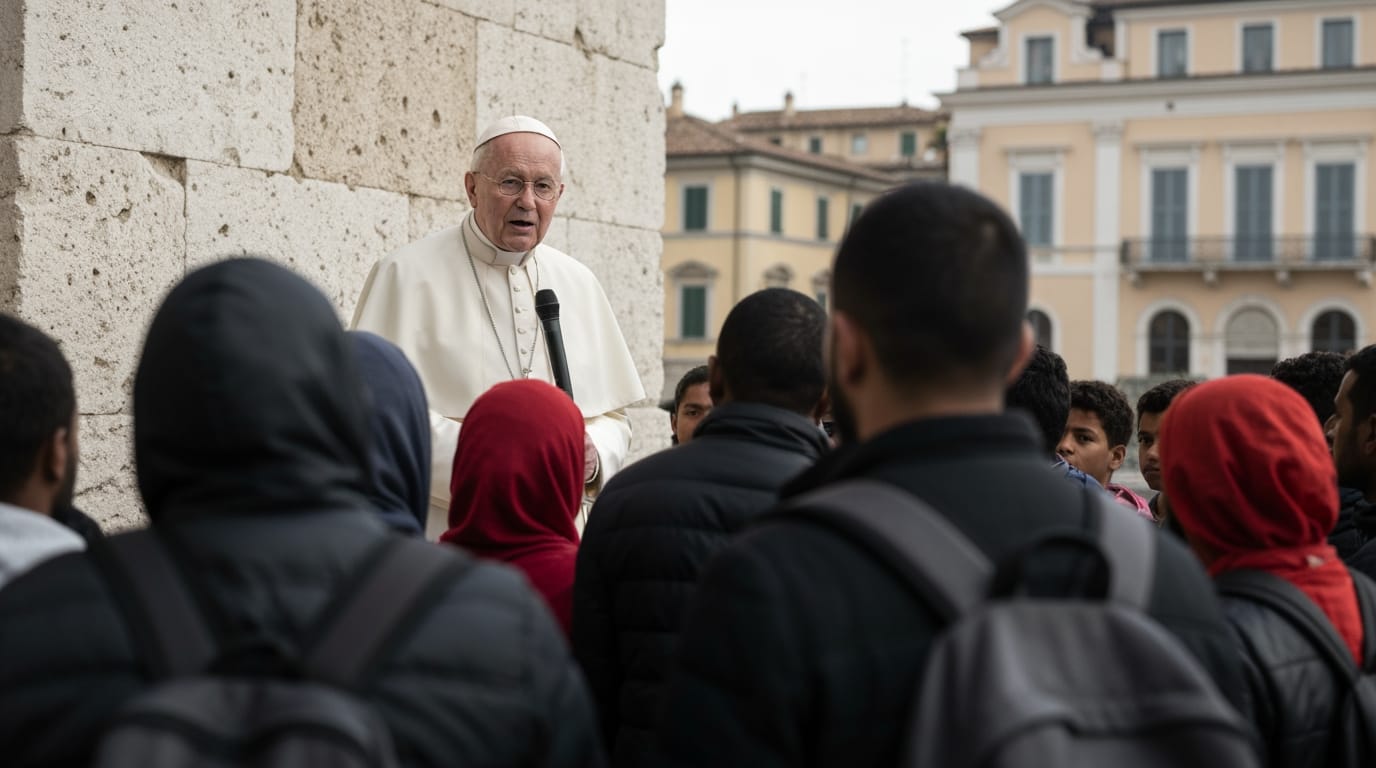
Vatican City — Pope Francis has intensified his long-standing appeal to European nations, urging them to adopt more humane and unified policies towards migrants and refugees. His impassioned pleas, delivered consistently over more than a decade, underscore a profound humanitarian crisis unfolding on Europe’s borders and within its societies. The Pontiff's latest calls come as the European Union finalizes a new pact on migration, set to become fully operational amidst persistent challenges and deeply divided public opinions.
A Decade of Steadfast Advocacy: The Pope's Enduring Message
Since the earliest days of his pontificate, Pope Francis has made the plight of migrants a cornerstone of his moral agenda. His first pastoral visit outside Rome in July 2013 was to Lampedusa, the Italian island that serves as a primary entry point for migrants risking perilous sea crossings from North Africa. There, he decried the "globalization of indifference" that met those seeking refuge and a better life, a phrase that would become a recurring theme in his papacy.
Through speeches, general audiences, and symbolic gestures, Pope Francis has consistently challenged Europe to open its heart and doors. In a September 2023 visit to Marseille, France, he again blasted the "fanaticism of indifference" toward migrants, urging governments to see those who risk their lives at sea not as invaders, but as individuals seeking welcome and dignity. He emphasized that the continent does not face a migration "emergency" but rather a long-term reality demanding humane governance. The Pope's vision is one where being a migrant is "not a crime but a summons to greater commitment on behalf of the dignity of every human being," a sentiment echoed in his receipt of the Charlemagne Prize in 2016. He has frequently called for policies that prioritize the "welcome, protect, promote, and integrate" framework for migrants and refugees.
His pronouncements in recent years have grown increasingly forceful. In August 2024, during a general audience, Pope Francis criticized "more restrictive laws" and the "militarization of borders" as ineffective methods, advocating instead for "safe and legal access routes" and a "global governance of migration based on justice, fraternity, persecution and solidarity". He notably declared that intentionally driving away migrants constitutes a "grave sin," marking a significant escalation in his moral condemnation of certain anti-immigration practices.
Europe's Complex Landscape: Policies and Human Costs
The Pope's appeals resonate against a backdrop of complex and often contentious European migration policies. The Mediterranean Sea continues to be a deadly barrier, with thousands losing their lives annually attempting to reach European shores. In just the first half of 2023, more than 130,000 people landed in Italy alone, doubling the number from the entirety of 2022 and overwhelming reception services on islands like Lampedusa.
In response to sustained migratory pressures, the European Union has been striving for a more unified approach. The new Pact on Migration and Asylum, adopted in 2024 and set to become fully applicable by June 2026, aims to overhaul border management, asylum processing, and responsibility-sharing among member states. Key elements of the pact include stricter border procedures, a new Common European System for Returns, and the establishment of a "solidarity pool" for 2026, where member states can pledge to accept relocated migrants or contribute financially.
However, human rights advocates have raised concerns that the pact could weaken protections for asylum seekers. Critics point to provisions allowing denial of asylum applications in situations of "mass influx" and the concept of "safe countries of origin," which may risk returning individuals to places where they face human rights abuses. The EU's focus has largely been on irregular migration, at times leading to a perceived weakening of the principle of non-refoulement.
The Vatican's Moral Imperative and Practical Steps
The Holy See's persistent stance on migration is rooted in Catholic social teaching, which emphasizes the inherent dignity of every human person and the moral duty of hospitality. Pope Francis repeatedly highlights that hospitality is not merely generosity, but a fundamental moral obligation. He views migrants and refugees as symbols of a shared humanity and calls for empathy rather than indifference.
Beyond rhetoric, the Vatican has also taken practical steps. In 2015, Pope Francis urged "every parish, every religious community, every monastery, every sanctuary of Europe" to take in one migrant family, with the Vatican itself setting an example by offering shelter to two families. His creation of the Migrants and Refugees Section within the Dicastery for Promoting Integral Human Development in 2016 further cemented the Church's institutional commitment to this cause. This section works to ensure migrants' dignity and rights are respected, inspiring grassroots initiatives and shifting public debate. The Pope's personal engagement, including his visit to Lesbos in 2016 and bringing Syrian families back to Italy on his papal plane, served as powerful demonstrations of solidarity.
It is important to note that while the Pope calls for open hearts and integrated reception, the Vatican City State itself maintains some of Europe's strictest immigration laws, reflecting its unique status and the need to safeguard its small population. Unauthorized immigration is not tolerated, and access is tightly controlled, with residency granted under stringent conditions. However, this institutional reality does not diminish the moral message Pope Francis delivers to sovereign nations and the global community.
Reactions and Resistance: A Continent Divided
Pope Francis's calls for greater compassion and solidarity have met with a mixed reception across Europe. While some leaders and humanitarian organizations laud his moral leadership, many European governments continue to prioritize national security and border control, often driven by public sentiment and the rise of anti-immigrant political parties.
Matteo Salvini, Italy's former Deputy Prime Minister and leader of the anti-immigrant League party, has, at times, acknowledged the Pope's "words of great wisdom," particularly when the Pope stressed that Italy should not be left to manage migrant flows alone. However, the broader trend in many European countries has been towards more restrictive policies and increased efforts to deter irregular migration. The debate highlights a fundamental tension between the humanitarian imperative advocated by the Vatican and the political realities and perceived burdens faced by European states.
As the EU's new migration pact becomes fully operational in 2026, the continent stands at a critical juncture. The outcome will determine whether Europe can reconcile its foundational values of humanism and solidarity with the practicalities of managing complex migration flows.
Conclusion: A Moral Compass in Turbulent Times
Pope Francis's unwavering voice continues to serve as a moral compass for Europe, urging leaders and citizens alike to move beyond indifference and embrace a more compassionate and comprehensive approach to migration. His message is a reminder that behind every statistic is a human being with a story, seeking hope and dignity. As Europe navigates the complexities of its evolving migration policies and the full implementation of its new pact, the Pontiff's calls for shared responsibility, legal pathways, and genuine integration remain a powerful challenge to the conscience of the continent. The coming years will reveal how deeply this moral imperative resonates in the legislative chambers and communities of Europe.


