Mali's Military Under Scrutiny: Soldiers Probed for Alleged Collusion in Major Jihadi Attacks
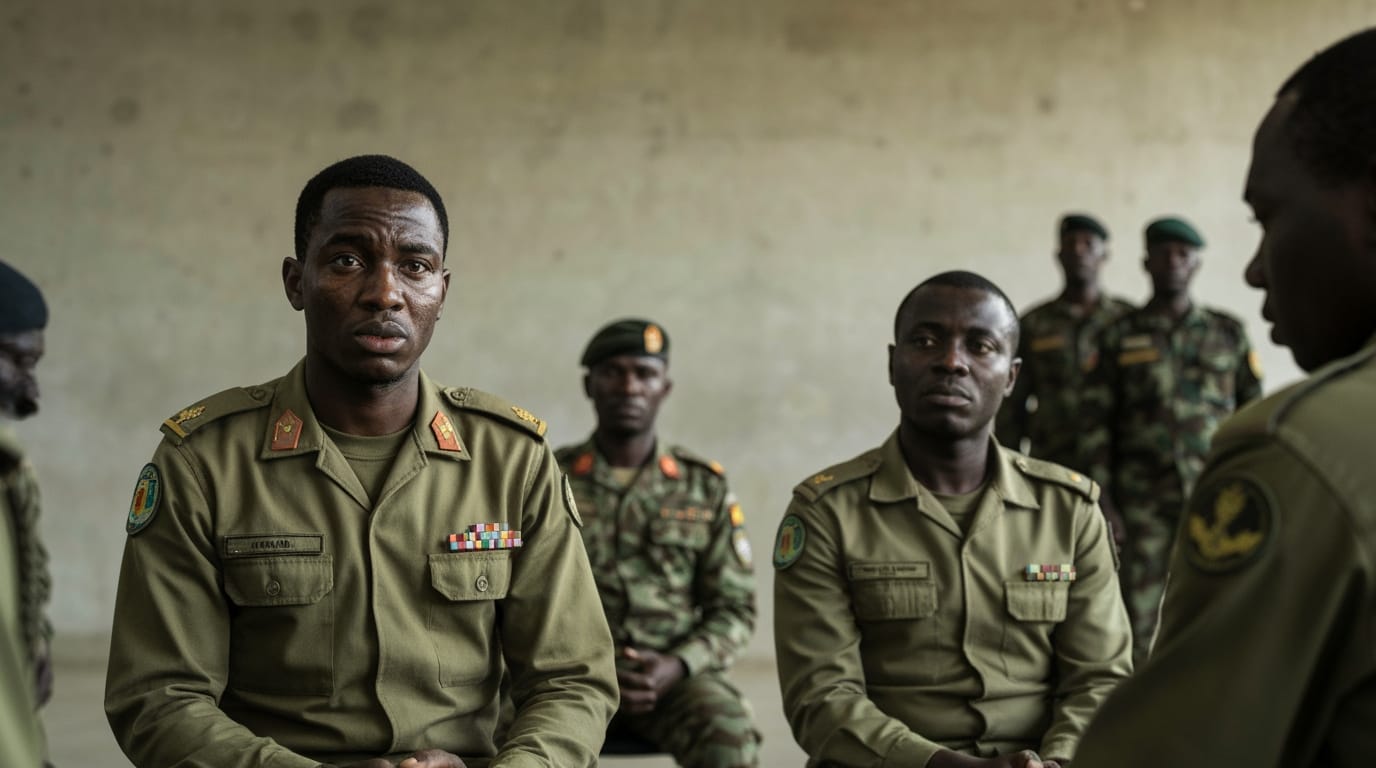
BAMAKO, Mali — Malian authorities have launched a wide-ranging investigation into allegations that military officers actively collaborated with jihadi rebels and separatist fighters, orchestrating and executing a recent wave of devastating attacks across the West African nation. The startling revelations, confirmed by the public prosecutor at the Military Court of Bamako, suggest a profound internal compromise within the armed forces, raising critical questions about the state's ability to combat a decade-long insurgency that has destabilized the Sahel region.
The probe follows a series of unprecedented and coordinated assaults in late April 2026, which saw key military installations and population centers, including the strategic town of Kati near the capital Bamako, fall under siege. The attacks, attributed to an alliance of al-Qaeda-linked jihadists and Tuareg separatists, inflicted heavy casualties and marked the most significant challenge to Mali's ruling junta since it seized power in 2020. The unfolding investigation has cast a long shadow over the Malian military, already struggling to restore security amidst a complex conflict and shifting international partnerships.
Allegations of Betrayal from Within
The public prosecutor's statement, read on state television, indicated that investigations had uncovered "solid evidence regarding the complicity of certain military personnel" in the recent attacks. These accusations include serving and recently dismissed officers, implicated in the "planning, coordination, and execution" of the militant operations. Such internal treachery, if proven, represents a grave threat to national security, undermining the very institutions tasked with protecting the Malian populace. The scope of the alleged collaboration suggests a sophisticated network capable of providing critical intelligence and operational support to the very groups the military is sworn to defeat. The implication of active facilitation in such large-scale assaults signals a deeper rot within a force already grappling with public distrust and persistent accusations of human rights abuses.
The allegations surfaced in the wake of the coordinated attacks that swept across Mali around April 25-26, 2026. These assaults were characterized by their widespread nature and the apparent synchronization of efforts by disparate militant groups. Targets included the critical garrison town of Kati, a military stronghold just outside Bamako, and northern cities like Kidal and Gao. The attacks were reportedly carried out by an alliance between the Jama'at Nusrat al-Islam wal-Muslimin (JNIM), an al-Qaeda affiliate, and the Front de Libération de l'Azawad (FLA), a Tuareg separatist coalition. The audacity and scale of these operations, including the reported capture of the strategic Tessalit military camp by separatists after a withdrawal by Malian and Russian forces, have shocked the nation and highlighted severe vulnerabilities. Compounding the crisis, Malian Defense Minister General Sadio Camara was reportedly killed in a suicide vehicle bomb attack on his home in Kati during this period, a devastating blow to the junta.
A Nation in Peril: The Long Shadow of Insurgency
Mali has endured over a decade of relentless conflict, a tumultuous period marked by political instability, military coups, and the rise of powerful jihadi groups. Since 2012, the country has been ravaged by forces linked to al-Qaeda (JNIM) and the Islamic State – Sahel Province (ISGS). These groups have exploited deep-seated grievances, ethnic tensions, corruption, and the weakness of state institutions to expand their influence, particularly in vast, under-governed regions.
The military junta, which seized power in 2020, has struggled to contain the insurgency, despite shifting its alliances from traditional Western partners to Russia. The withdrawal of the United Nations peacekeeping mission (MINUSMA) in 2023 and French forces in 2022 left a security vacuum, which Mali attempted to fill by inviting in Russia's Wagner Group, now rebranded as the Africa Corps. However, even with the presence of Russian mercenaries, the security situation has not improved; in fact, 2023 was reported as the deadliest year in Mali's history due to both terrorist attacks and counter-terrorism efforts by Malian forces alongside Wagner. Critics argue that a purely military approach, often characterized by indiscriminate targeting and human rights abuses by government forces and their allies, has only exacerbated civilian distrust and inadvertently aided militant recruitment.
Undermining Trust and Fragmenting Security
The alleged complicity of military personnel in jihadi attacks represents a profound breach of trust and a significant setback for Mali's efforts to stabilize the nation. Such revelations inevitably erode public confidence in the armed forces, making it increasingly difficult to garner support for counter-insurgency operations. The core of effective counter-terrorism lies in intelligence gathering and community cooperation, both of which are severely compromised when elements within the security apparatus are suspected of colluding with the enemy.
Moreover, these internal vulnerabilities threaten to fracture the military from within, potentially leading to purges or further destabilization. The coordinated nature of the recent attacks, involving drone warfare techniques and intelligence on fuel supplies, points to a level of sophistication that raises concerns about insider assistance. If elements of the military are indeed providing such capabilities to the militants, it fundamentally alters the landscape of the conflict, transforming it from an external threat to an insidious internal one. This situation also complicates Mali's already strained relationships with regional and international partners, many of whom have expressed concerns about governance, human rights, and the presence of foreign mercenary groups.
The Path Forward: A Precarious Future
Mali's military leaders have vowed to continue their offensive against militant groups, with statements from leaders like Assimi Goita emphasizing the goal of neutralizing armed groups and restoring security. However, the current investigation into internal complicity highlights the immense challenges facing the nation. Effectively addressing the insurgency requires more than military might; it demands robust governance, an end to corruption, and genuine efforts to rebuild trust between the state and its citizens.
The persistent cycle of violence, political upheaval, and allegations of internal compromise underscores the urgent need for a comprehensive strategy that moves beyond purely military solutions. Experts suggest that a political solution, including negotiation and local-level mediation to address community grievances, is essential. Until Mali can secure its own institutions and ensure the unwavering loyalty of its protectors, the specter of internal betrayal will continue to complicate its struggle against the formidable forces of extremism. The path to lasting peace and stability remains fraught with peril, with the integrity of the nation's own defense at the very heart of the crisis.


