Malta's Labour Party Secures Historic Fourth Term Amidst Economic Strength
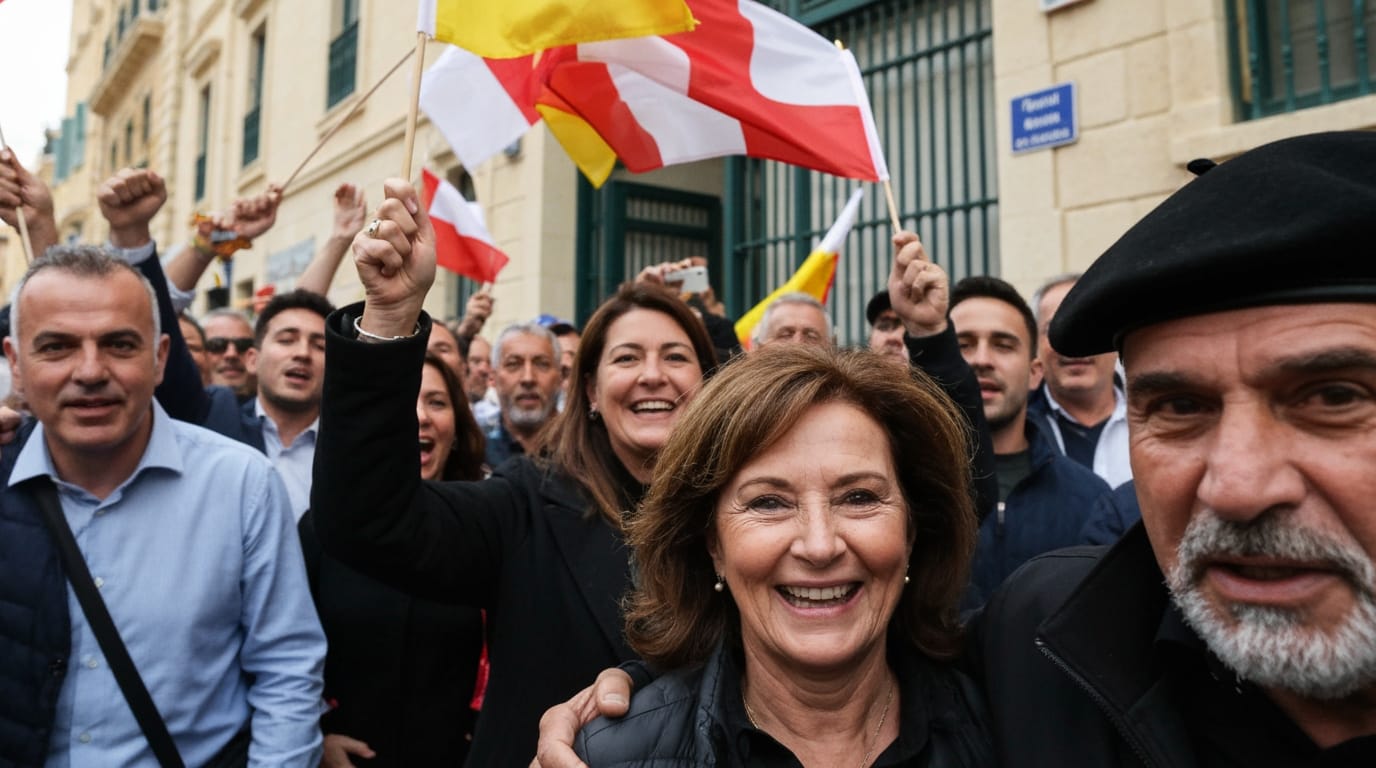
VALLETTA, Malta – Malta's Labour Party has achieved an unprecedented fourth consecutive term in government, with preliminary results from Saturday's snap general election confirming a decisive victory for Prime Minister Robert Abela. The win solidifies Labour's dominance on the Mediterranean island, extending its rule which began in 2013 and reinforcing a political landscape heavily influenced by economic performance and a focus on stability.
The outcome, which became clear as ballot counting commenced on Sunday, May 31, represents a significant mandate for Abela, who called the election a year early, citing the need for a fresh mandate to navigate global uncertainties. The result ensures policy continuity for the European Union's smallest member state, a nation that has experienced remarkable economic growth under Labour's stewardship.
A Resounding Mandate for Continued Governance
Prime Minister Robert Abela, 48, successfully led his Labour Party to its fourth successive electoral triumph. While specific final percentages for this latest election are still emerging, pre-election polls consistently indicated a comfortable lead for Labour, with one showing them comfortably ahead at 49 percent of the vote compared to the Nationalist Party's 38 percent. Abela’s personal popularity has seen a sharp rise recently, with trust ratings approaching levels recorded just before the 2022 election, demonstrating strong public confidence in his leadership.
This victory builds on a strong electoral performance in the 2022 general election, where the Labour Party secured its third consecutive victory with 55.11% of the vote and 38 seats. That election, Robert Abela’s first as party leader, also saw several 'firsts' for the nation, including the participation of 16-year-old voters and the implementation of a Gender Balance Mechanism to increase female representation in parliament. The consistent electoral success underscores a deep-seated public endorsement of Labour's policies and direction over more than a decade.
Economic Prosperity as a Cornerstone of Support
A primary driver behind Labour's sustained popularity is Malta's robust economic performance. Since 2013, the country has experienced one of the most rapid economic expansions in its modern history. In the first quarter of 2026, Malta's economy grew by 3.9%, a rate five times higher than the eurozone average and the highest in the European Union. This growth, alongside virtually full employment, has been a central pillar of Labour's campaign platform.
The government has highlighted its management of economic challenges, particularly its strategy to shield households and businesses from rising energy prices through substantial subsidies. This approach has ensured Malta maintains some of the lowest electricity and fuel costs in Europe, a significant factor for an island nation heavily reliant on imports. Prime Minister Abela campaigned on this record, pledging continued stability in a turbulent global environment marked by geopolitical tensions and potential inflationary pressures from Middle East conflicts.
The Opposition's Uphill Battle
The opposition Nationalist Party (PN), led by 30-year-old Alex Borg, faced an uphill battle in challenging Labour's entrenched dominance. Borg, a lawyer and former "Mr World Malta" beauty pageant winner, campaigned on promises of renewal and a change in the country's direction. The PN's platform included ambitious proposals such as a one billion euro investment in ten new economic sectors and a shift towards high-value, knowledge-based industries.
Despite a focus on issues such as mounting national debt, which the PN claimed had reached approximately €11.9 billion by April (up from €5 billion six years prior), and concerns over governance, the Nationalist Party struggled to significantly sway public opinion. The PN accused the government of ordering the National Statistics Office to withhold debt figures until after polling day, a claim the NSO defended by citing statistical governance principles. While Abela's popularity remains significantly higher than Borg's, the younger opposition leader had shown some signs of improving his trust rating and connecting with younger voters. However, this was not enough to overcome Labour's formidable lead.
Navigating Future Challenges
Despite its economic successes, Malta faces a number of complex challenges that the newly elected Labour government will need to address. The rapid economic growth has led to a significant increase in population, primarily driven by foreign workers, which has fueled a construction boom. This has raised concerns about over-development, environmental degradation, and increased strain on the nation's infrastructure and services, including traffic congestion. Heritage groups have vocalized worries about risks to UNESCO World Heritage sites.
Furthermore, while corruption was not a prominent campaign topic in this election, lingering concerns persist. Malta was greylisted by the Financial Action Task Force (FATF) in 2021 due to shortcomings in anti-money laundering rules, though it was removed from the list in 2022. A 2025 Council of Europe report indicated that Malta still lags in the fight against corruption. The Abela administration will face ongoing scrutiny to demonstrate its commitment to good governance and transparency.
Conclusion
The Labour Party's historic fourth consecutive electoral victory reaffirms the Maltese electorate's preference for economic stability and continuity, particularly in a volatile global climate. Under Prime Minister Robert Abela, the government is poised to continue its path of economic growth and social policies that have resonated with a majority of voters. However, the mandate comes with the responsibility to tackle the growing environmental and infrastructure challenges, as well as to reinforce institutional integrity. The coming years will test Labour's ability to balance continued prosperity with sustainable development and robust governance, ensuring that Malta's success is inclusive and enduring.


