Manhunt Ends: Fugitive Accused of Killing Two Officers Shot Dead in Victoria
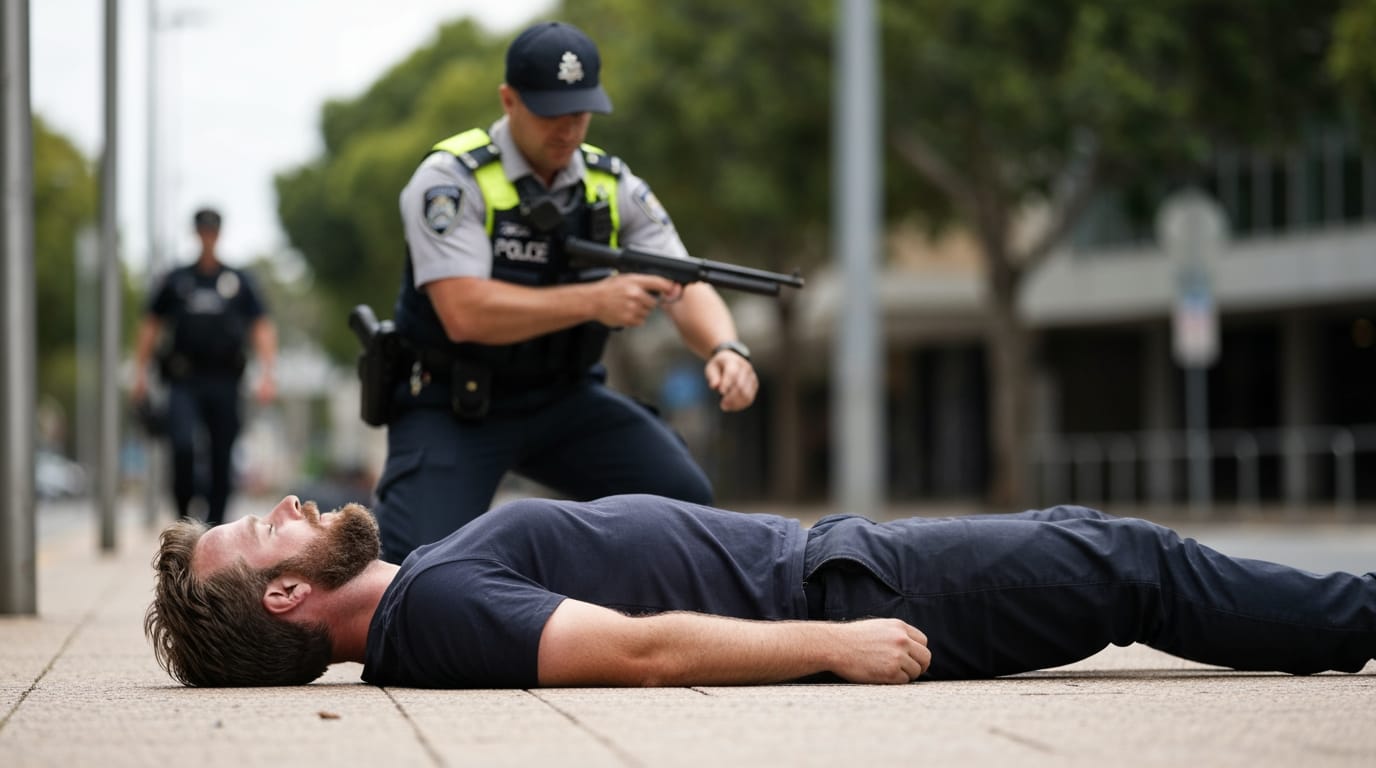
MELBOURNE, Victoria – A massive seven-month manhunt across rugged Australian bushland concluded this week with police fatally shooting Desmond Freeman, the 56-year-old fugitive accused of murdering two Victoria Police officers last August. The operation, one of the largest in Australia's history, brought a decisive end to the protracted search that had gripped the nation and highlighted the growing threat posed by radicalized individuals adhering to anti-government ideologies.
The final confrontation unfolded on Monday morning, March 29, 2026, at a rural property in north-east Victoria, where tactical police units located Freeman. After attempts to negotiate his surrender proved unsuccessful, Freeman was fatally shot during a confrontation with officers. Police indicated that Freeman was believed to be armed and had not taken the opportunity to surrender peacefully. Victoria Police Chief Commissioner Mike Bush stated that the operation's conclusion would bring closure to the families of the fallen officers and to every member of the Victoria Police force.
The Deadly Ambush in Porepunkah
The extensive search for Freeman began on August 26, 2025, after a routine police operation in the small Victorian town of Porepunkah turned deadly. Ten police officers were attempting to execute a search warrant at Freeman's property, reportedly in connection with historical sex offenses, when they were met with gunfire. Detective Neal Thompson, 59, and Senior Constable Vadim De Waart, 35, were killed in what authorities described as a "cold-blooded" ambush. A third officer sustained a wound to the lower body but survived after surgery.
Following the attack, Freeman fled into the dense, challenging terrain of the Mount Buffalo National Park, triggering an immediate and vast search operation. The incident sent shockwaves across Australia, particularly within law enforcement agencies still grappling with the memory of other ambushes on officers, such as the Wieambilla shootings in Queensland in late 2022.
Seven Months on the Run: A Nation on Edge
For seven months, Desmond Freeman remained at large, evading capture despite an unrelenting pursuit by hundreds of police officers. The manhunt became a testament to the perseverance of law enforcement, with resources poured into navigating the region's rugged landscape. The search highlighted the difficulties of apprehending a determined fugitive in such an environment.
The police effort was augmented by a substantial AU$1 million reward for information leading to Freeman's capture, the largest reward ever offered in Victoria's history. This significant bounty underscored the seriousness with which authorities viewed the threat posed by Freeman and the urgency of bringing him to justice. Public safety alerts were frequently issued, advising residents in and around Porepunkah to remain indoors as the search continued. During the early stages of the investigation, Freeman's wife, Mali, and a 15-year-old boy were arrested but later released without charges. The involvement of family members in the initial aftermath further complicated the narrative surrounding the fugitive.
The Ideology of a "Sovereign Citizen"
Desmond Freeman was identified as a proponent of the "sovereign citizen" movement, an anti-government ideology whose adherents falsely believe they are not subject to the laws of the land. Reports indicated that Freeman was a radicalized conspiracy theorist who held deep-seated anti-police sentiments. This extremist viewpoint is believed to have motivated his violent actions against the officers attempting to serve the warrant.
His disdain for authority was evident in a 2024 court hearing regarding his suspended driver's license, where he reportedly likened the sight of a police officer or vehicle to "an Auschwitz survivor seeing a Nazi soldier". Such statements offered a chilling glimpse into the mindset that fueled his aggression and refusal to comply with legal processes. The case tragically underscores the dangerous consequences when individuals embrace such radical beliefs, leading them to reject the very institutions designed to maintain public order and safety.
The incident in Porepunkah, alongside the 2022 Wieambilla shootings in Queensland—where three individuals with extremist Christian fundamentalist and conspiracy theories ambushed and killed two police officers and a civilian—serves as a stark reminder of the evolving threats faced by Australian law enforcement. While the Wieambilla case was later determined by a coronial inquest not to meet the statutory definition of a terror act, attributing the perpetrators' actions to shared psychosis rooted in religious beliefs and persecutory delusions, both incidents reveal a pattern of violence driven by radicalized ideologies and deep-seated mistrust of authority.
Closure and Lingering Questions
The death of Desmond Freeman brings an end to a period of intense anxiety and uncertainty for the communities of Victoria and for the wider Australian police force. For the families of Detective Neal Thompson and Senior Constable Vadim De Waart, the conclusion of the manhunt offers a measure of closure, though the profound loss of their loved ones remains. The incident has reignited discussions about officer safety, the psychological toll on emergency services personnel, and the need for enhanced strategies to address the spread of extremist ideologies within society.
While the immediate threat posed by Freeman has been neutralized, the underlying issues that contribute to such acts of violence continue to demand attention. The tragic events in Porepunkah will undoubtedly be meticulously reviewed, with police and government officials seeking to understand how such a situation could have escalated and what preventative measures can be strengthened to safeguard both law enforcement officers and the public in the future. The memory of the fallen officers, and the immense effort to bring their alleged killer to justice, will serve as a somber reminder of the sacrifices made in the line of duty and the persistent challenges of maintaining peace and order.


