Manipur's Enduring Anguish: Ethnic Tensions Thwart Path to Peace
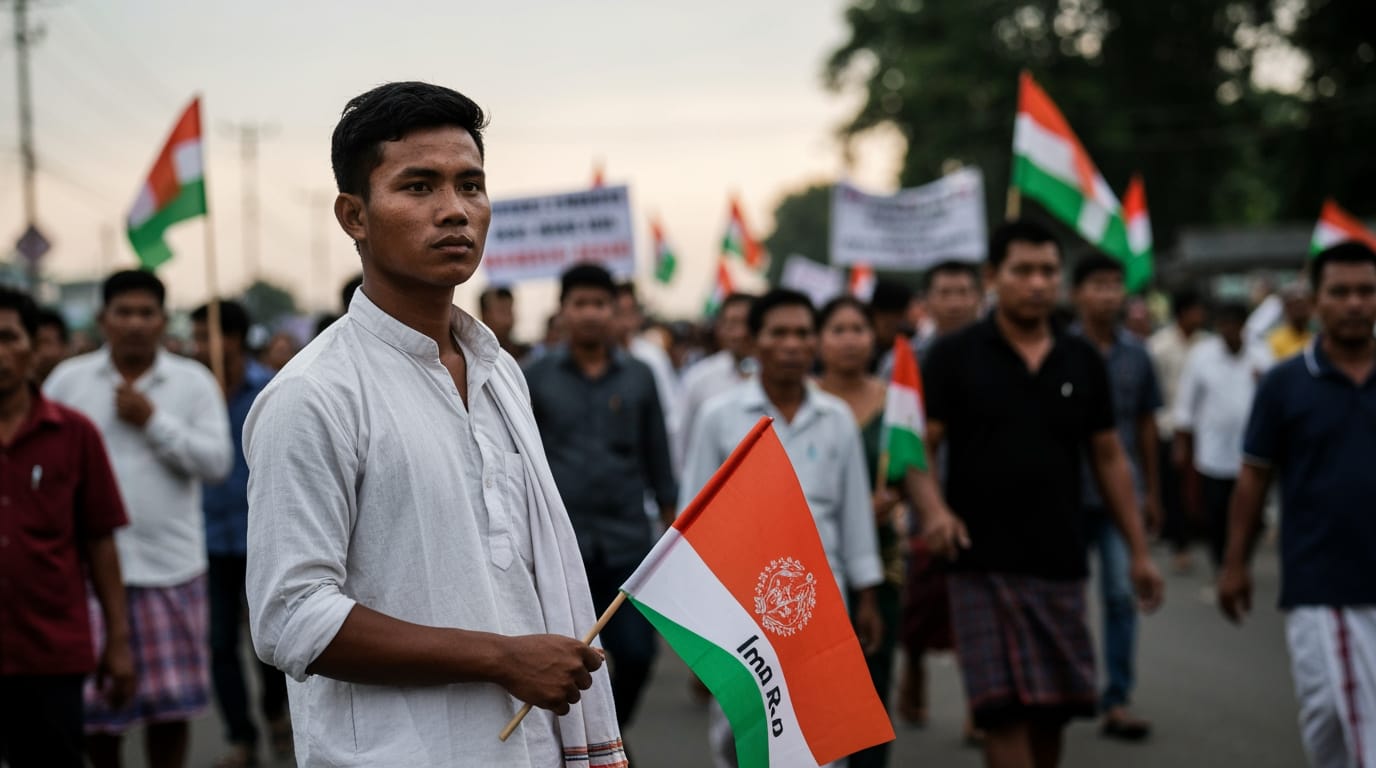
Manipur, a picturesque state in India's northeastern region, remains ensnared in a cycle of ethnic violence, with deep-seated tensions between the dominant Meitei community and the tribal Kuki-Zo communities keeping peace frustratingly out of reach. Nearly three years since widespread unrest first erupted, the state continues to grapple with sporadic clashes, significant displacement, and a profound breakdown of community trust, underscoring the formidable challenges to achieving lasting stability in the volatile region.
The Tinderbox Ignites: A Spark of Discontent Escalates to Widespread Conflict
The current wave of violence primarily ignited on May 3, 2023, following a controversial order from the Manipur High Court. This ruling suggested granting Scheduled Tribe (ST) status benefits to the majority Meitei community, which would have allowed them to purchase land in the constitutionally protected hill districts predominantly inhabited by tribal groups, including the Kuki-Zo. Tribal communities, fearing the erosion of their land rights and a dilution of their existing affirmative action benefits in government jobs and education, protested vociferously. These protests swiftly escalated into widespread ethnic clashes, transforming parts of the state into conflict zones. In the immediate aftermath, hundreds of houses, shops, churches, and temples were destroyed, and dozens of lives were lost. The contentious High Court order itself was later revoked in February 2024, yet the violence and deep divisions it exposed have continued to fester.
Deep-Seated Divides and the Spiral of Violence
The roots of the conflict extend far beyond the immediate trigger, delving into complex historical, economic, and political grievances. The Meitei community, largely residing in the Imphal Valley, often expresses concerns over "illegal migration" from neighboring Myanmar, alleging that Kuki-Zo refugees, ethnically aligned with local Kuki groups, are encroaching on resources and engaging in illegal poppy cultivation. Conversely, Kuki-Zo communities, primarily inhabiting the surrounding hill districts, feel marginalized and perceive state policies, particularly those related to land and forest management, as attempts to dispossess them of their ancestral lands. This struggle for land, resources, and recognition has created a volatile environment where distrust runs deep.
The ensuing violence has been devastating. Since May 2023, more than 260 people have been killed, and upwards of 60,000 individuals have been displaced from their homes, forced to seek refuge in relief camps both within and outside the state. Instances of extreme brutality, including rocket-propelled grenade attacks and hostage-taking, have been reported, further highlighting the lawlessness that has gripped certain areas. The breakdown of law and order has been so severe that India's Supreme Court expressed grave concerns, noting "serious allegations" of law enforcement machinery being "inept in controlling the violence" and, in some cases, "colluded with the perpetrators".
A State Divided, Peace Efforts Prove Elusive
In an attempt to quell the violence, the central government deployed thousands of security forces to Manipur, and Home Minister Amit Shah visited the state. However, these efforts have largely failed to restore normalcy. Security forces have established buffer zones, effectively partitioning the state into areas controlled by Meitei and Kuki-Zo communities. While intended to prevent direct confrontation, this measure has inadvertently solidified the division and hampered the movement of people and goods, leading to severe shortages and distress among civilians.
Attempts to facilitate free movement and restore essential services have been met with resistance and further clashes. For instance, efforts to ensure unrestricted passage on highways and launch bus services with security escorts have faced Kuki protests that turned violent, resulting in casualties. Both sides have accused the government of bias or inaction, deepening the mistrust in state institutions and hindering any meaningful dialogue. The imposition of President's Rule on February 13, 2025, following the resignation of the Chief Minister, reflected the gravity of the situation and the perceived failure of the state administration to control the crisis. Despite these interventions, peace remains an elusive goal, with activists and experts criticizing a lack of "political maturity" and a historical failure of successive governments to address the core issues.
The Human Toll and the Precarious Path Forward
The human cost of the protracted conflict is immense and continues to mount. Thousands of displaced individuals live in precarious conditions in relief camps, their homes destroyed, and their futures uncertain. The social fabric of Manipur has been torn apart, with community ties completely broken, making reconciliation an arduous prospect. Children have missed schooling, livelihoods have been shattered, and psychological trauma runs deep across both communities.
Amidst the ongoing violence and division, calls for separate administrations for the Kuki-Zo community have grown louder, signaling a profound desire for self-governance and security. However, this demand is fiercely opposed by the Meitei community, complicating any potential political resolution. While both Meitei and Kuki-Zo leaders often express a desire for peace, their divergent narratives and mutual distrust, fueled by repeated cycles of violence and perceived injustices, create an intractable stalemate. Without a concerted and unbiased effort from both state and central governments to address the underlying grievances of all communities, ensure accountability for atrocities, and foster genuine dialogue, Manipur's path to lasting peace will remain fraught with peril, leaving its people in a state of enduring anguish.


