Mark Carney Secures Majority Government, Reshaping Canadian Political Landscape
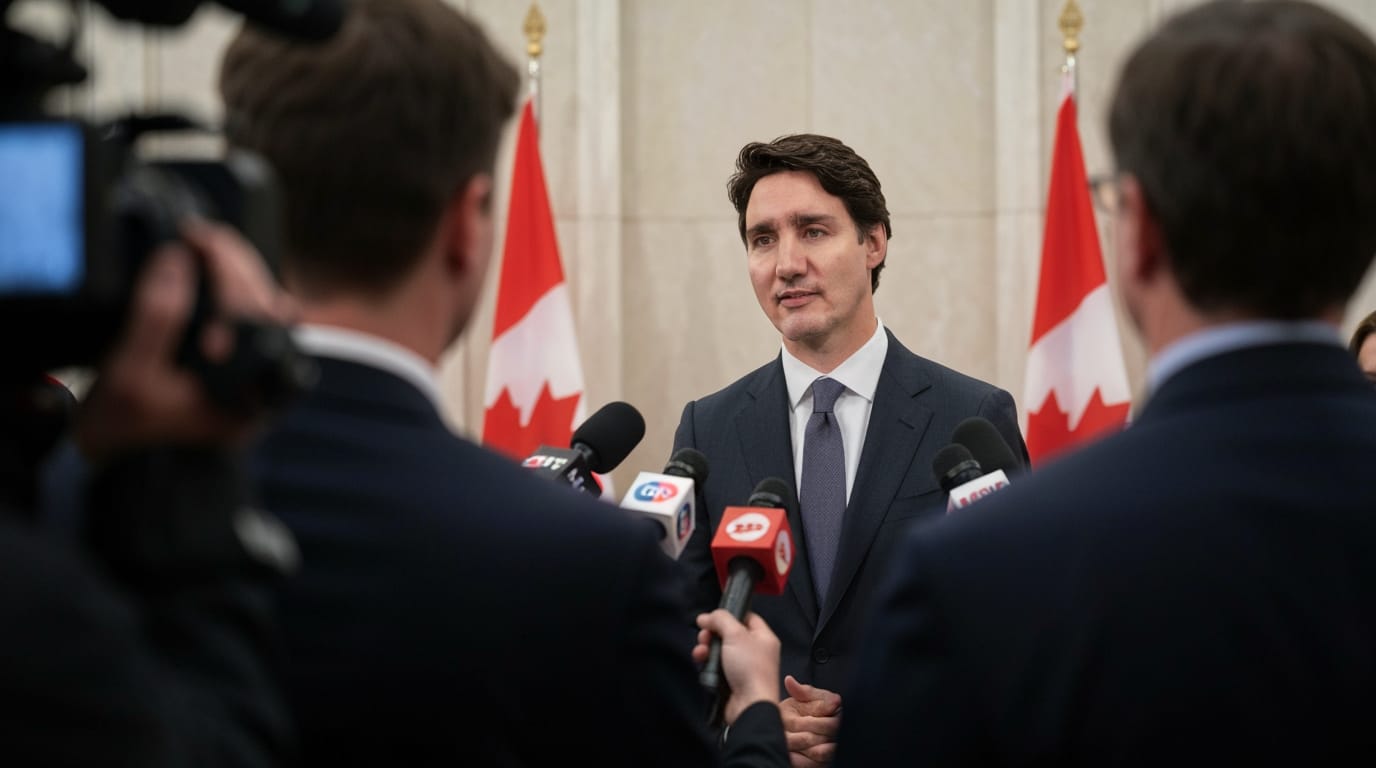
OTTAWA, ON – Prime Minister Mark Carney's Liberal government has secured a parliamentary majority following a decisive triple byelection victory and a series of strategic defections, fundamentally altering the Canadian political landscape. The wins, achieved on Monday, April 13, 2026, push the Liberal Party's seat count to 172 in the 343-seat House of Commons, exactly the threshold required to govern without relying on opposition support. This pivotal shift grants Carney, who assumed the prime ministership in March 2025, a robust mandate to steer Canada through pressing domestic and international challenges until the next scheduled national election in 2029.
The Path to a Firm Mandate
The culmination of the Liberals' effort to gain a majority arrived with the results of three federal byelections held across Ontario and Quebec. In a significant victory for the government, Liberal candidates swept all three vacant ridings. Danielle Martin secured the seat in University-Rosedale, Ontario, a riding with a strong Liberal history. Doly Begum, who had previously served as deputy leader of Ontario's NDP, claimed Scarborough Southwest, Ontario, after crossing the floor to join the Liberal ranks. Rounding out the night, Tatiana Auguste emerged victorious in Terrebonne, Quebec, following a closely contested race against her Bloc Québécois opponent, Nathalie Sinclair-Desgagné.
These byelection triumphs were the final pieces in a carefully orchestrated strategy that saw five opposition Members of Parliament defect to the Liberal Party in the preceding months. These floor-crossings, particularly from Conservative members, played a critical role in bolstering the Liberals' numbers, bringing them to 171 seats just prior to Monday's byelections. The combined effect of these strategic additions and the byelection wins propelled the Liberals over the majority threshold, ending a period of minority government that began with the 2025 general election. The last time a federal government held a majority in Canada was under Justin Trudeau from 2015 to 2019.
Carney's Ascent: From Central Banker to Prime Minister
Mark Carney's journey to prime minister has been unconventional and marked by a dramatic turnaround in his party's fortunes. A former Governor of both the Bank of Canada and the Bank of England, Carney stepped into the political arena following Justin Trudeau's resignation in January 2025. He was elected Leader of the Liberal Party and sworn in as Prime Minister in March 2025, becoming the first prime minister to have never held elected public office prior to his appointment.
His leadership immediately injected new momentum into the Liberal Party, which had been trailing significantly in opinion polls. Before Carney's ascendancy, projections widely anticipated a Conservative landslide victory under Pierre Poilievre in the next federal election. However, Carney's unique blend of economic expertise, international experience, and a perceived ability to navigate complex geopolitical landscapes quickly resonated with Canadians. The 2025 federal election, held on April 28, 2025, saw the Liberals win 169 seats, forming a minority government, which was nonetheless considered a remarkable recovery given their earlier polling deficits. Key issues animating that election included the rising cost of living, housing affordability, crime rates, and growing concerns over U.S. tariffs and annexation threats emanating from the second Trump presidency. Carney's perceived competence in managing the economy and handling relations with the United States has been a significant factor in his and his party's resurgence.
Implications for Governance and Policy
The attainment of a majority government is a transformative development for the Liberal administration. It provides Prime Minister Carney with unparalleled legislative power, enabling his government to pass bills and implement its agenda without needing to seek the support of opposition parties on every vote. This newfound stability means the Liberals can govern with greater predictability and focus until the next general election, constitutionally mandated for 2029.
Carney has already signaled his intent to leverage this stronger position to advance a legislative agenda he deems essential for a world grappling with increased geopolitical divisions. His government's focus is expected to remain on economic growth, creating higher-paying jobs, addressing the cost of living, and bolstering Canada's security. With a clear path forward, the pressure will now intensify for Carney to deliver on these significant promises and translate his mandate into tangible improvements for Canadians. The ability to pass legislation more efficiently could also allow the government to respond more effectively to emergent economic shifts or international developments without the constant threat of a confidence vote.
A Redrawn Political Map
The shift to a Liberal majority also illuminates broader trends in Canadian politics. The 2025 general election saw a significant concentration of the popular vote between the Liberal and Conservative parties, a phenomenon that commentators have described as a polarization and a move towards a de facto two-party system. This trend was underscored by the New Democratic Party (NDP) experiencing its worst electoral result in history in 2025, losing official party status. The Green Party also continued its struggle, further solidifying the dominance of the two largest parties.
While the Liberal camp celebrates its enhanced position, the path to majority has drawn criticism from the opposition. Conservative leader Pierre Poilievre condemned the majority as being achieved through "backroom deals" and accused defecting politicians of betraying their voters. This sentiment highlights the contentious nature of floor-crossings in Canadian politics and the potential for public cynicism regarding political opportunism. Nevertheless, the strategic maneuverings proved effective for the Liberal Party.
Conclusion: A New Era of Stability
Mark Carney's Liberal government has successfully navigated a complex political landscape to secure a majority mandate. This outcome, driven by a series of byelection victories and critical opposition defections, promises a period of increased governmental stability and legislative efficiency for Canada. From a position of minority rule, Carney has consolidated power, allowing his administration to pursue its policy objectives with greater confidence and less parliamentary obstruction.
The transformation from a projected electoral defeat to a solid majority in little over a year underscores Carney's impact on Canadian politics and signals a potential new era of leadership. While the implications for policy and the broader political discourse will unfold over the coming months and years, one thing is clear: Prime Minister Mark Carney now holds a firm grip on the reins of power, poised to chart Canada's course with an undeniable mandate.


