Mass Kidnapping Rocks Kaduna: Over 160 Worshippers Abducted in Church Attacks
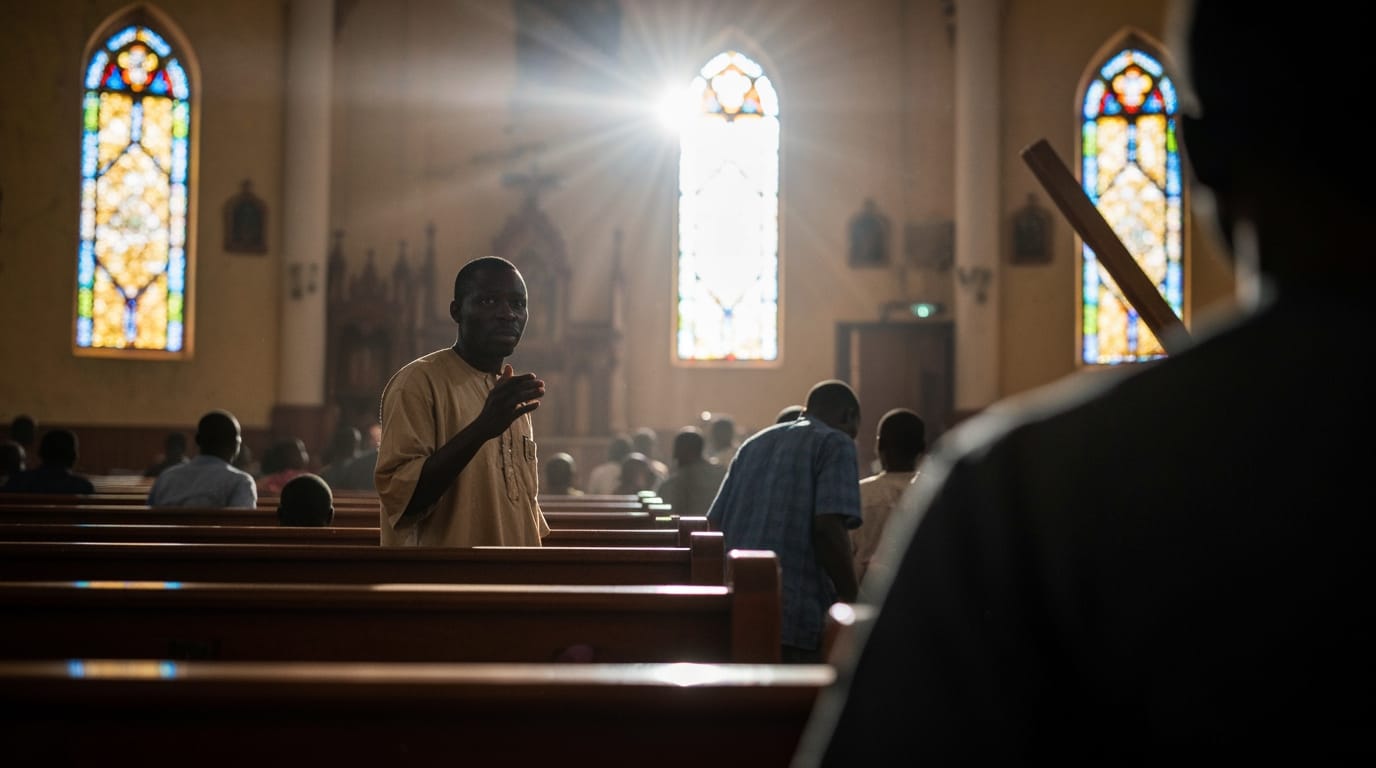
KADUNA, Nigeria – In a brazen display of escalating insecurity, armed gunmen stormed multiple churches in Nigeria's northern Kaduna State on Sunday, January 18, 2026, abducting more than 160 Christian worshippers during services. The coordinated attacks in the remote community of Kurmin Wali have ignited renewed fears about the pervasive threat of mass kidnappings and highlighted the persistent challenges facing security forces in Africa's most populous nation.
Coordinated Attacks Unleash Terror During Sunday Services
The tranquil Sunday morning was shattered in Kurmin Wali, a forest community nestled in the Afogo district of Kaduna State, as armed "bandits" launched simultaneous assaults on at least two, possibly three, churches. Eyewitnesses and church leaders reported that gunmen, described as heavily armed, forced their way into the Evangelical Church Winning All (ECWA), a Cherubim and Seraphim church, and a Catholic church around 11:25 a.m. local time. The attackers reportedly blocked entrances and herded worshippers into the dense bush, turning places of solace into scenes of terror.
Initial reports from Reverend Joseph Hayab, head of the Christian Association of Nigeria for the northern region, indicated that 172 believers were initially abducted, though nine managed to escape, leaving 163 still in captivity. Traditional chief Ishaku Dan'azumi of Kurmin Wali stated that 166 individuals were seized from three churches during the Sunday service, further underscoring the scale of the incident. While state police acknowledged the incident, they stated they were working to determine the precise number of those taken, with some local officials even dismissing the reports as "totally false". This discrepancy has fueled frustration among affected communities, who claim political leaders are downplaying the severity of the crisis.
Nigeria's Deepening Kidnapping Epidemic
The mass abduction in Kaduna is the latest in a relentless wave of kidnappings that have plagued Nigeria, particularly its northern and central regions, for several years. These attacks are primarily carried out by organized criminal gangs, locally known as "bandits," who frequently target communities for mass abductions, demanding large ransoms for their victims' release. The targets are often indiscriminate, with both Christian and Muslim communities falling prey to these criminal enterprises.
The tactic of mass abduction gained international notoriety with the 2014 kidnapping of over 200 Chibok schoolgirls by Boko Haram. Since then, numerous similar incidents, including the abduction of more than 300 students and teachers from a Catholic school in Niger state in November 2025, have become tragically common. These previous victims were eventually released in batches, but often after weeks or months of captivity and presumed ransom payments. The economic incentive of ransoms has created a lucrative industry for these criminal groups, further entrenching the cycle of violence and abductions. Villages like Kurmin Wali have reportedly lived under constant threat, with residents sometimes facing multiple smaller-scale kidnappings that go unreported to authorities, impacting vital farming activities and livelihoods.
Official Response Amidst Community Outcry
The immediate aftermath of the Kaduna attacks was marked by a troubling divergence between official statements and the accounts of local residents and church leaders. While Kaduna State Police spokesperson Mansir Hassan confirmed efforts were underway to track the abductors and rescue captives, other state officials, including the Commissioner for Internal Security Sule Shauibu, reportedly dismissed the "narrative" about the kidnapping as entirely baseless. This denial has exacerbated tensions and deepened distrust between the affected communities and governmental authorities. Local chief Wali lamented that politicians were denying the kidnapping of their people, stating, "It is only politicians that are denying the kidnapping of our people."
The challenges faced by Nigerian security forces are multifaceted. The remote nature of many targeted communities, often characterized by poor road infrastructure, makes rapid response difficult. Furthermore, experts point to systemic issues such as corruption, inadequate intelligence sharing, and underfunded local police as significant impediments to effectively addressing the various security crises gripping the nation. Despite these challenges, reports indicate that troops and other security agencies have been deployed to the area following the latest abductions, with efforts focused on rescue operations.
Broader Implications and International Scrutiny
The persistent insecurity has far-reaching implications for Nigeria, affecting not only the safety of its citizens but also its economic stability and international standing. The constant threat of kidnapping has severely hampered agricultural activities in affected regions, leading to reduced food production and increasing economic hardship for already vulnerable populations. The instability also deters investment and development, perpetuating a cycle of poverty and vulnerability.
Internationally, Nigeria's ongoing struggles with insecurity have drawn increasing attention. The U.S. government has expressed concerns about the targeting of Christians, with former President Donald Trump previously warning of further attacks if the violence continued. In December 2025, the U.S. launched military airstrikes in Nigeria's Sokoto region, reportedly targeting an Islamic State group, highlighting the international dimension of the conflict. While Nigeria is diverse, with a roughly even split between a predominantly Christian south and a Muslim-majority north, experts emphasize that the violence often affects both religious groups, frequently without distinction.
A Nation Grapples with Unrelenting Crisis
The mass kidnapping in Kaduna State serves as a stark reminder of the unrelenting security challenges confronting Nigeria. While the government asserts its commitment to combating these criminal elements, the frequency and scale of such incidents continue to underscore the urgent need for more effective strategies, improved intelligence gathering, and robust community engagement. For the families of the abducted worshippers and the wider Nigerian populace, the anguish of uncertainty and the desperate plea for safety remain a pervasive reality as the nation grapples with a crisis that continues to claim lives and shatter communities.


