Nirav Modi Mounts Last-Ditch Legal Challenge to Block Extradition, Citing Torture Risk
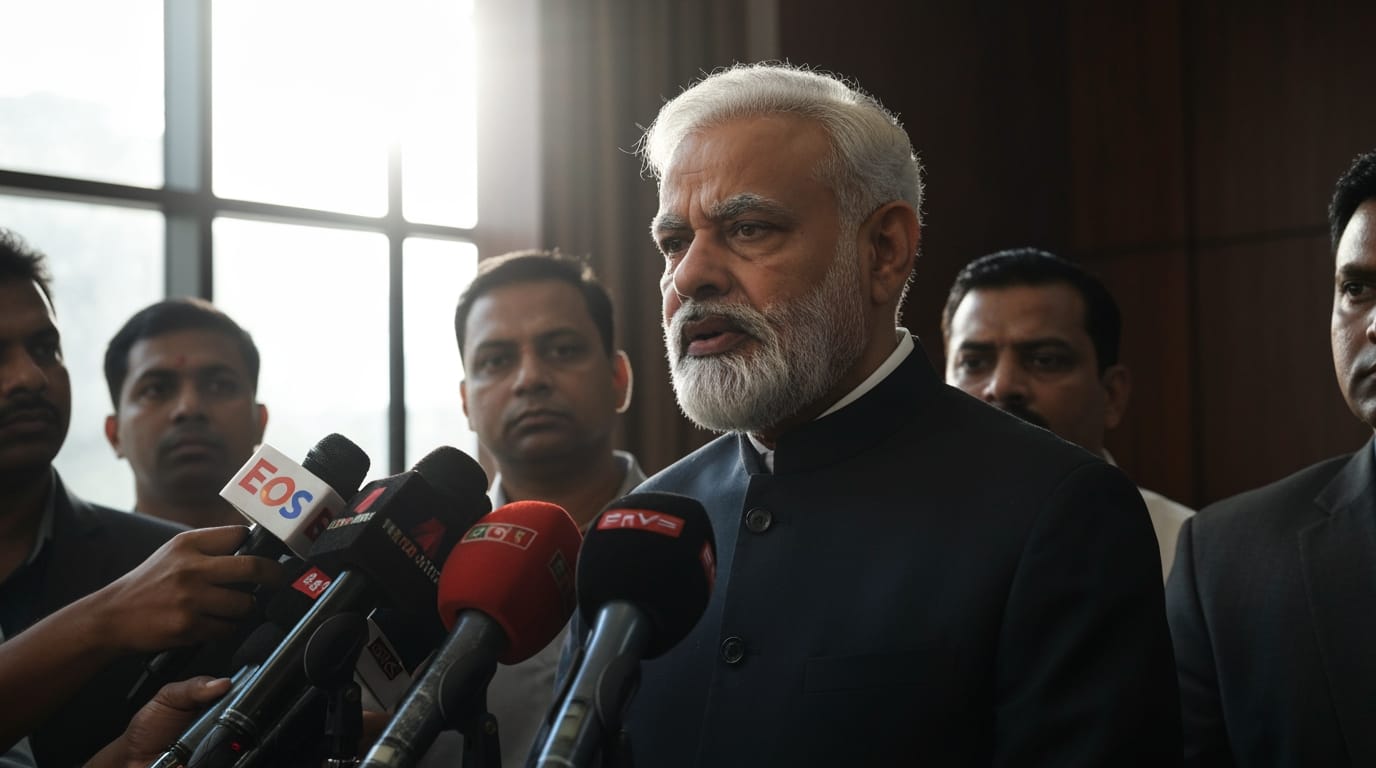
London, UK – Fugitive diamantaire Nirav Modi has made a fresh, urgent plea before the UK High Court, launching a last-ditch attempt to prevent his extradition to India to face charges in the estimated $2 billion Punjab National Bank (PNB) fraud case. In a two-day hearing that concluded on Tuesday, Modi's legal team argued that he faces a "real risk of torture" and ill-treatment in Indian custody, asserting that fresh developments warrant a reconsideration of his long-running appeal. The High Court has reserved its judgment, a decision that could either clear the path for his return to India or plunge the complex extradition battle into further delays.
The high-stakes legal proceedings, unfolding at the Royal Courts of Justice, underscore the persistent efforts by Indian authorities to bring back economic offenders who have fled the country. Appearing via video link from Pentonville prison in north London, where he has been held since his arrest in March 2019, Modi's counsel laid out arguments challenging the reliability of India's sovereign assurances regarding his safety and fair treatment.
The Latest Legal Maneuver: Torture Claims and Doubts over Assurances
During the recent High Court hearing, Modi's barrister, Edward Fitzgerald KC, sought to reopen the extradition appeal, contending that returning his client to India poses a "real risk of inhuman or degrading treatment or torture arising from interrogation." Fitzgerald argued that custodial mistreatment in India is "endemic" and that there is a lack of effective monitoring mechanisms to prevent such occurrences. He specifically raised concerns that Modi could be moved out of Mumbai's Arthur Road Jail and subjected to coercive interrogation by agencies beyond the Central Bureau of Investigation (CBI) and the Enforcement Directorate (ED), whose assurances, he claimed, might not bind other departments like the Income Tax Department or the Serious Fraud Investigation Office.
The Indian government, represented by the Crown Prosecution Service (CPS), vehemently opposed the application, labeling it as "delayed and without merit" and based on a "false premise." Helen Malcolm KC, representing India, asserted that the sovereign assurances provided are given in good faith, are binding, and that significant protective factors are in place to ensure their upholdment. She accused Modi of making "repeated attempts to find a chink" in the extradition process and manipulating judicial proceedings, including allegations of attempting to destroy evidence and intimidate witnesses. Lord Justice Stuart-Smith, presiding over the hearing alongside Justice Robert Jay, acknowledged the "extreme importance" of the case to both Modi and the Indian officials who traveled for the proceedings, promising to deliver the judgment as soon as possible.
The Genesis of the PNB Fraud: A Multi-Billion Dollar Deception
The roots of the current legal battle trace back to January 2018, when the Punjab National Bank (PNB), a state-owned Indian lender, uncovered a massive financial fraud that sent shockwaves through India's banking sector. The scam, initially estimated at ₹11,400 crore (approximately $1.77 billion), quickly ballooned to over ₹14,000 crore (around $2 billion) following further investigations.
The elaborate scheme, allegedly orchestrated by Nirav Modi and his uncle Mehul Choksi, involved the fraudulent issuance of Letters of Undertaking (LoUs) from a single PNB branch in Mumbai. These LoUs, essentially bank guarantees, were illicitly obtained by PNB officials in collusion with Modi's companies, bypassing the bank's core banking system. This allowed Modi and his associates to secure substantial overseas credit from other Indian banks' foreign branches without providing the necessary collateral. The fraud went undetected for years due to the complicity of bank insiders, enabling the siphoning off of massive sums under the guise of trade finance. Modi faces multiple charges, including fraud investigated by the CBI and money laundering allegations by the Enforcement Directorate.
A Prolonged Legal Odyssey: Appeals and Setbacks
Modi's fight against extradition has been a protracted and multi-layered legal saga in the UK. Following his arrest in March 2019 on an extradition warrant, the UK Home Secretary, Priti Patel, approved his extradition to India in April 2021, after UK courts found a prima facie case against him.
However, Modi immediately launched an appeal, primarily on grounds of his mental health, arguing that his severe depression and high risk of suicide would make extradition "unjust or oppressive." His legal team contended that conditions in Indian prisons, specifically Arthur Road Jail in Mumbai where he would be held, were inadequate to manage his mental state and prevent suicide attempts. Despite these arguments, the High Court dismissed his appeal in December 2022, ruling that the risk of suicide was not such that extradition would be unjust or oppressive, given the assurances provided by Indian authorities regarding medical care. Subsequently, his application to appeal to the UK Supreme Court was also refused, significantly limiting his legal options in the UK.
This latest application to reopen the appeal marks a new chapter, heavily relying on the precedent set by the extradition case of Sanjay Bhandari, who was discharged from extradition on human rights grounds in the UK last year. The deferral of a "rolled-up hearing" to March 2026, which would determine whether permission to reopen the appeal should be granted, highlights the complexity and ongoing nature of this high-profile case.
Implications and the Road Ahead
The High Court's impending decision carries significant implications for both Nirav Modi and the ongoing efforts by India to hold individuals accountable for financial crimes committed within its jurisdiction. If the court rejects Modi's plea to reopen the appeal, the extradition process is expected to move forward, potentially leading to his return to India to face trial. Conversely, a decision in his favor would introduce yet another layer of legal proceedings and further prolong his stay in the UK.
The case also tests the strength and reliability of bilateral extradition treaties and the efficacy of "sovereign assurances" provided by one nation to another regarding the treatment of an extradited individual. The outcome will undoubtedly be closely watched by international legal communities and financial institutions, as it could set a precedent for future extradition cases involving alleged economic offenders seeking refuge abroad. For the time being, the fate of Nirav Modi, a central figure in one of India's largest financial scandals, remains in the hands of the British judiciary.


