Assassination of Iran's Security Chief Ali Larijani Ignites Tehran's Fury, Prompts Vows of 'Decisive' Retaliation
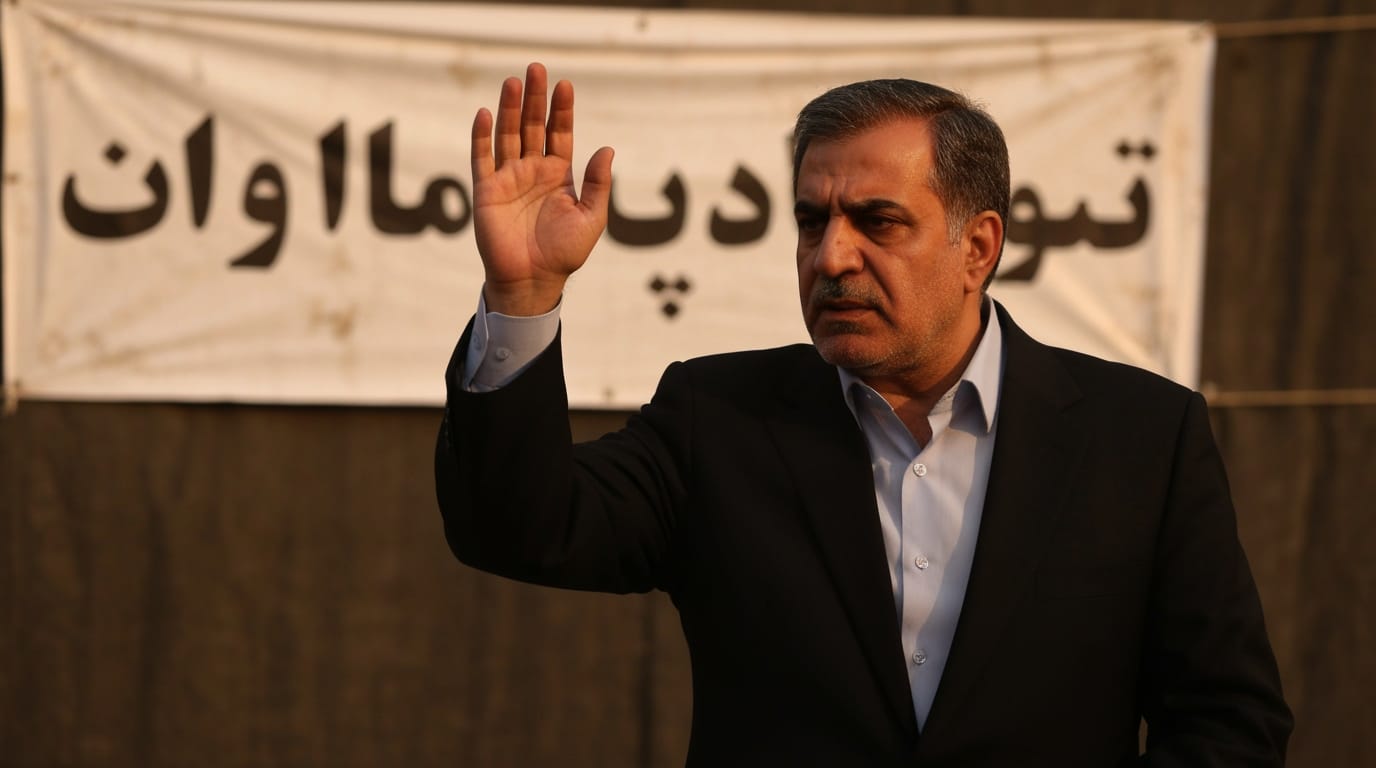
Iran's powerful security chief, Ali Larijani, was killed in an Israeli airstrike early Tuesday, Tehran confirmed, immediately triggering pledges of "decisive and regrettable" retaliation from Iranian officials and further escalating an already volatile regional conflict. The death of Larijani, a figure widely regarded as the "de facto leader" of Iran following the recent killing of Supreme Leader Ayatollah Ali Khamenei, marks a significant blow to the Islamic Republic's leadership and deepens the ongoing "US-Israeli war on Iran." The incident has sent shockwaves across the Middle East, with analysts warning of potentially severe consequences for regional stability and international relations.
The Strike and Tehran's Confirmation
In an overnight operation that Israel later confirmed, Ali Larijani, the Secretary of Iran's Supreme National Security Council, was killed. The strike also claimed the lives of his son, Morteza Larijani, his deputy for security affairs Alireza Bayat, and several guards. Concurrently, General Gholamreza Soleimani, commander of Iran's influential Basij militia, was also reportedly killed in a separate, but related, Israeli attack. Iran's Supreme National Security Council officially confirmed Larijani's death, describing it as an act of martyrdom after a lifetime dedicated to the advancement of Iran and the Islamic Revolution. The rapid confirmation from Tehran underscored the gravity of the event and set a confrontational tone for the Islamic Republic's response.
Ali Larijani: Architect of Iranian Power
Ali Larijani, aged 67, was a towering figure in Iranian politics and security, holding a career that spanned decades and placed him at the heart of the Islamic Republic's decision-making apparatus. Born in Najaf, Iraq, he rose to prominence after joining the Islamic Revolutionary Guard Corps (IRGC) in 1981, eventually becoming a brigadier general. His diverse resume included serving as head of state broadcasting, chief nuclear negotiator, and Speaker of Parliament for over a decade.
More recently, Larijani returned to the core of power as the Secretary of the Supreme National Security Council in August 2025, a position he previously held from 2005 to 2007. In this critical role, he was at the intersection of military, intelligence, and political strategy, often functioning as Iran's top negotiator on national security issues, including its nuclear program. Following the death of Supreme Leader Ayatollah Ali Khamenei on February 28, Larijani was widely seen as the "de facto leader" of Iran, effectively managing the country's day-to-day strategy and coordinating its security bodies in the ongoing conflict. His death removes a key pillar of the Iranian leadership, described as a "renaissance man" who possessed a unique blend of hardline ideology and pragmatic negotiation skills.
Tehran's Unwavering Resolve and Vows of Revenge
The assassination immediately drew fierce condemnation and promises of retribution from Iranian leadership. Iranian Army Chief Amir Hatami vowed a "decisive and regrettable" retaliation for Larijani's killing. Echoing this sentiment, President Masoud Pezeshkian expressed deep sorrow and pledged "harsh revenge" against those responsible, describing Larijani's death as a profound loss that would be "a very difficult task" to overcome.
In a dramatic escalation, Iran's Revolutionary Guards announced on Wednesday that they had launched missiles at central Israel, explicitly stating the strikes were "in revenge for the blood of martyr Dr Ali Larijani and his companions." Furthermore, the newly appointed Supreme Leader, Mojtaba Khamenei, the son of the late Ayatollah Ali Khamenei, reportedly rejected de-escalation offers conveyed by intermediary countries. According to a senior Iranian official, Khamenei asserted that it was not "the right time for peace until the United States and Israel are brought to their knees, accept defeat, and pay compensation." These statements underscore Tehran's unwavering resolve and signal a potential for continued, and possibly intensified, retaliatory actions.
Escalating Regional Tensions and Global Implications
Larijani's assassination occurs more than three weeks into a broader "US-Israeli war on Iran," which has rapidly expanded into a regional conflict with no clear signs of abatement. The conflict has seen heightened tensions in critical waterways, with US President Donald Trump reportedly castigating allied countries for their lukewarm response to requests for military assistance in securing the Strait of Hormuz, a vital transit point for a fifth of the global oil trade.
The targeting of such a high-ranking official like Larijani, coupled with the prior death of Supreme Leader Ali Khamenei, indicates a strategy of decapitation strikes aimed at Iran's leadership. This aggressive posture is further amplified by Israel's explicit vow to "track down, find, and neutralise" Iran's new Supreme Leader, Mojtaba Khamenei. Such declarations raise serious concerns about the conflict's trajectory, suggesting a willingness to target the highest echelons of Iranian power, which could provoke an even more severe response from Tehran. The loss of Larijani, an experienced insider capable of managing both war and political negotiations, could leave a void in Iran's leadership that potentially makes future de-escalation efforts more challenging.
A Region on Edge
The killing of Ali Larijani represents a critical juncture in the ongoing conflict, removing a key strategist and influential figure from Iran's command structure. Tehran's immediate and forceful vows of retaliation, already manifested in missile strikes against Israel, suggest a further intensification of hostilities. With Iran's new Supreme Leader explicitly rejecting de-escalation and Israel openly threatening further leadership targets, the Middle East stands on the brink of an even wider and more devastating confrontation. The international community watches anxiously as the cycle of strikes and reprisals threatens to unravel an already fragile regional order, pushing the boundaries of conflict into uncharted and perilous territory.


