Counterterrorism Chief Joe Kent Resigns Amidst Iran War, Citing "No Imminent Threat"
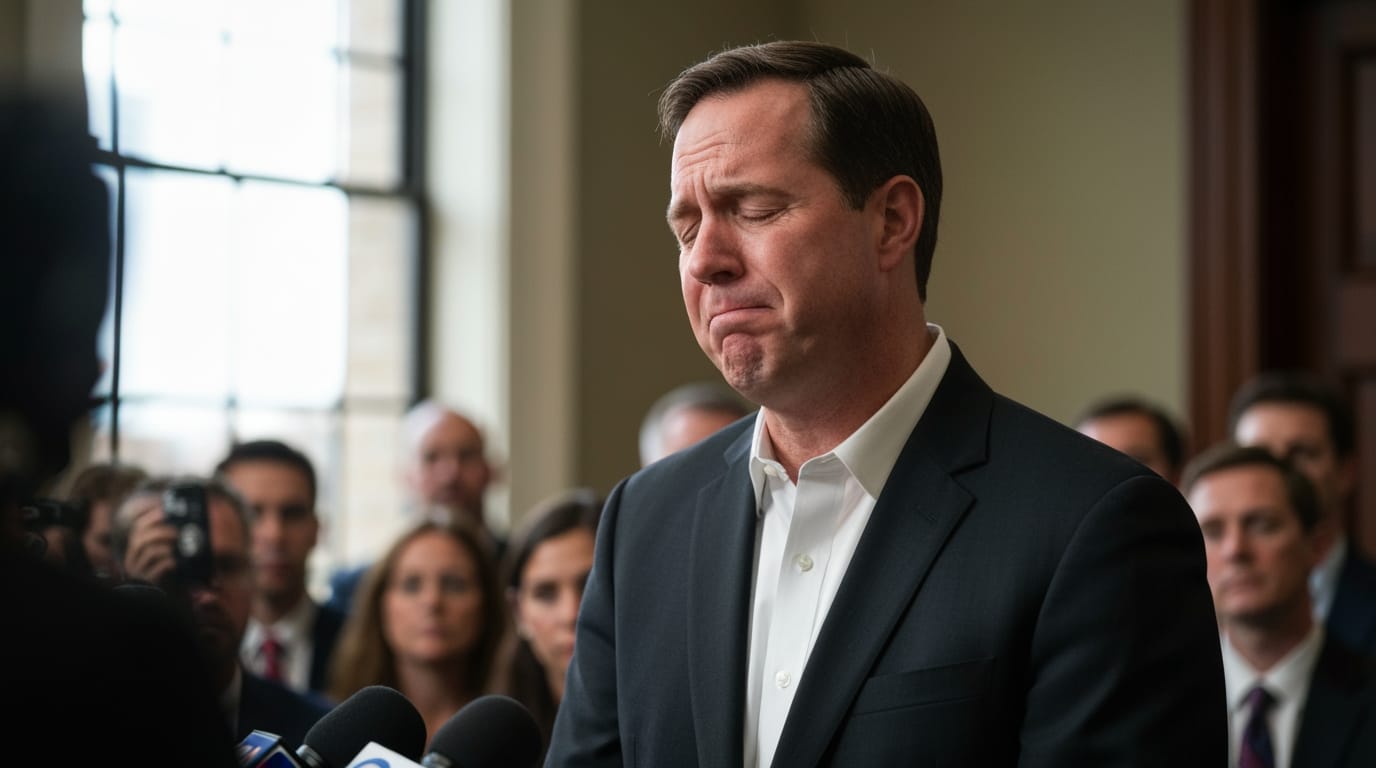
WASHINGTON D.C. – Joe Kent, the United States' top counterterrorism official, dramatically resigned from his post on Tuesday, March 17, 2026, becoming the first senior administration official to openly dissent against the ongoing U.S. and Israeli military intervention in Iran. Kent, who served as Director of the National Counterterrorism Center (NCTC), publicly stated his inability to "in good conscience support the ongoing war in Iran," asserting that the Islamic Republic "posed no imminent threat to our nation" and that the conflict was initiated "due to pressure from Israel and its powerful American lobby." His resignation, announced via a letter posted on X (formerly Twitter), sent ripples through Washington, exposing deep ideological fissures within the administration as the war enters its third week.
Kent's departure marks a significant moment, highlighting a stark contrast between his anti-interventionist "America First" stance and the administration's justification for military action. His direct challenge to the rationale for war has ignited debate on Capitol Hill and within the intelligence community, raising questions about the intelligence assessments that led to the conflict and the influence of foreign interests on U.S. foreign policy.
A Moral Stand Against Intervention
In his resignation letter, addressed to President Donald Trump, Joe Kent articulated a profound moral objection to the military campaign. He emphasized that he "cannot support sending the next generation off to fight and die in a war that serves no benefit to the American people nor justifies the cost of American lives." Kent further accused "high-ranking Israeli officials and influential members of the American media" of deploying a "misinformation campaign" that "wholly undermined" President Trump's "America First" platform. He alleged this campaign sowed "pro-war sentiments" to encourage a war with Iran, deceiving the President into believing an "imminent threat" existed and that there was a "swift path to victory." Kent explicitly labeled this assertion a "lie," drawing parallels to tactics he claimed were used to draw the U.S. into the Iraq War.
President Trump swiftly dismissed Kent's rationale, telling reporters on Tuesday that he had "always thought he was a nice guy, but I always thought he was weak on security — very weak on security." The President added that Kent's statement confirmed it was "a good thing that he's out" because of his assertion that Iran was not a threat, a claim Trump strongly refuted. White House press secretary Karoline Leavitt echoed this sentiment, stating that Kent's letter contained "many false claims" and took issue with his "no imminent threat" assertion. House Speaker Mike Johnson (R-La.) also weighed in, questioning Kent's sources of information and defending the administration's actions by stating that classified briefings indicated an "imminent threat" and Iran's proximity to "nuclear capability."
Kent's Background and Anti-War Convictions
Joe Kent's career trajectory and personal experiences have long shaped his anti-interventionist views. A decorated former Green Beret, Kent served 11 combat deployments, a background that he often cited in his arguments against prolonged foreign engagements. His personal connection to the costs of war is profound; his wife, Shannon Kent, a Navy cryptologic technician, was tragically killed by a suicide bomber in Syria in 2019. This personal loss has frequently underpinned his fervent calls to avoid what he termed "never-ending wars."
Despite his anti-war stance, Kent was a staunch supporter of President Trump, who nominated him as NCTC Director, a position he was confirmed for in July 2025. Prior to his federal appointment, Kent was a political candidate who aligned with conservative and right-wing elements, having run two unsuccessful congressional campaigns in Washington state. During his Senate confirmation hearing, he faced scrutiny for his refusal to distance himself from conspiracy theories related to the January 6, 2021, Capitol attack and false claims regarding the 2020 presidential election. Within the administration, Kent was known to be closely associated with Director of National Intelligence Tulsi Gabbard, sharing a common "America First" and anti-interventionist foreign policy outlook. He had previously lauded Trump's first administration for decisive actions against figures like Qassem Soleimani and the defeat of ISIS, seeing these as examples of effective, yet contained, uses of military power.
The Shifting Justification and Deepening Divide
Kent's resignation has brought into sharp focus the administration's shifting justifications for the military strikes against Iran. While Kent argued that "Iran posed no imminent threat," President Trump and other officials have consistently maintained the necessity of intervention due to intelligence suggesting an immediate danger, including Iran's alleged pursuit of nuclear capabilities. Secretary of State Marco Rubio had previously indicated that the "imminent threat" involved Israel's plan to target Iranian leadership, though President Trump later denied any direct link between Israel's plans and his decision-making.
The highly public nature of Kent's resignation and his pointed criticisms have exposed a significant schism within the broader Trump coalition. It highlights the tension between those who advocate for a restrained foreign policy and those who believe in projecting U.S. military power to advance global interests. While some, like Senator Lindsey Graham (R-S.C.), an outspoken proponent of military action against Iran, called for a replacement who would "have a better understanding of the threats presented by the Iranian regime," others within the administration quietly expressed admiration for Kent's stand. An anonymous administration official described Kent as a "consistent anti-war voice on the right for years" and acknowledged widespread fatigue with conflicts in the Middle East. Paul, co-founder of the advocacy organization A New Policy, supported Kent's decision, asserting that "Israel's interests are not America's — and its war with Iran should not be our war."
Implications for Policy and Public Trust
The resignation of such a high-ranking official from a critical national security post, particularly one responsible for counterterrorism, carries significant implications. It not only raises concerns about the morale and internal cohesion of the intelligence community but also forces a renewed public examination of the intelligence underpinning the current conflict. The NCTC, where Kent served, is tasked with analyzing and detecting terrorist threats, and his assertion that "Iran posed no imminent threat" directly challenges the very intelligence assessments that form the basis of military action.
Kent's departure underscores a broader discomfort among certain segments of the "America First" movement regarding foreign entanglements, further intensifying the debate about America's role in global conflicts and the reliability of its alliances. As the war in Iran continues, the void left by Kent's resignation, coupled with the public questioning of official narratives, ensures that scrutiny over the war's justification and its long-term consequences will only intensify in the coming weeks and months. His final plea, "I pray that you will reflect upon what we are doing in Iran, and who we are doing it for," serves as a potent challenge to the administration and a rallying cry for those skeptical of ongoing U.S. military engagements abroad.


