AFCON Final Overturned: Morocco Crowned Champions After Senegal Stripped of Title in Unprecedented Ruling
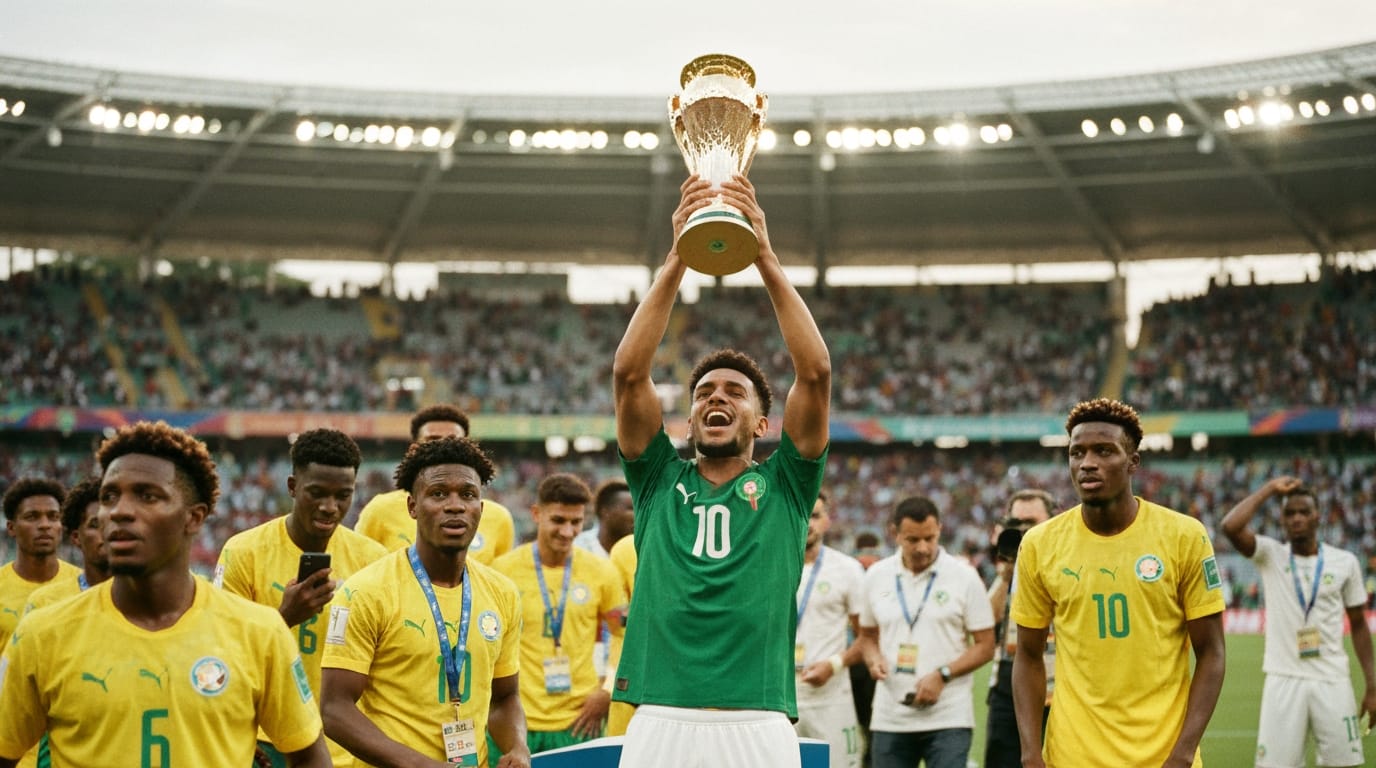
RABAT, Morocco – In a shocking turn of events that has sent ripples across African football, Senegal has been stripped of its 2025 Africa Cup of Nations (AFCON) title, with the Confederation of African Football (CAF) officially crowning Morocco as the champions. The extraordinary decision, announced by the CAF Appeal Board on March 17, 2026, comes two months after the contentious final in Rabat, where Senegal originally clinched a 1-0 extra-time victory over the host nation. The ruling hinges on Senegal's dramatic mid-match protest and walk-off, which CAF has deemed a forfeiture of the game, altering the historical record and handing Morocco their second continental crown.
The Controversial Final That Sparked a Crisis
The January 18, 2026, AFCON final at the Prince Moulay Abdellah Stadium in Rabat was marred by controversy and chaotic scenes that ultimately led to this unprecedented outcome. The match, which had been a tightly contested affair, took a dramatic turn in stoppage time of regulation play when Morocco was awarded a penalty kick. Spanish-Moroccan star Brahim Diaz went down in the box, and after a VAR review, the referee pointed to the spot.
This decision ignited a furious reaction from the Senegalese bench and players. Head coach Pape Thiaw reportedly instructed his team to leave the field in protest, leading to a stoppage of approximately 17 to 20 minutes as Senegalese players walked off the pitch. Despite the lengthy delay and widespread bewilderment, the players eventually returned. Brahim Diaz subsequently missed the penalty, and the game proceeded to extra time, where Senegal's Pape Gueye scored the decisive goal, seemingly securing their second AFCON title.
Morocco's Successful Appeal and CAF's Strict Enforcement
Following the tumultuous final, the Royal Moroccan Football Federation (FRMF) lodged an official appeal with CAF, contesting the validity of the result due to Senegal's conduct. The FRMF's stance was that their appeal was "never intended to challenge the sporting performance," but rather to ensure the strict application of the competition's regulations.
The CAF Appeal Board, after careful deliberation, sided with Morocco, upholding their appeal. In its official statement on March 17, 2026, CAF declared that the Senegalese National Team had forfeited the final match. The ruling invoked Article 84 of the Regulations of the CAF Africa Cup of Nations, which addresses situations where a team refuses to play or leaves the field before the end of regulation time without the referee's authorization. Consequently, the match result has been officially recorded as a 3-0 victory in favor of Morocco, retroactively making them the 2025 AFCON champions. This ruling effectively reversed the earlier decision by the CAF Disciplinary Board, which had initially dismissed Morocco's bid to overturn the result.
The CAF statement highlighted that "the conduct of the Senegal team falls within the scope of Articles 82 and 84" of the regulations, citing their infringement. FIFA President Gianni Infantino had previously condemned the scenes during the final, describing the behavior as "unacceptable" and emphasizing that "violence cannot be tolerated in our sport."
Ramifications and Reactions Across the Continent
The decision has ignited a firestorm of debate and discussion throughout the football world, particularly in Africa. For Morocco, this ruling marks their second AFCON title, ending a long drought since their first triumph in 1976. The victory, albeit achieved off the field, is a significant milestone for a nation that hosted the controversial tournament.
Conversely, the ruling is a bitter blow for Senegal, who had been celebrating what they believed was their second continental crown, adding to their 2021 (played in 2022) victory. The stripping of their title is an unprecedented event in AFCON history, leaving their football federation and fans reeling. Many journalists and fans have expressed outrage and bafflement at the ruling, questioning its fairness given that the game was ultimately completed.
Beyond the title change, CAF also addressed other disciplinary matters stemming from the chaotic final. Moroccan player Ismaël Saibari received a reduced sanction, while the Moroccan federation was fined for incidents involving ball boys and interference around the VAR review area, though some penalties were reduced on appeal.
A Defining Moment for African Football Governance
The overturning of an AFCON final result sets a significant precedent for football governance in Africa. It underscores CAF's commitment to upholding its regulations, even when faced with highly contentious on-field events and potential backlash. The incident serves as a stark reminder to all participating nations about the consequences of protests that violate established rules of conduct during matches.
While the sporting integrity of such a decision will undoubtedly be debated for years to come, CAF's ruling aims to reinforce discipline and respect for the game's laws. The dramatic conclusion to the 2025 AFCON tournament will long be remembered not for the goals scored on the pitch, but for the administrative decision that rewrote the history books and reshaped the legacy of two prominent African footballing nations.


