Mass Shooting Suspect Found Dead in German Prison, Raising Questions About Justice and Oversight

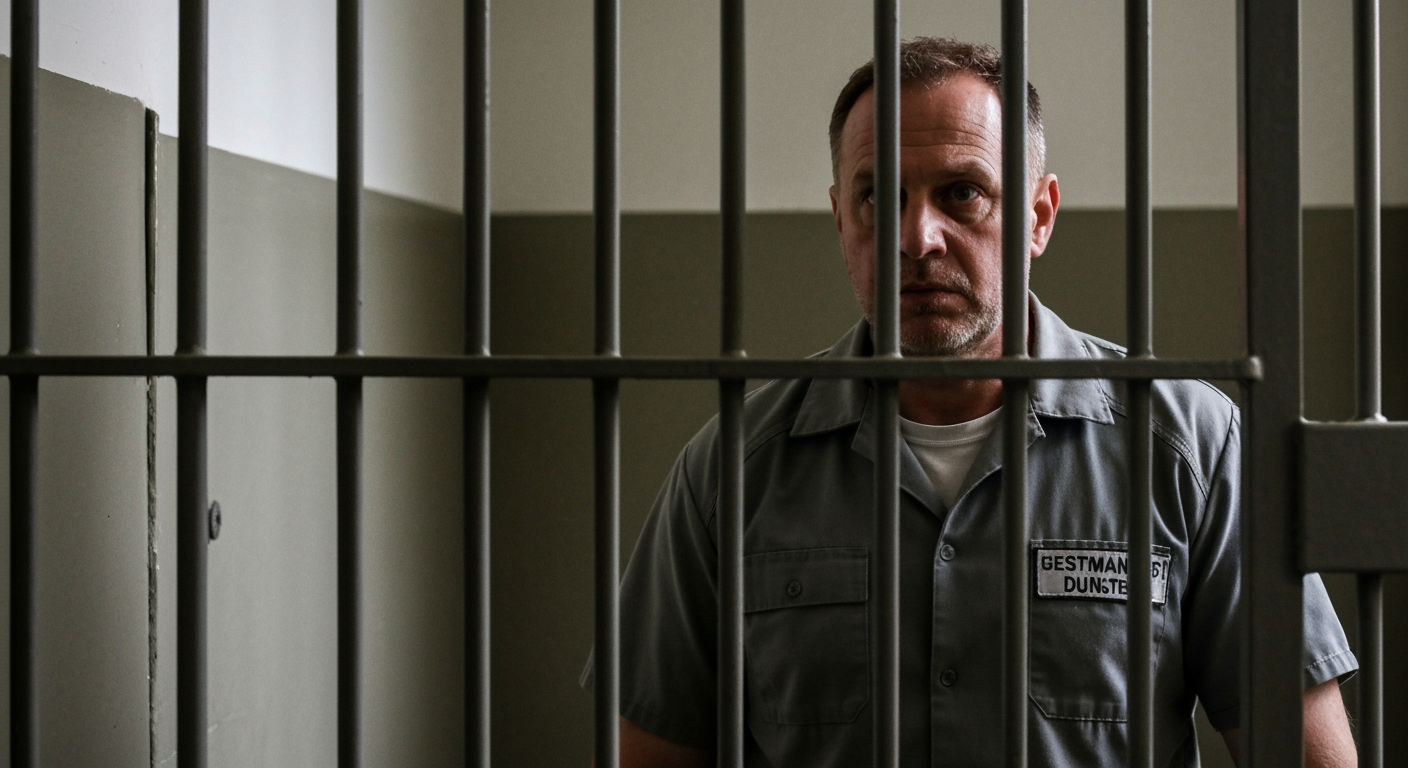
BREMERVÖRDE, Germany – A man accused of a horrific mass shooting that claimed the lives of six social workers in Stade last month was found dead in his prison cell on Tuesday, ending a judicial process before it could truly begin and leaving victims' families grappling for answers. Fatih Khan G., 45, a Turkish citizen residing in Hanover, was discovered deceased in his single cell at Bremervörde Prison in Lower Saxony, with authorities swiftly indicating suicide by strangulation as the cause. The news has sent shockwaves across Germany, reigniting debates over prison safety, mental health protocols for high-profile detainees, and the nature of justice in the wake of such a tragedy.
The discovery was made during a routine check by prison staff early Tuesday morning. Despite immediate intervention, including an emergency doctor being called to the scene, Khan G. was pronounced dead less than 30 minutes later. The Lower Saxony state justice ministry confirmed the death and stated that preliminary evidence points to suicide, with no indications of third-party involvement. Both the suspect's relatives and the families of his alleged victims have been informed of the development. This sudden turn of events closes one chapter of a deeply disturbing case but opens another, prompting scrutiny into the circumstances leading to the alleged perpetrator's death in state custody.
The Stade Tragedy: A Custody Dispute Turns Deadly
The deadly rampage occurred on June 29, 2026, at a mother-child welfare facility in Stade, a city west of Hamburg. Fatih Khan G. was reportedly at the facility for an appointment to discuss custody arrangements for his three-month-old daughter. What began as a dispute over child care escalated into unspeakable violence, resulting in the deaths of four women and two men. All victims were identified as social workers, either employed by the facility or by the regional youth welfare office, who were involved professionally in the case. Four victims died at the scene, one succumbed to injuries despite resuscitation efforts, and a sixth later died in the hospital.
The shooting rocked the quiet town of Stade, where mass violence of this nature is rare. Police arrived at the scene around 12:10 p.m. to find multiple casualties. Khan G. fled the scene in a car, accompanied by a 65-year-old female companion who was later identified as a family counselor. Police pursued the vehicle, eventually stopping it by firing at its tires, leading to Khan G.'s apprehension.
Investigations quickly revealed that Khan G. had used a Beretta 70 pistol, which he had illegally acquired for €4,000 just a week prior to the shooting. He did not possess a firearm license, highlighting a critical lapse in gun control, even in a country with generally restrictive gun laws compared to nations like the United States. The tragic incident underscored the devastating potential of private disputes spiraling into public bloodshed, particularly when firearms are involved.
The Unanswered Questions of a Prison Death
The death of Fatih Khan G. in Bremervörde Prison has immediately triggered an internal investigation by the Lower Saxony justice ministry to determine the exact circumstances of his suicide. While officials have stated there is no indication of third-party involvement, the incident inevitably raises serious questions about the oversight and care provided to detainees, particularly those facing severe charges. How could a high-profile suspect, accused of such a heinous crime, manage to take his own life while in state custody?
Prison authorities are expected to examine a range of factors, including the frequency of cell checks, the mental health assessments conducted upon Khan G.'s arrival, and any measures taken to prevent self-harm. Such investigations typically scrutinize whether standard protocols for monitoring at-risk inmates were followed, and if there were any signs or warnings that might have been overlooked. The fact that he was in a single cell may also be a point of review, as segregation can sometimes exacerbate feelings of isolation or provide opportunities for self-harm if not managed carefully. The outcome of this investigation will be crucial in ensuring accountability and potentially implementing reforms to prevent similar occurrences in the future.
Impact on Victims and the Pursuit of Justice
For the families of the six social workers who lost their lives in Stade, Khan G.'s death represents a complex and painful twist of fate. On one hand, it prevents a potentially lengthy and emotionally draining trial, sparing them the ordeal of reliving the horrific events in court. On the other hand, it denies them the public reckoning, the detailed testimony, and the official verdict that a trial would have provided. The legal process, for many victims, is an essential part of healing and finding closure, allowing the full story to be told and justice formally served.
"The death of the suspect means that many questions will remain unanswered in court," stated a representative for a victims' support group, highlighting the sentiment of many. While the physical perpetrator is no longer alive, the emotional and psychological scars on the community and the victims' families will undoubtedly persist. The incident underscores the profound challenge of balancing the legal rights of detainees with the societal demand for justice and accountability for grievous crimes.
A Broader Context of Violence in Germany
While mass shootings are statistically less frequent in Germany than in some other nations, particularly the United States, the country has experienced several high-profile incidents in recent years. Just three years prior, in March 2023, Germany was gripped by another mass shooting at a Jehovah's Witnesses Kingdom Hall in Hamburg, where a former member, Philipp Fusz, killed six people and an unborn baby before taking his own life at the scene. In that case, police had received an anonymous tip regarding Fusz's anger towards the religious community and his mental state, yet found no legal basis to revoke his gun permit after an unannounced check.
These incidents, though distinct in their motives and circumstances, collectively fuel ongoing public discourse about the effectiveness of Germany's gun laws, the adequacy of mental health support systems, and the measures required to prevent such tragedies. The death of Fatih Khan G. in prison adds another layer to this complex conversation, shifting focus from the direct act of violence to the custodial responsibilities of the state and the broader implications for the justice system.
Conclusion
The death of Fatih Khan G., the alleged mass shooter of six social workers in Stade, within the confines of Bremervörde Prison, marks a somber and unsettling conclusion to a case that began with horrific violence. While authorities quickly labeled his death a suicide by strangulation, the event leaves a void of unanswered questions and unfulfilled justice for the victims and their families. The ensuing investigation into prison protocols will be paramount in determining whether proper care and oversight were provided, and what systemic changes, if any, are needed to prevent similar incidents. As Germany continues to grapple with the aftermath of such devastating acts, the tragic end to Khan G.'s life behind bars serves as a stark reminder of the complexities of crime, punishment, and the enduring quest for peace and security within its communities.
Related Articles

Ebola Crisis Deepens in DRC, Neighbors Boost Defenses Amid Regional Threat
KINSHASA, DR Congo – A rapidly escalating Ebola outbreak in the Democratic Republic of Congo (DRC), driven by the particularly challenging Bundibugyo virus, has prompted its neighbors to significantly bolster their...

Beyond the Final Whistle: Unpacking the Enduring Legacy of the 2026 World Cup
As the echoes of roaring crowds fade and the last confetti settles, the 2026 FIFA World Cup has concluded, leaving behind a complex tapestry of economic transformations, infrastructural advancements, and environmental...

UK Demands FIFA Investigation After Argentina Players Display Falklands Banner in World Cup Semi-Final Uproar
Atlanta, USA — Following a dramatic World Cup semi-final victory over arch-rival England, Argentina's triumphant football squad ignited a fresh international controversy by displaying a banner proclaiming "Las Malvinas...