Massive Protests Erupt in Belgrade Over Government Corruption
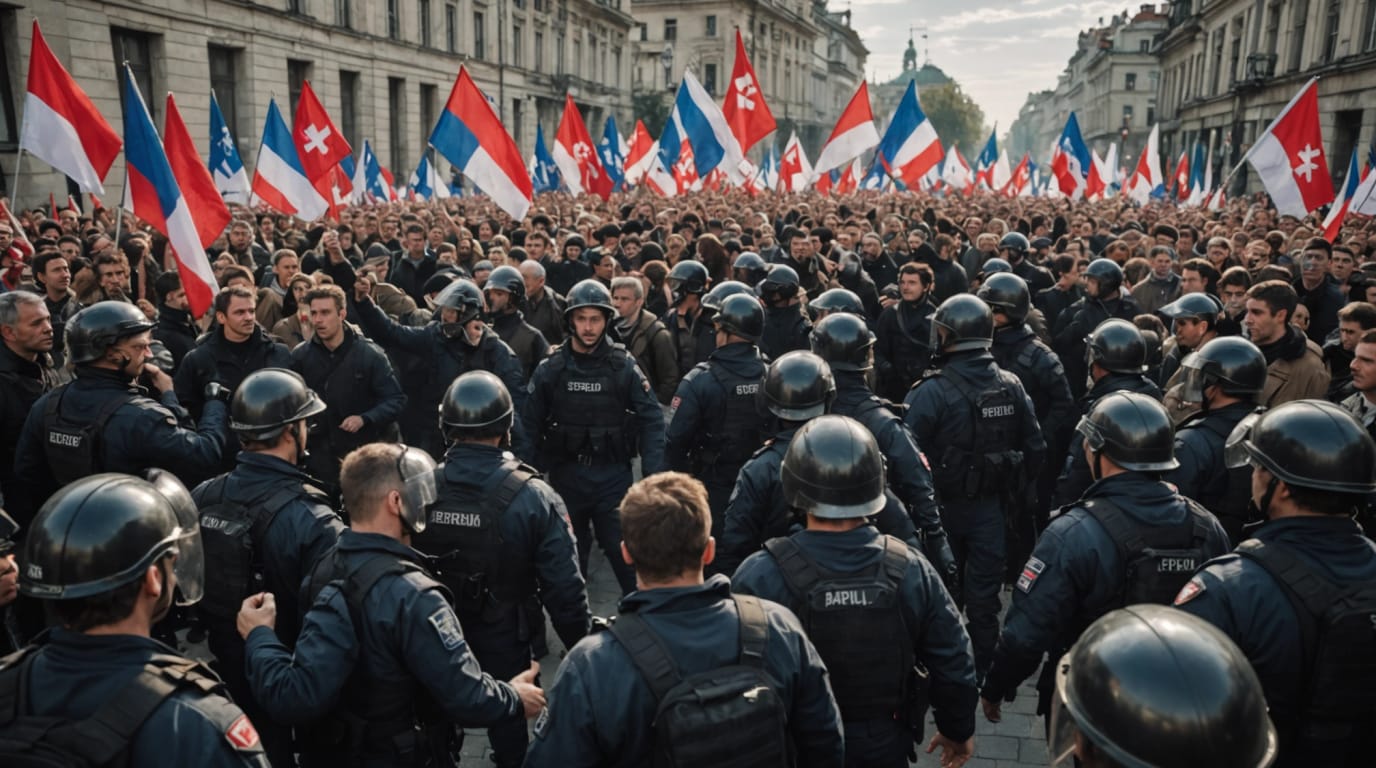
Belgrade, Serbia – Tens of thousands of Serbian citizens flooded the streets of Belgrade on Saturday in what is being described as the largest anti-government rally in years. The protests, fueled by months of simmering discontent over alleged government corruption and negligence, mark a significant escalation in public opposition to President Aleksandar Vucic and his administration.
The catalyst for the widespread demonstrations was the tragic collapse of a concrete canopy at a railway station in Novi Sad in November, which resulted in the deaths of 15 people, including young children. Critics have blamed the incident on systemic corruption, lax oversight, and disregard for safety regulations within the government. The tragedy ignited a wave of near-daily student-led protests that have since broadened to include citizens from all walks of life.
The sheer scale of Saturday's rally underscores the depth of public anger and frustration. Interior Minister reported at least 107,000 people turned out in Belgrade. Independent media outlets within Serbia suggest the actual number of participants was even higher, potentially making it the largest protest in the country's history. Demonstrators arrived from across Serbia, many traveling on foot, by bicycle, or motorcycle, effectively converging on the capital.
Tragedy in Novi Sad Sparks Outrage
The collapse of the railway station canopy in Novi Sad served as the immediate trigger for the protests, but it also exposed deeper-seated grievances within Serbian society. The public outcry over the incident reflects a broader perception of government corruption and impunity. Many Serbians believe that the tragedy could have been prevented if proper safety measures had been in place and if government officials had been held accountable for their actions.
The victims of the collapse included young children, further amplifying the emotional impact of the tragedy. The public's sense of outrage was compounded by reports of negligence and disregard for construction safety regulations. Protesters are demanding a thorough and impartial investigation into the incident, as well as accountability for those responsible.
President Vucic has stated that those responsible for the collapse "will go to prison" and suggested that the incident was likely due to "professional error" rather than corruption. However, this explanation has failed to quell public anger, with many viewing it as an attempt to downplay the role of corruption in the tragedy.
Student-Led Protests Gain Momentum
The initial protests in response to the Novi Sad tragedy were largely organized and led by students. These demonstrations quickly gained momentum, attracting support from a wide range of citizens, including veterans, bikers, and families. Students boycotted classes, and entire faculties suspended lectures in solidarity with the protesters.
The student-led movement has adopted a deliberately leaderless approach, aiming to represent the collective voice of the Serbian people. Protesters have used social media to organize and disseminate information, effectively circumventing traditional media outlets that are often perceived as being controlled by the government.
The students have called for accountability for the Novi Sad tragedy, as well as broader reforms to address corruption and improve governance in Serbia. Their demands include greater transparency, an end to political interference in the judiciary, and increased protection for freedom of the press.
Government Response and Tensions
The Serbian government has responded to the protests with a mix of condemnation and concessions. While President Vucic has acknowledged the "enormous negative energy and anger" directed at the authorities and vowed to "change ourselves," he has also accused protesters of attempting to destabilize the country.
Speaker of Parliament Ana Brnabic went further, accusing protesting students and professors of "instigating a coup d'état and civil war." These accusations have been dismissed by protest leaders, who maintain that their movement is peaceful and aims to promote democratic reforms.
Prior to Saturday's rally, there were reports of attempts to disrupt the protests. A man was arrested after allegedly ramming his car into protesters in a Belgrade suburb, injuring three people. Additionally, railway and bus links to Belgrade were canceled, ostensibly for "security reasons," but critics saw this as an attempt to prevent people from attending the rally.
A Nation Divided
The protests have highlighted deep divisions within Serbian society. While many Serbians are demanding change and accountability, others remain loyal to President Vucic and his government. The political landscape in Serbia has become increasingly polarized, with limited space for dialogue and compromise.
President Vucic has warned against a "color revolution," referring to uprisings that have toppled governments in other countries. He insists that the majority of citizens do not support such a scenario. However, the scale of Saturday's protest suggests that a significant portion of the population is deeply dissatisfied with the current state of affairs.
The future of Serbia remains uncertain. The protests have demonstrated the power of collective action and the potential for change. However, it remains to be seen whether the government will be willing to address the underlying grievances that have fueled the unrest. The coming weeks and months will be critical in determining the direction of the country.
Conclusion: A Turning Point?
The massive protests in Belgrade represent a significant moment in Serbian history. The outpouring of public anger and frustration over government corruption and negligence has shaken the foundations of President Vucic's administration. While the government has acknowledged the need for change, it remains to be seen whether it will be willing to implement meaningful reforms.
The protests have demonstrated the resilience and determination of the Serbian people. They have shown that they are no longer willing to tolerate corruption and impunity. The events in Belgrade could mark a turning point in the country's political trajectory, potentially paving the way for a more democratic and accountable government. However, the path forward is likely to be fraught with challenges and uncertainties. The divisions within Serbian society are deep, and the government's response to the protests will be crucial in determining the future of the nation.


