Massive Ukrainian Drone Barrage Rocks Russia, Strikes Deep into Moscow Region
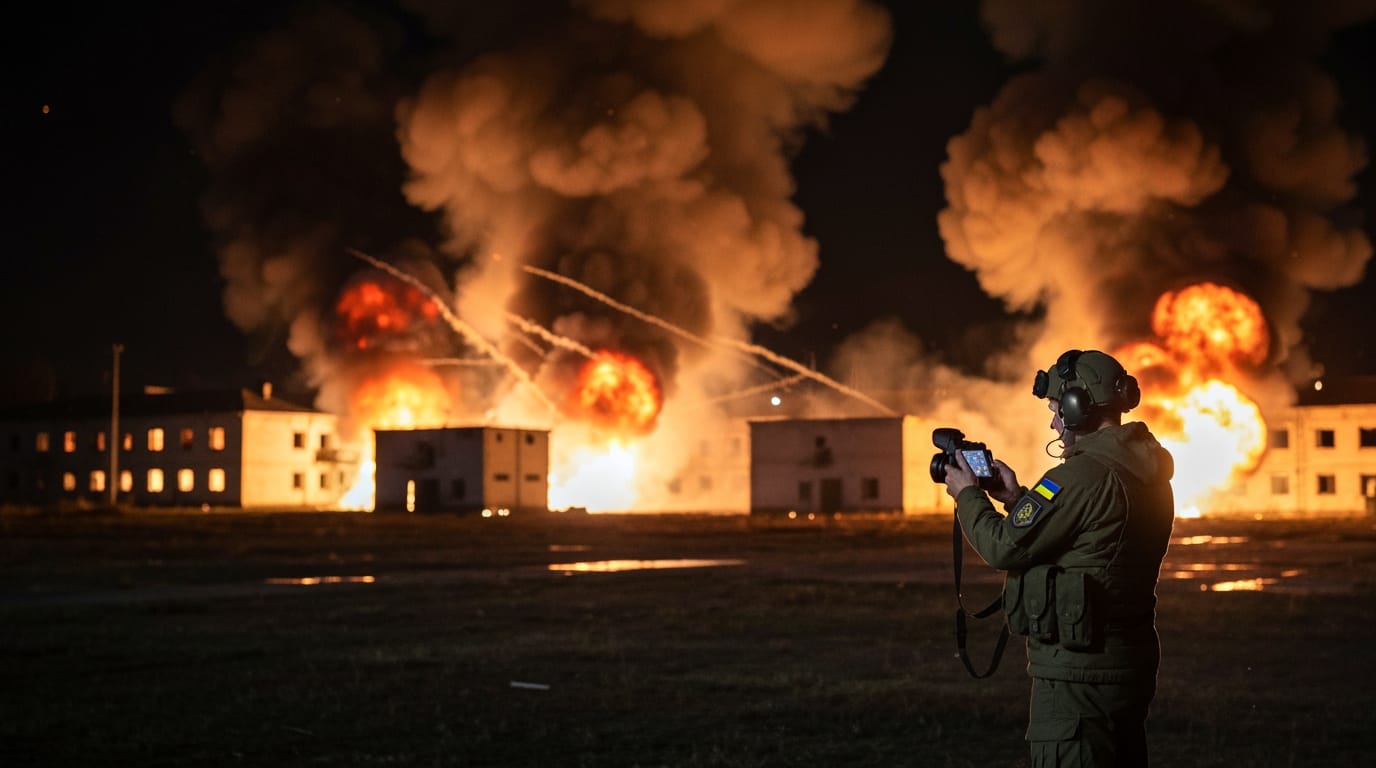
A sprawling and intense wave of Ukrainian drones reportedly struck targets across Russia and annexed Crimea overnight, on May 17, 2026, with the capital region experiencing one of its most significant aerial assaults since the conflict began. Russian authorities claimed the interception of over 500 unmanned aerial vehicles (UAVs) across more than a dozen regions, though several strikes reportedly caused casualties and significant damage to infrastructure, including oil facilities and critical industrial sites. The coordinated attacks underscore Ukraine's persistent strategy to disrupt Russia's war machine and economy, even as Russian forces maintain an offensive posture in eastern Ukraine.
Unprecedented Barrage Targets Russian Heartland
The May 17 drone offensive marked a notable escalation in the scope and intensity of Ukrainian aerial operations, with Russian defense officials reporting the downing of 556 drones across 14 Russian regions, as well as the annexed Crimean Peninsula and the Black and Azov Seas. The sheer number of UAVs involved in the overnight assault represents one of the largest barrages recorded in the ongoing conflict, signaling a continued evolution in Ukraine's drone warfare capabilities.
The Moscow region bore the brunt of the attack, with Mayor Sergei Sobyanin stating that air defense systems intercepted at least 74 drones approaching the capital itself. The widespread nature of the assault led to civilian casualties and disruption. Reports indicated that three individuals were killed in the Moscow region, including a woman in a private house and two men in separate incidents. Twelve people sustained injuries near the Moscow Oil Refinery in the Kapotnya district, primarily construction workers. Beyond human impact, critical infrastructure was also reportedly hit. The Elma technopark in Zelenograd, a hub for microelectronics, robotics, and information technology, reportedly caught fire, alongside the Solnechnogorsk fuel loading station. The Raduga Machine-Building Design Bureau in Dubna was also said to have been targeted. The extensive attacks also led to significant disruptions in air travel, with approximately 200 flights delayed or canceled at Sheremetyevo Airport and nearly 100 at Vnukovo Airport.
Outside the Moscow metropolitan area, the Belgorod region, bordering Ukraine, also reported casualties. Authorities stated that a man was killed in the Shebekino district when a drone struck a lorry. Another incident in Belgorod saw a drone strike a family's car near the border, killing a mother and her four-year-old son, while the father was injured. A gas station in Bessonovka also experienced a drone-induced fire. In the Krasnodar region, a Tuapse oil refinery was struck, igniting a substantial blaze. Further reports from the Kursk region detailed damaged power lines and a subsequent blackout in the village of Ponyry. The Russian Ministry of Defense additionally confirmed that the Russian navy had successfully destroyed six seaborne drones.
Energy Infrastructure Under Renewed Assault
The extensive drone campaign, particularly targeting Russia's energy infrastructure, has become a consistent feature of Ukraine's defensive strategy. The May 17 strike on the Tuapse oil refinery in the Krasnodar region aligns with Ukraine's broader effort to degrade Russia's economic and logistical capabilities supporting its military operations. This latest attack follows a pattern of successful strikes on key Russian energy facilities throughout recent months. For instance, Russia's Perm oil refinery completely halted processing after a Ukrainian drone attack on May 7, 2026, caused a fire and damaged equipment. Similarly, primary oil processing at the Rosneft-operated Novokuibyshevsk refinery had been halted since April 18, 2026, due to a Ukrainian drone attack.
These attacks are strategically designed to disrupt fuel supplies for the Russian military, complicate logistics, and reduce revenue-generating infrastructure. Industry calculations indicate that Ukraine has significantly increased its targeting of Russian oil refineries, doubling the number of such facilities hit since the beginning of the year. Between January and May 2026, Ukrainian drone attacks are estimated to have taken approximately 700,000 barrels per day of Russian refining capacity offline across 16 refineries. Major affected facilities include plants in Kirishi, Nizhny Novgorod, Perm, and Tuapse. The International Energy Agency reported that Russian crude oil output in April 2026 fell by 460,000 barrels per day year-on-year, reaching roughly 8.8 million barrels per day, a decline partly attributable to these strikes.
The continuous targeting of these facilities places immense pressure on Russia's refining capacity and its ability to maintain stable fuel exports. While Russia possesses significant surplus refining capacity, the cumulative effect of these strikes, combined with international sanctions complicating the supply of spare parts for repairs, poses a growing challenge to its energy sector.
Human Cost and Strategic Context
The overnight assault's human toll, including the deaths of civilians in the Moscow and Belgorod regions, highlights the tragic consequences of the expanding conflict. Ukrainian President Volodymyr Zelensky had previously vowed retaliatory strikes, following a Russian attack on Kyiv that reportedly killed 24 people and injured around 50 others. This recent wave of drone attacks occurs amid intensified Russian military pressure in northeastern Ukraine, where Russian forces are reportedly advancing and exploiting Ukrainian manpower shortages and delays in Western military aid.
From Ukraine's perspective, these long-range strikes serve multiple strategic objectives. By hitting targets deep within Russian territory, Ukraine aims to force Moscow to reallocate valuable air defense assets away from the front lines and towards protecting industrial sites. This diversification of threats can potentially create vulnerabilities for Russian forces elsewhere. Moreover, the attacks aim to degrade Russia's capacity to sustain its war effort by disrupting crucial supply chains and reducing its economic resources. Despite Russia's robust air defense network, Ukrainian drones continue to penetrate defenses, demonstrating the difficulty of protecting vast and geographically dispersed industrial infrastructure from persistent aerial threats.
Escalation in Drone Warfare
The May 17, 2026, drone attack represents a significant data point in the evolving landscape of modern warfare, characterized by the increasing sophistication and deployment of unmanned aerial vehicles. Ukraine has pioneered various drone technologies, utilizing ground, air, and sea-based models for combat and reconnaissance missions. The ability of these drones to reach targets deep within Russia, sometimes spanning vast distances, underscores a growing asymmetry in capabilities and tactics.
The sustained pressure on Russian energy infrastructure, including oil refineries and fuel depots, points to a deliberate and attritional strategy. The aim is not necessarily to achieve complete destruction in every instance but to inflict consistent damage that requires costly repairs, disrupts operations, and creates logistical challenges for Moscow. While the immediate impact on global oil markets has been relatively limited, the continuation of such attacks could lead to more significant disruptions, particularly if repair efforts are hampered by sanctions or if a larger percentage of refining capacity remains offline for extended periods. The long-term implications of this intensified drone warfare include potential reconfigurations of global oil product flows and increased costs for Russia to maintain domestic fuel stability.
The latest attacks highlight a critical phase in the conflict, where both sides are adapting their strategies. Ukraine's ability to conduct such extensive and damaging drone operations against well-defended targets indicates a growing operational reach and technological prowess. These strikes will likely continue to compel Russia to divert resources for homeland defense while simultaneously impacting its economic stability and military logistics. The ongoing drone war deep behind enemy lines remains a pivotal and evolving component of the broader conflict.


