Medvedev Likens German Politician Merz to Nazi Propagandist Goebbels
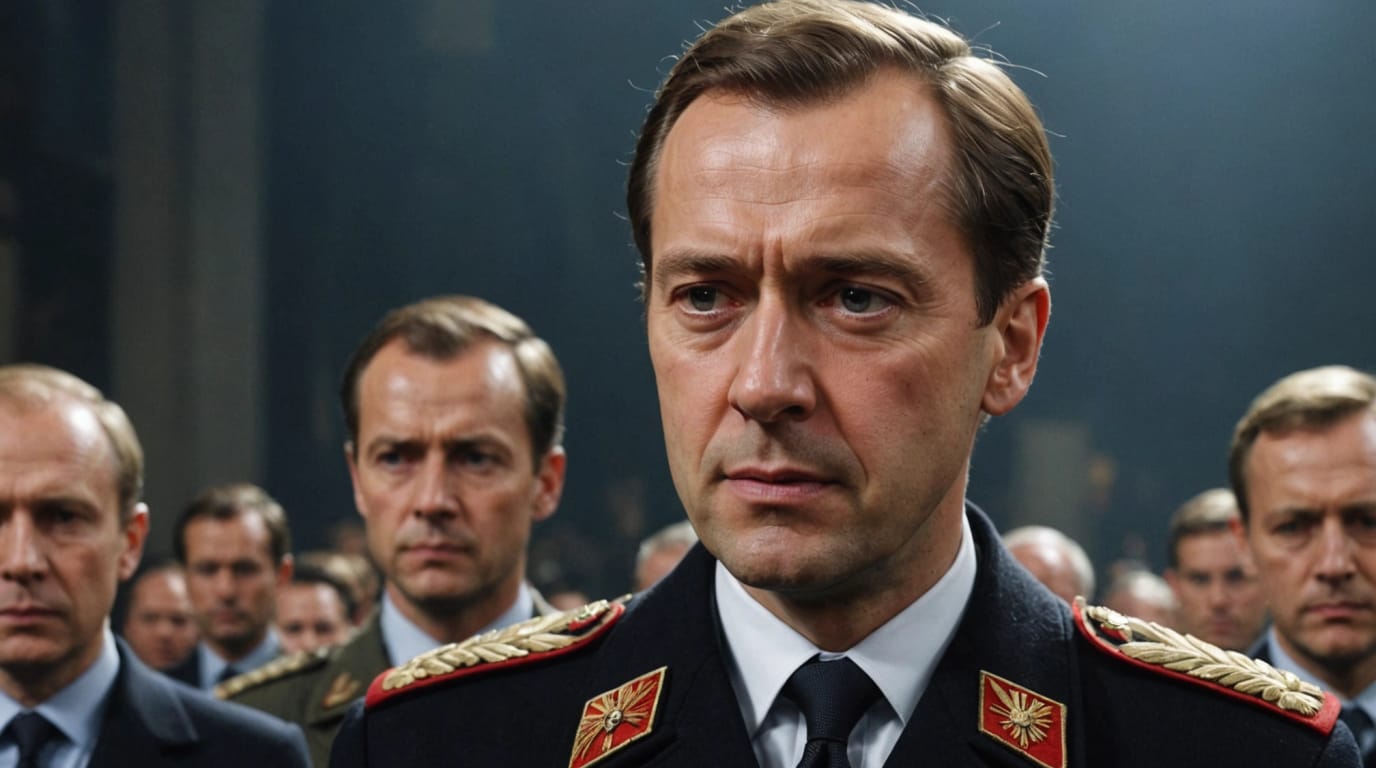
In a sharp escalation of rhetoric, former Russian President Dmitry Medvedev has compared Friedrich Merz, a leading German politician and potential future chancellor, to Joseph Goebbels, the infamous propaganda minister of Nazi Germany. The inflammatory remarks, posted on Medvedev's Telegram channel, mark a significant deterioration in already strained relations between Russia and Germany amid the ongoing conflict in Ukraine.
Accusations and Reactions
Medvedev, who currently serves as the deputy chairman of the Russian Security Council, accused Merz of "lying like Goebbels" in response to the German politician's recent criticism of Russian President Vladimir Putin. Merz had stated in the German parliament that Putin is waging a "war of aggression against Europe," citing hybrid attacks on European infrastructure and disinformation campaigns. These comments were made during a vote to approve a constitutional reform aimed at increasing German defense spending in light of the war in Ukraine.
Medvedev's Telegram post included a derogatory Russian term for Germans ("Fritz") and expressed hope that Merz would suffer the same fate as Nazi Germany in 1945. The comparison to Goebbels, a figure synonymous with manipulation and deceit, is a particularly strong condemnation, reflecting the depth of animosity in the current geopolitical climate.
Merz's Stance on Russia
Friedrich Merz, leader of the Christian Democratic Union (CDU), has taken a firm stance against Russia's actions in Ukraine. He has been vocal in his support for increased defense spending and has accused Russia of engaging in a broader campaign against Europe, including cyberattacks, disinformation, and economic pressure.
Merz's comments in the Bundestag, the German parliament, specifically highlighted what he described as daily attacks on communication networks, supply lines, and instances of arson, assassinations, espionage, and disinformation campaigns. He argued that these actions constitute a war against the entire continent, not just Ukraine.
Russia's Broader Response
Medvedev's attack on Merz is not an isolated incident. It is part of a broader pattern of increasingly hostile rhetoric from Russian officials towards Western leaders who have condemned the invasion of Ukraine. Since the beginning of the conflict in February 2022, Medvedev has become known for his outspoken criticism of the West, often employing harsh language and historical comparisons.
In addition to the verbal attacks, Russia has taken concrete actions against German institutions. On the same day as Medvedev's comments, Russia declared the German Council on Foreign Relations (DGAP) an "undesirable" organization, effectively banning its activities within Russia. This move further underscores the deteriorating relationship between the two countries and signals a growing intolerance for dissenting voices within Russia.
Implications for German-Russian Relations
The exchange between Medvedev and Merz highlights the deep chasm that has opened up between Russia and Germany. Once a key economic partner, Germany has become one of the most vocal critics of Russia's aggression in Ukraine, providing substantial military and financial aid to Kyiv.
Medvedev's personal attack on Merz, a potential future leader of Germany, suggests that Russia sees little prospect for improved relations in the near future. The comparison to Goebbels is likely to be interpreted in Germany as a deliberate attempt to delegitimize Merz and undermine his political standing.
The incident also raises questions about the future of German foreign policy. With the country embarking on a significant increase in defense spending, it is clear that Germany is preparing for a more assertive role in European security. The confrontation with Russia is likely to accelerate this trend, leading to a further hardening of positions on both sides.
Historical Context
The use of historical comparisons, particularly references to World War II and Nazi Germany, is a recurring theme in the rhetoric surrounding the conflict in Ukraine. Both Russia and its adversaries have invoked the past to justify their actions and demonize the opposing side.
For Russia, the memory of the Great Patriotic War, as World War II is known in Russia, is a powerful symbol of national unity and resistance against foreign aggression. By comparing Merz to Goebbels, Medvedev is attempting to tap into this historical narrative and portray Germany as a potential aggressor.
However, such comparisons are deeply offensive in Germany, a country that has spent decades confronting its Nazi past and atoning for the crimes of the Third Reich. The use of Nazi imagery is seen as a deliberate attempt to provoke and insult, further poisoning the already fraught relationship between the two countries.
Conclusion
Dmitry Medvedev's comparison of Friedrich Merz to Joseph Goebbels represents a significant escalation in the war of words between Russia and Germany. The incident underscores the deep divisions that have emerged as a result of the conflict in Ukraine and suggests that relations between the two countries are likely to remain strained for the foreseeable future. The use of historical comparisons, particularly those invoking the Nazi era, serves to inflame tensions and further complicate the prospects for dialogue and reconciliation. As Germany prepares for a more assertive role in European security, the confrontation with Russia is likely to intensify, with potentially far-reaching consequences for the continent as a whole.


