Merz Declares Tehran Leadership 'Weakened' Amid Escalating Tensions and Israeli Strikes
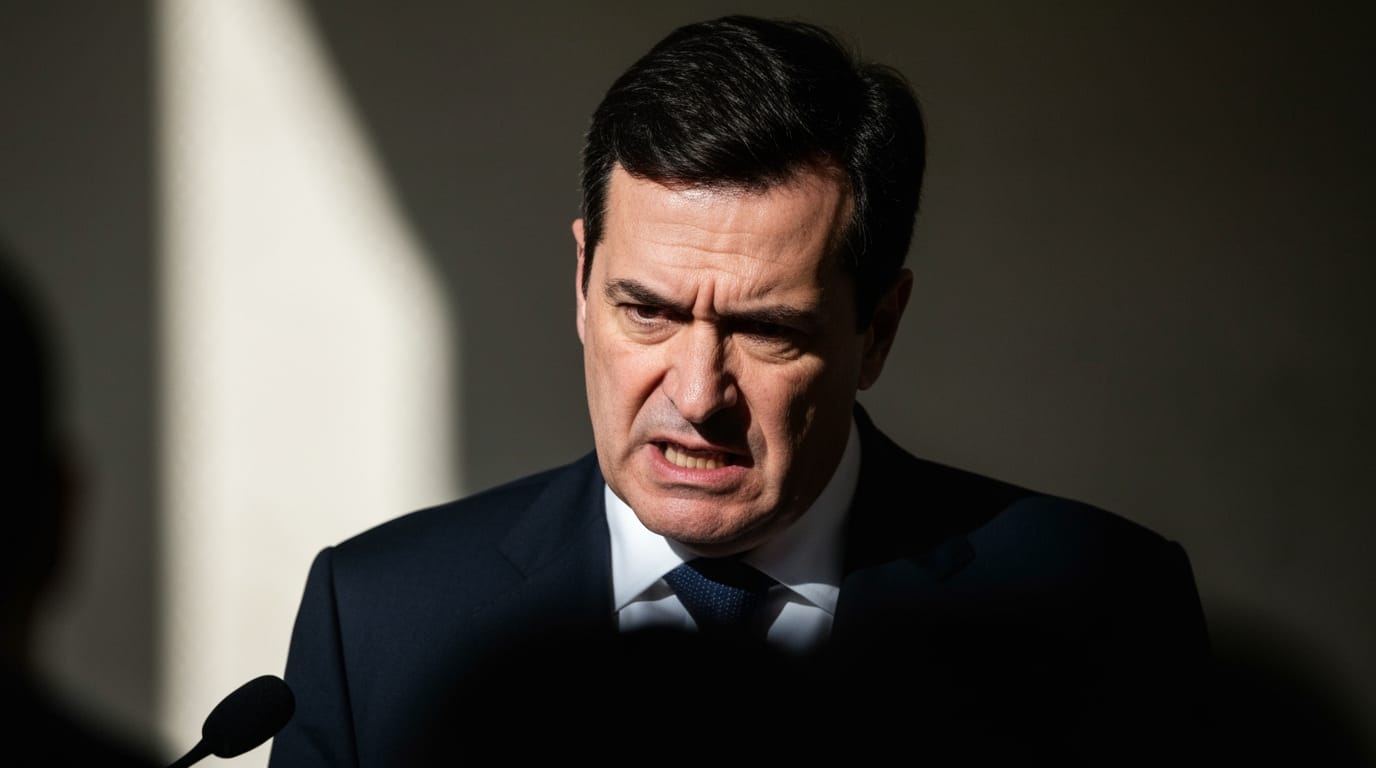
Kananaskis, Canada – In a significant hardening of Germany's stance towards Iran, Friedrich Merz, leader of Germany's Christian Democratic Union (CDU) and the current German Chancellor, has asserted that the leadership in Tehran is "very weakened" following recent Israeli military actions. Speaking at the G7 summit in Canada, Merz underscored a shift in the regional power dynamic, suggesting that Iran's current rulers are unlikely to regain their former strength. His remarks come amidst heightened regional instability and a renewed focus on Iran's nuclear ambitions and destabilizing activities.
The pronouncement by Chancellor Merz reflects a growing impatience among Western powers with Iran's nuclear program and its alleged support for proxy groups. Merz's statements align with a broader strategic re-evaluation within Germany, particularly from his conservative party, which has consistently advocated for a more robust approach to Tehran. The timing of these comments, made on the sidelines of the G7 summit, highlights the international community's concerns and the potential for a collective response to Iran's actions.
The Chancellor's Assertions and Immediate Context
Chancellor Friedrich Merz articulated his strong views during an interview at the G7 summit in Canada, held in mid-June 2025. He noted that Iran's leadership had been severely undermined by Israeli attacks that commenced around June 12th. Merz stated that the regime's future appeared uncertain and that it would likely not recover its previous level of influence.
Further elaborating on the nature of the recent conflict, Merz indicated that Israel was performing "dirty work for all of us" in its strikes against what he termed the "mullah regime," asserting that this regime has brought "death and destruction to the world". He also pointed to Israel's success in damaging key aspects of Iran's nuclear program, leading him to believe that Iran might no longer possess nuclear weapons. However, he cautioned that Tehran's alleged support for terrorism remained a significant concern.
In a stark warning, Merz suggested that if Iran refuses to engage in negotiations, the "complete destruction of the Iranian nuclear program is on the agenda." He acknowledged that while Israel might lack the specific weaponry for such an extensive operation, the United States possesses the necessary capabilities. Despite these strong declarations, Merz affirmed that Europe's standing offer of diplomatic assistance would remain open should talks resume. The G7 summit itself concluded with a joint statement that supported Israel and identified Iran as a destabilizing force in the Middle East, while also advocating for regional de-escalation.
A Shifting Stance in German-Iranian Relations
Historically, Germany and Iran have maintained complex and often contradictory relations. Diplomatic ties trace back to the late 19th century, with Germany serving as a crucial trading partner for Iran, providing industrial machinery and expertise, particularly before the 1979 Islamic Revolution. Post-revolution, and especially since the 2000s, relations have been increasingly strained due to concerns over human rights, Iran's nuclear program, and its regional policies.
Germany has been a key player in European efforts to manage Iran's nuclear ambitions, notably as part of the E3 group (with France and the United Kingdom) involved in negotiating the 2015 Joint Comprehensive Plan of Action (JCPOA). However, Iran's systematic violations of JCPOA limits since 2019 and the unilateral reimposition of U.S. sanctions after its withdrawal from the deal have severely impacted trade volumes, which saw a significant decline from 3.4 billion euros in 2017 to approximately 1.5 billion euros in 2024.
The current German government, and particularly the CDU, has been advocating for a more assertive foreign policy regarding Iran. A position paper drafted by CDU lawmakers articulated a need for a fundamental change in Berlin's approach, identifying the Islamic Republic as an "unequivocal enemy of Germany". This document advocates for measures to weaken the Iranian regime, including pushing for the European Union to designate the Islamic Revolutionary Guard Corps (IRGC) as a terrorist organization and forming a broader anti-Iran coalition. Such a shift marks a departure from earlier German policies that sometimes prioritized engagement over confrontation, reflecting growing alarm over Iran's nuclear trajectory and its role in regional conflicts.
Implications for Regional Stability and International Diplomacy
Chancellor Merz's remarks carry significant diplomatic weight, signaling a robust European backing for recent Israeli actions and a potential shift in international strategy towards Iran. By openly discussing the "weakened" state of Iran's leadership and the possibility of destroying its nuclear program, Merz has heightened the stakes for Tehran. This assertive posture could be interpreted by Iran as a direct challenge, potentially exacerbating tensions in an already volatile region.
The call for the "complete destruction" of Iran's nuclear program, even while emphasizing the need for negotiations, underscores the gravity with which the international community views the threat of a nuclear-armed Iran. Such statements, especially from a G7 leader, reinforce the narrative that diplomatic solutions must be pursued with increased urgency, but also indicate a willingness to consider more drastic measures if diplomacy fails. The coordinated stance emerging from the G7 summit suggests a united front among key global players, aiming to exert maximum pressure on Iran to alter its course.
The emphasis on Europe's continued offer of diplomatic assistance also leaves a narrow, albeit clear, path for de-escalation through dialogue. However, the conditions for such talks appear to be framed within a context where the Iranian regime is perceived as being on the back foot, a position Tehran is unlikely to accept readily. The coming months will reveal how Iran responds to this intensified international pressure and whether the perceived weakening of its leadership translates into a change in its strategic calculations or a further entrenchment of its current policies.
Conclusion
Chancellor Friedrich Merz's declaration regarding the "weakened" state of Iran's leadership marks a pivotal moment in international relations with Tehran. Delivered at the G7 summit following significant Israeli military strikes, his statements reflect a hardening stance from Germany and the broader international community. While keeping the door open for diplomatic solutions, Merz has clearly outlined the potential consequences should Iran fail to engage constructively, including the possible destruction of its nuclear capabilities. This assertive approach, underpinned by a changing policy within Germany, underscores the urgency with which global powers are confronting Iran's regional influence and nuclear ambitions. The ramifications of these developments are poised to shape the geopolitical landscape of the Middle East and beyond for the foreseeable future, as all eyes turn to Tehran's response and the potential for either de-escalation or further confrontation.


