Merz Intensifies Coalition Talks with SPD Amidst Fragmented German Political Landscape
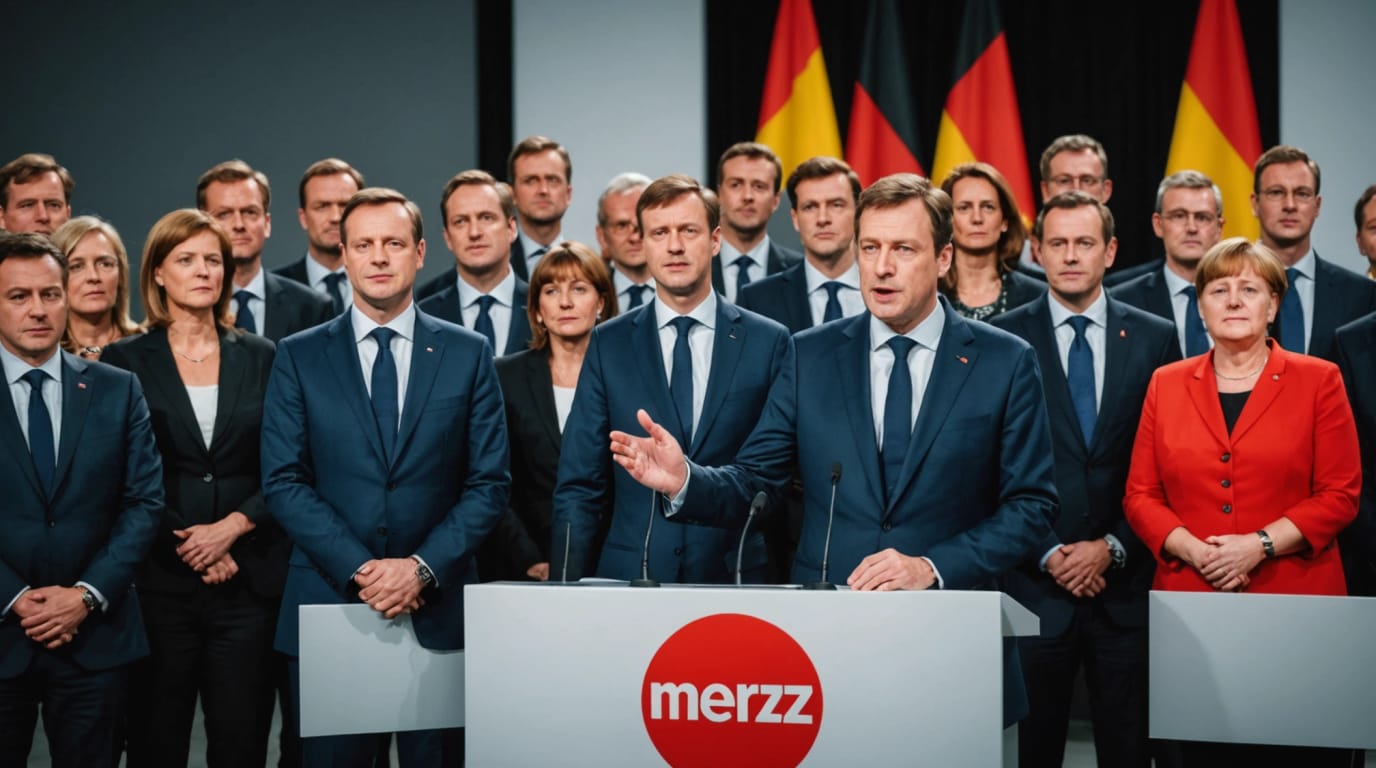
Germany's political future hangs in the balance as Friedrich Merz, leader of the Christian Democratic Union (CDU), intensifies coalition talks with the center-left Social Democratic Party (SPD) following the recent federal election. The snap election, triggered by the collapse of the previous coalition government, has resulted in a fragmented political landscape, compelling the CDU, as the strongest party, to seek a stable coalition to govern Europe's largest economy.
Election Results and the Path to Coalition
The February 23rd election saw the CDU/CSU emerge as the leading party with 28.5% of the vote, a shift away from Chancellor Olaf Scholz's SPD, which experienced its worst performance in over a century, plummeting to 16.4%. The far-right Alternative for Germany (AfD) secured a significant 20.5%, becoming the second-largest parliamentary group, but remains politically isolated due to coalition exclusions from all other parties. The SPD's poor showing and the rise of the AfD underscore the challenges facing the established political order.
Given the arithmetic of the new Bundestag, a coalition between the CDU/CSU and the SPD, a so-called "Grand Coalition," appears to be the most viable option. This arrangement has governed Germany several times under Angela Merkel between 2005 and 2021 and is seen as the only means to achieve a two-party coalition that excludes the AfD.
Merz's Urgency and Key Priorities
Merz has emphasized the urgency of forming a new government, aiming to have a coalition in place by Easter, April 20. He has identified key priorities for the upcoming government, including bolstering European defense in light of shifting United States foreign policy, addressing migration challenges, and securing Germany's industrial base.
Speaking alongside Markus Söder, head of the Christian Social Union (CSU), Merz expressed optimism that his party can reach a coalition agreement with the SPD in a "short time." He acknowledged the dramatically changing global situation, requiring a capable German government to address pressing issues ranging from security to immigration and the economy.
Potential Hurdles and Contentious Issues
Despite the urgency, coalition talks are expected to be complex, with potential hurdles and contentious issues to navigate. The SPD, recovering from its worst election result ever, may be hesitant to enter a coalition as a junior partner to the CDU/CSU. Internal divisions within the SPD and the need for a potential grassroots vote on any coalition agreement could further delay the process.
One significant point of contention lies in foreign policy, particularly regarding defense spending and support for Ukraine. Merz has criticized the United States' approach to the Ukraine war, stating that the U.S. is "throwing Ukraine to the wolves". He has also expressed concerns about the future of NATO, suggesting the need to establish a European defense capability more quickly. These views contrast with those of some within the SPD, including Olaf Scholz, who has resisted calls to deliver long-range Taurus missiles to Ukraine.
The SPD's Perspective and Demands
The SPD, while open to discussions, has made clear its demands for any potential coalition agreement. Senior SPD figures have emphasized the need for the CDU to guarantee that any attempt to work with the far-right AfD "never happens again." This demand reflects deep concerns within the SPD about the CDU's past flirtations with the AfD and the need to maintain a clear distance from the far-right party.
Dirk Wiese, a Social Democratic parliamentarian, stated that "mathematically, only one responsible coalition option exists for the country," highlighting the limited alternatives available to form a stable government. However, he also acknowledged the challenges and the need for the SPD to carefully consider its position in any potential coalition.
Implications for Germany and Europe
The formation of a stable German government is crucial not only for domestic stability but also for the broader trajectory of the European Union. Germany plays a pivotal role in shaping EU policies and addressing key challenges such as economic recovery, immigration, and foreign policy.
A strong and decisive German government is needed to navigate the complex geopolitical landscape, particularly in light of the ongoing war in Ukraine and shifting transatlantic relations. Germany's European partners are looking to Berlin to provide leadership and contribute to a more proactive and unified European approach to security and economic challenges.
A Grand Coalition: A Path Forward?
As coalition talks intensify, the prospect of another "Grand Coalition" between the CDU/CSU and the SPD appears increasingly likely. While challenges and disagreements remain, the need for a stable and functional government to address pressing domestic and international issues may ultimately compel the two parties to find common ground. The coming weeks will be critical in determining whether Merz and the CDU can successfully navigate the complexities of coalition negotiations and forge a path forward for Germany.


