Merz Reaffirmed as CDU Leader Amidst Calls for Unity and Responsibility in Stuttgart
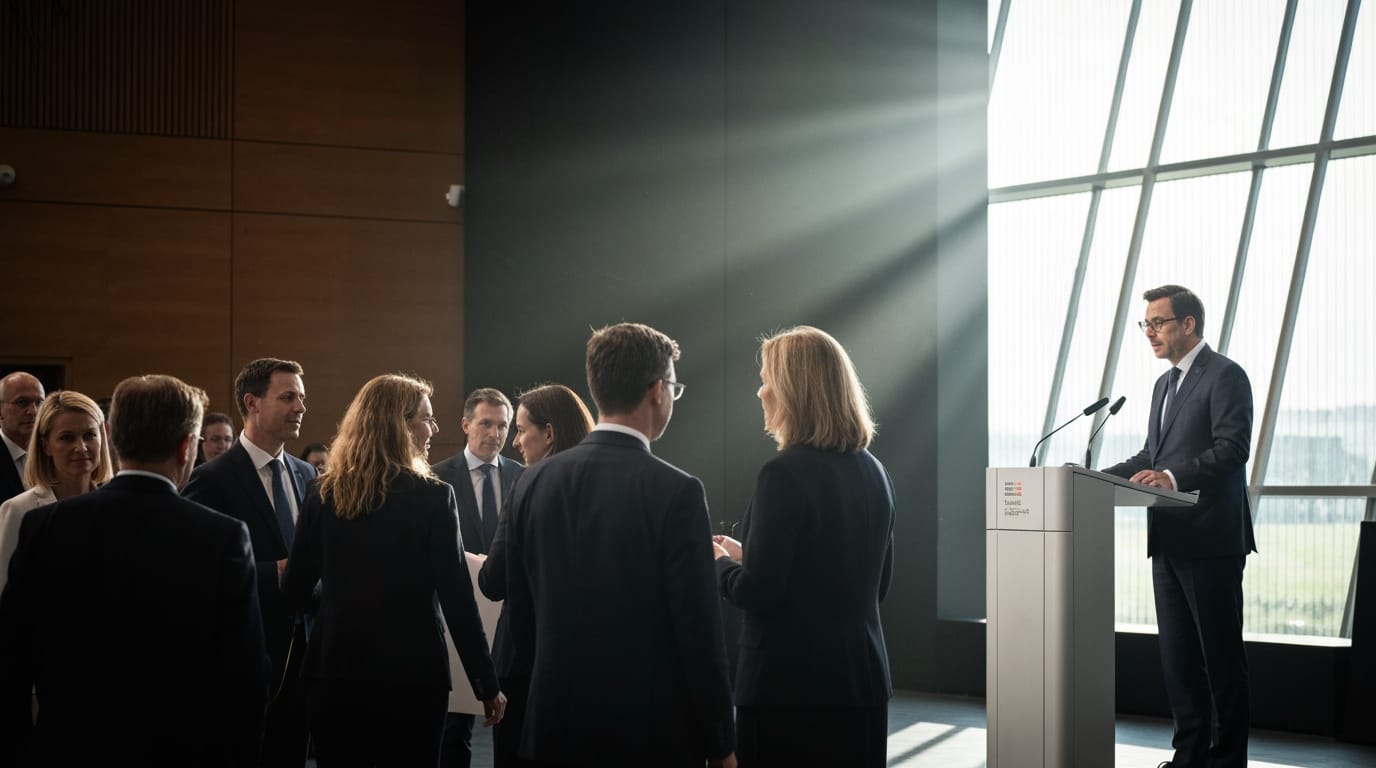
Stuttgart, Germany – Chancellor Friedrich Merz has overwhelmingly secured another term as the leader of Germany's Christian Democratic Union (CDU), receiving 91.17 percent of delegate votes at the party's 38th Federal Congress in Stuttgart. The two-day conference, which concluded today, February 21, 2026, saw Merz consolidate his power at a critical juncture for both the party and the nation, one year into his chancellorship leading a "black-red" coalition government. His re-election, while anticipated, underscored a renewed emphasis on internal cohesion and a firm commitment to tackling Germany's multifaceted challenges, from a sputtering economy to the rising influence of the far-right.
A Mandate for Leadership Amidst Rising Pressure
Merz's re-election marks his first formal re-confirmation as party leader since assuming the chancellorship in May of last year, following the CDU's victory in the February 2025 general election. Addressing nearly a thousand delegates, Merz, 70, pledged continued cooperation within the CDU and called for unwavering support for his government's work. The vote itself was not without a minor hiccup, as a malfunction in the electronic voting system necessitated a return to traditional paper ballots, a momentary delay in what was otherwise a clear show of support for the incumbent leader. This strong endorsement, a slight improvement on his previous re-election performance in 2024, grants Merz a reinforced mandate to steer the party and the country through a period defined by economic uncertainty and shifting geopolitical landscapes.
Confronting Domestic Headwinds: Economy, Coalition, and the Far-Right
The Stuttgart congress served as a crucial platform for Merz to address both internal dissent and external threats. A year into his coalition with the Social Democrats (SPD), Merz acknowledged the "bumpy start" of his government and faced internal criticism regarding concessions made to the junior partner. In response, he reminded delegates of the CDU's "government responsibility" and the imperative to meet voters' expectations. He admitted that reforms require time and could not be implemented overnight, urging patience and unity within the party ranks.
A significant portion of Merz's address focused on Germany's economic performance. Having vowed to revitalize the stagnating economy upon taking office, he confronted a "mixed" scorecard on the home front, with GDP growth forecast at a modest one percent for the current year. Business leaders have publicly urged Merz to present a "genuine reform programme," highlighting the economic pressures facing the nation. Merz also reiterated his commitment to limiting irregular migration, a key policy plank for the conservative party.
Perhaps most emphatically, Merz drew a clear line against the far-right Alternative for Germany (AfD), firmly rejecting any potential cooperation. He vowed to uphold the long-standing "firewall" among mainstream parties designed to isolate the AfD from positions of power, asserting, "We will not allow these people from the so-called Alternative for Germany to ruin our country." This unequivocal stance comes ahead of crucial state elections in Mecklenburg-Western Pomerania and Saxony-Anhalt in September, where the AfD's growing support presents a significant challenge to established parties. The presence of former Chancellor Angela Merkel, attending a CDU congress for the first time in years, was seen by many as a powerful symbol of party unity and historical continuity, particularly in light of past strained relations with Merz.
Germany's Place in a Changing World Order
Beyond domestic policy, Merz dedicated considerable attention to Germany's role on the global stage. He called for a stronger and more assertive Europe, emphasizing that the continent "must learn to speak the language of power." He underlined the unpredictability of the new world order and the necessity for Europe to act as a unified, powerful entity.
Merz also addressed the critical transatlantic relationship, reaffirming Germany's friendship with the United States despite current political tensions. He underscored the shared values and culture between the two nations, despite acknowledged "political tensions" with the U.S. In a demonstration of Germany's active engagement in global diplomacy and economic strategy, Merz announced his upcoming visit to China, leading a large business delegation next week. While acknowledging China as an "important trading partner," he cautioned against "illusions" about Beijing's ambition to define a new multilateral order on its own terms, stressing the need for a "right balance of cooperation" and competition. Furthermore, Merz highlighted Germany's commitment to supporting Ukraine, increasing NATO defense spending, and rearming the country to deter Russia, reflecting a proactive foreign policy agenda.
Looking Ahead: Unity and Sustained Effort
The 38th Federal Congress of the CDU in Stuttgart culminated with a clear message: unity, responsibility, and a determined approach to the challenges facing Germany. Friedrich Merz's robust re-election as party leader, combined with his dual role as Chancellor, positions him to lead the CDU in navigating complex domestic policy debates and asserting Germany's influence in an increasingly turbulent international environment. The party leadership, including the re-election of the Bundesvorstand, is now tasked with translating the congress's calls for action into tangible progress ahead of forthcoming regional elections and with an eye towards solidifying Germany's future trajectory. The path forward for the CDU and Germany under Merz's leadership will depend on the sustained implementation of their outlined policies and their ability to forge consensus both within the party and across the political spectrum.


