Mexican Teacher Protests Threaten to Overshadow World Cup Kick-off
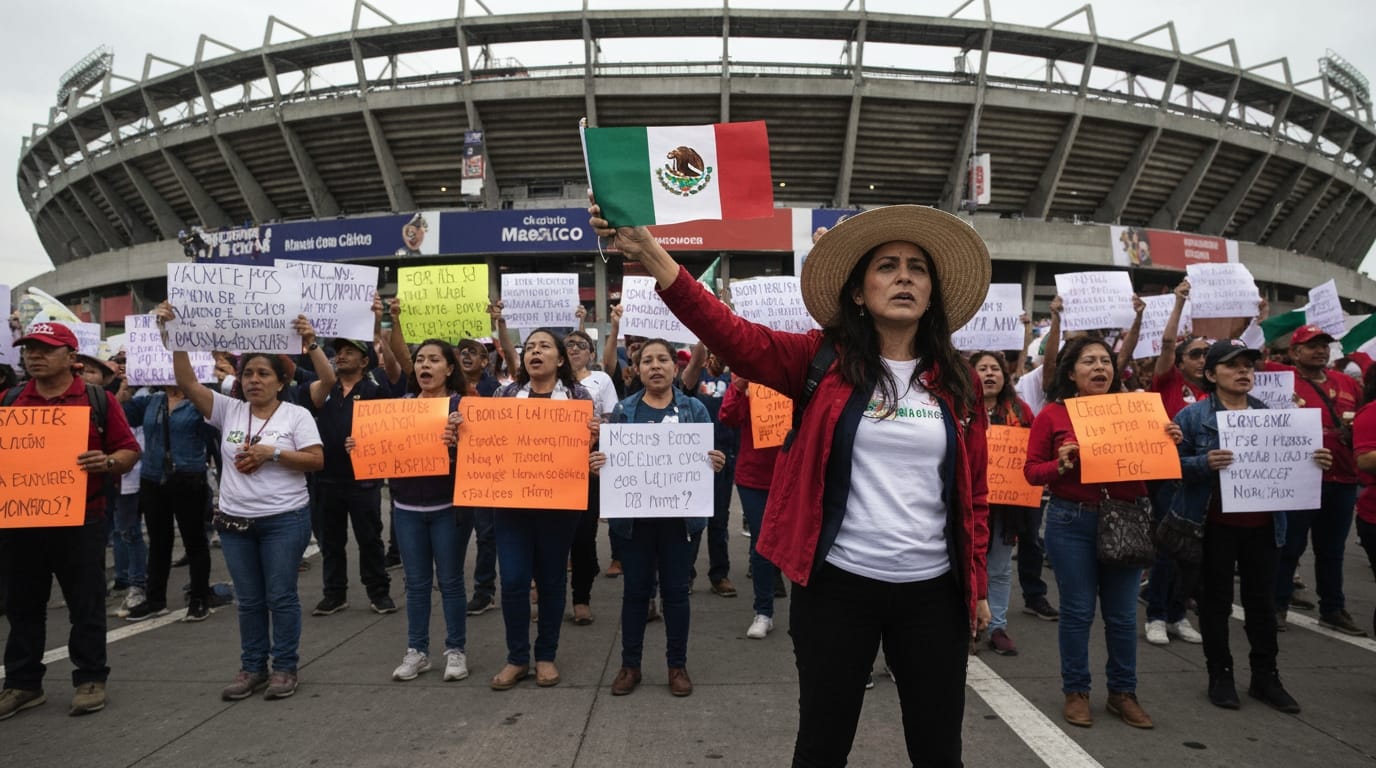
Mexico City, Mexico – With the FIFA World Cup 2026 opening ceremony just days away, Mexico City finds itself at a tense crossroads as a wave of protests by a powerful teachers' union threatens to overshadow the nation's moment on the global stage. The National Coordinating Committee of Education Workers (CNTE) has escalated its long-standing grievances, blocking major thoroughfares, clashing with police, and vandalizing public displays, all while chanting a defiant message: "If there is no solution, the ball won't roll." The unrest, fueled by demands for significant salary increases and the reversal of controversial education and pension reforms, presents an immediate challenge to President Claudia Sheinbaum's administration as millions of international visitors prepare to descend upon the capital.
A Nation on Edge: Teachers Leverage Global Spotlight
The timing of the CNTE's intensified demonstrations is no coincidence. As Mexico, co-hosting the World Cup with the United States and Canada, gears up to welcome a projected five million tourists, the teachers are strategically leveraging the international spotlight to amplify their demands. For weeks, members of the dissident teachers' union have been vocal about their intentions to disrupt the tournament if their demands remain unmet. This strategy aims to exert maximum pressure on the government, forcing a resolution to issues they argue have been neglected for too long.
The protests, which have seen thousands of educators take to the streets, are a stark reminder of the deep-seated frustrations within Mexico's education sector. While the official leadership of the teachers' union reached an agreement with the government for a 9% salary increase, the CNTE, a more radical faction, has rejected this offer as insufficient. They are demanding a staggering 100% pay raise, arguing that current wages, averaging around $960 gross per month for a starting public school teacher, are unsustainable in the face of rising living costs and pale in comparison to salaries in neighboring countries like the United States. Beyond salaries, the union also seeks the repeal of the 2007 social security law, which dismantled a solidarity-based pension scheme in favor of individually managed private accounts, and the elimination of USICAMM, the body responsible for teacher hiring and promotions. They also demand the repeal of the 2012 education reform.
Disruptions Mount as World Cup Nears
The CNTE's actions have already caused significant disruption across Mexico City and other states. Protesters have blocked major arteries, including the vital Paseo de la Reforma, bringing parts of the capital to a standstill and causing extensive traffic delays. One of the most visually striking acts of protest involved the toppling and vandalism of giant football player statues installed along the Paseo de la Reforma to promote the World Cup. Demonstrators used ropes to pull down the five-meter-high plastic figures, stripped them of their uniforms, and set parts of them ablaze, spray-painting messages like "Long live the CNTE" and the ominous "If there isn't a solution, the ball won't roll."
In an even more direct confrontation, protesters breached the headquarters of the Public Education Secretariat (SEP), causing damage to the government building and reportedly injuring at least two police officers. These acts have been met with resistance from authorities. Riot police have deployed tear gas and, reportedly, rubber bullets to disperse marching teachers, particularly during attempts to access the historic Zócalo plaza, which is slated to host a World Cup "Fan Fest." Union leaders, however, have accused authorities of repression, reporting that one teacher lost an eye during a recent clash, an allegation Mexico City authorities have denied, insisting they did not use rubber bullets or tear gas.
Government's Delicate Balancing Act
President Claudia Sheinbaum's administration faces a formidable challenge. While officials have engaged in dialogue with the CNTE, major breakthroughs have remained elusive. Sheinbaum has publicly stated that while the government is open to addressing feasible demands, some requests cannot be met due to budgetary limitations, not a lack of political will. The government's immediate priority appears to be securing key areas for the World Cup events, with the Zócalo plaza being barricaded to prevent further incursions by protesters.
However, the teachers remain unconvinced by the government's approach. Sergio Cruz, a protesting teacher, voiced the sentiment of many within the movement, stating that "all the government has done is hold meetings for dialogue, but there's no progress." Filiberto Frausto Orozco, another CNTE leader, warned that without satisfactory resolutions, "there will be no more negotiations," and the union is prepared to escalate its actions during the World Cup. President Sheinbaum, for her part, has accused the protesters of trying to provoke a violent reaction from authorities, asserting that such tactics will not succeed.
Broader Societal Concerns Emerge
The teachers' protests are not occurring in a vacuum. Other social movements, including families of Mexico's estimated 130,000 missing people and animal rights groups, are also capitalizing on the World Cup's imminent arrival to draw attention to their respective causes. This confluence of grievances threatens to create a broader atmosphere of unrest during what is intended to be a celebratory period for the nation.
Local business owners in downtown Mexico City, who had been eagerly anticipating an economic boost from the influx of World Cup tourists, are now expressing concern and frustration over the ongoing disruptions. The protests have highlighted a perceived dichotomy in government priorities, with critics arguing that the "million-dollar business of the World Cup" is being prioritized over the critical needs of the education system and other societal issues.
Conclusion: A Looming Showdown
As the countdown to June 11 continues, the standoff between the Mexican government and the CNTE intensifies. The teachers' unwavering resolve, coupled with their strategic timing, has created a volatile situation that could significantly impact Mexico's presentation as a World Cup host nation. The government's attempts at dialogue have so far failed to de-escalate the situation, and the teachers' threats to disrupt World Cup events remain firmly in place. The coming days will determine whether a resolution can be found or if the cheers of football fans will be intertwined with the clamor of protest, casting a long shadow over Mexico's highly anticipated global sporting celebration.