Mid-Air Mayhem: Ryanair Flight Suffers Window Blowout, Passenger Partially Sucked Out
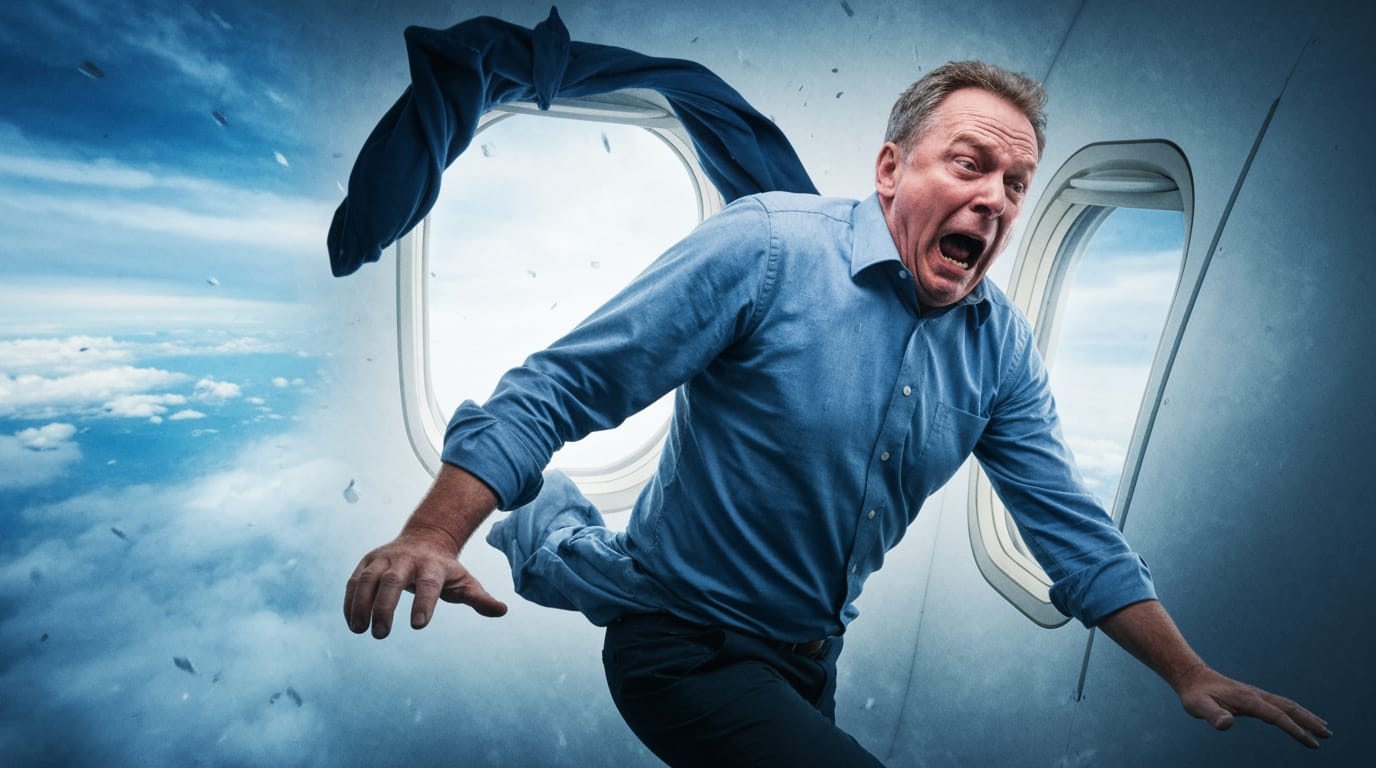
Thessaloniki, Greece – A routine Ryanair flight from Thessaloniki, Greece, to Memmingen, Germany, turned into a terrifying ordeal Friday morning when a passenger window "detached" mid-flight, leading to a rapid depressurization and a male passenger being partially sucked out of the aircraft. Fellow passengers, in a harrowing act, reportedly intervened to pull the man back to safety before the pilots executed an emergency landing back in Thessaloniki. The dramatic incident has ignited fresh concerns over aircraft maintenance and passenger safety, prompting an immediate investigation by aviation authorities.
A Sudden and Shocking Decompression
Flight FR1879, operated by Ryanair subsidiary Malta Air using a Boeing 737-800 (registration 9H-QEU), departed Thessaloniki Airport (SKG) shortly after 6:00 AM local time. Approximately six minutes into the flight, as the aircraft climbed through 16,000 feet, a sudden, explosive noise shattered the morning calm. Passengers described a sound "like a tire bursting," immediately followed by the cabin experiencing a rapid decompression. Oxygen masks automatically deployed from the ceiling as a strong, unusual smell filled the cabin, and screams erupted among the 189 travelers.
The source of the chaos was quickly apparent: a passenger window on the right side of the aircraft had either "dislodged" or "detached." What unfolded next was a scene of sheer terror. A 61-year-old Serbian tourist, seated next to the compromised window, was reportedly lifted from his seat and partially pulled into the slipstream outside the plane, with his head and shoulders exposed to the freezing, high-altitude air. In a remarkable display of human instinct and courage, the man's wife reportedly held onto his legs, preventing him from being completely ejected from the aircraft. Other passengers in the vicinity also rushed to help, pulling the man back inside the cabin, away from the gaping hole and the vacuum of depressurization. The incident occurred as the flight traversed airspace over North Macedonia.
Emergency Procedures and Safe Return
Amidst the chaos, the flight crew promptly initiated emergency protocols. The pilots declared an emergency and began an immediate, controlled descent. From an altitude of approximately 16,000 feet, the aircraft rapidly descended to 6,000 feet. To ensure a safe landing, the plane spent approximately 30 minutes burning off excess fuel, a standard procedure to reduce weight before an emergency return. Just over an hour after its initial departure, the Boeing 737-800 landed safely back at Thessaloniki Airport.
Upon landing, emergency services were on standby, and the injured passenger received immediate medical attention. He was transported to a local hospital, where authorities reported he was in good condition, primarily suffering from friction burns and shock due to exposure to the cold and wind. While the physical injuries were not critical, the psychological trauma of such an experience is profound. Ryanair confirmed that the aircraft landed normally and passengers disembarked. The airline subsequently arranged a replacement aircraft to transport the remaining passengers to their original destination in Memmingen, albeit with a delay of approximately four hours. Images circulated on social media, though unverified, showed the broken window and deployed oxygen masks inside the cabin, underscoring the severity of the event.
The Investigation Begins: What Caused the Failure?
The exact cause of the window failure remains under intense scrutiny. Initial reports from local media and industry sources suggest that a piece of debris from one of the aircraft's engines may have broken off and struck the passenger window, leading to its shattering and the subsequent decompression. This theory points towards an "uncontained engine failure," where internal engine parts can breach the engine casing and impact other parts of the aircraft. Investigators will meticulously examine the aircraft, which remains on the ground in Thessaloniki, to determine the precise sequence of events.
The Irish Aviation Authority (IAA) has stated its awareness of the incident and pledged cooperation with Greek and Maltese air safety investigation authorities, as the aircraft is operated by Malta Air, a Ryanair subsidiary. Such investigations are complex, involving detailed analysis of flight recorders, structural integrity checks, and metallurgical examinations of any fractured components. Understanding whether the incident was a manufacturing defect, a maintenance lapse, or an unforeseen external factor will be crucial for preventing future occurrences.
Echoes of Past Incidents and Broader Safety Concerns
This incident, while rare, draws immediate comparisons to other serious aviation events involving cabin pressure and structural integrity. Most notably, it echoes the Southwest Airlines Flight 1380 incident in the United States in 2018, where an uncontained engine failure caused debris to strike and shatter a cabin window, resulting in a rapid decompression and the tragic death of a passenger who was partly sucked out. Another historical parallel is the 1990 British Airways Flight 5390, where a cockpit windscreen detached mid-flight, leading to the captain being partially ejected from the aircraft, though he ultimately survived. These past events prompted significant changes in aircraft maintenance and safety protocols.
While not directly comparable in cause, Ryanair has faced previous scrutiny over cabin pressure incidents. In 2018, Ryanair Flight FR7312 from Dublin to Zadar experienced a loss of cabin pressure, forcing an emergency landing in Frankfurt. During that incident, oxygen masks deployed, and the plane descended thousands of feet in minutes, leading to 33 of the 189 passengers requiring hospital treatment for injuries including ear pain, headaches, and nausea, with some reportedly bleeding from their ears. While the 2018 incident involved a pressure loss without a window blowout, it highlights the severe consequences of cabin pressurization failures and the importance of stringent safety standards.
Aviation experts emphasize that such dramatic events remain exceedingly rare due to multiple layers of safety checks and redundant systems. However, each incident serves as a critical learning opportunity for the industry. The focus of the ongoing investigation will not only be on the immediate cause but also on any systemic issues that could have contributed to the failure. For passengers, the incident is a stark reminder of the potential vulnerabilities, even in modern air travel, and the often-unseen heroes among them who rise to the occasion in moments of crisis. As the aviation community awaits the full findings, the priority remains ensuring that lessons learned translate into enhanced safety measures across the global fleet.