Middle East Engulfed as Israel Intensifies Strikes on Tehran and Beirut, Regional War Escalates
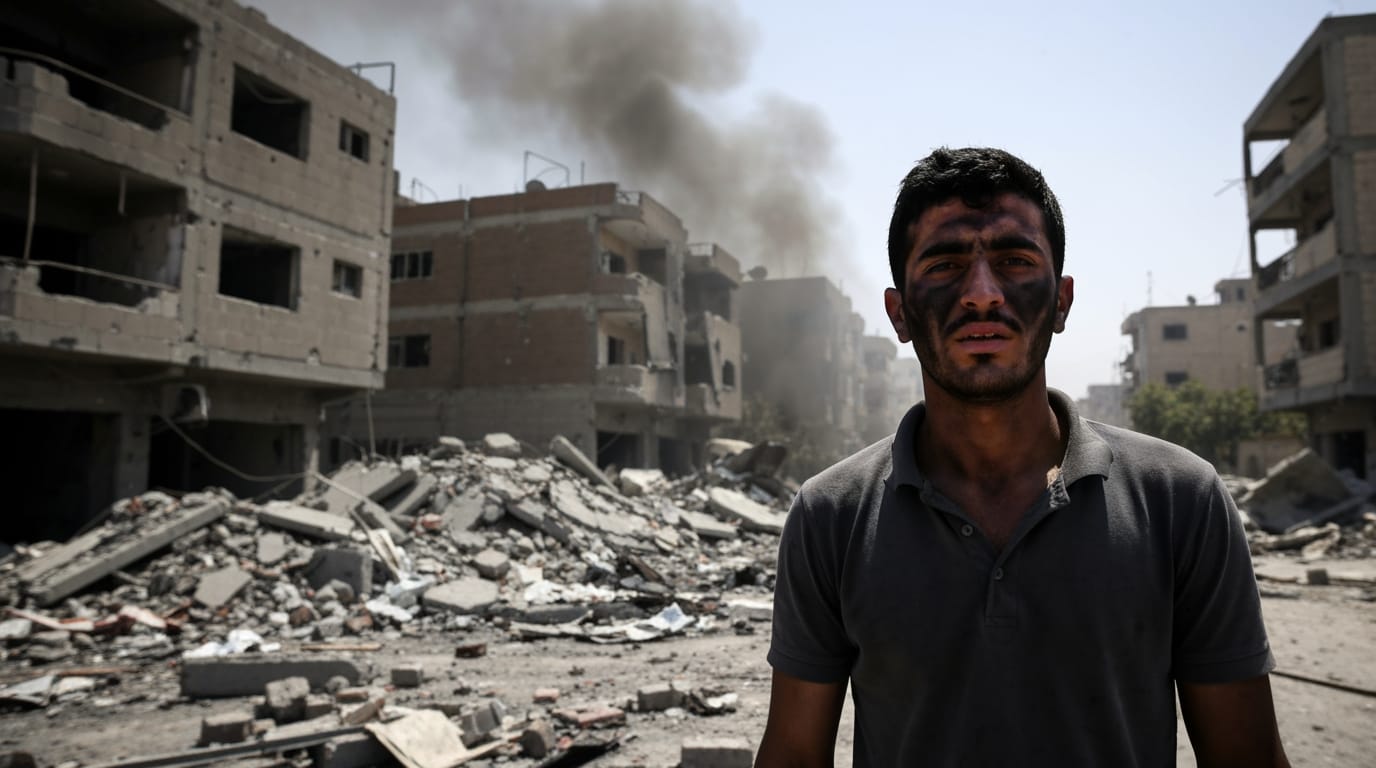
The Middle East finds itself at the precipice of an unprecedented regional conflict as Israel has significantly escalated its military campaign, launching renewed and intense airstrikes against targets in both Iran's capital, Tehran, and the Lebanese capital, Beirut. These latest assaults, occurring in early March 2026, mark a critical juncture in a rapidly expanding war that commenced on February 28, 2026, with coordinated operations by the United States and Israel against Iranian assets. The escalating hostilities have drawn multiple nations into the fray, resulting in a severe humanitarian crisis, widespread displacement, and profound uncertainty for global stability.
Escalation on Multiple Fronts: Strikes Pound Key Strategic Targets
In a dramatic intensification of military action, Israeli forces have conducted extensive airstrikes deep within Iranian territory, focusing on critical strategic and security targets in and around Tehran. On March 4, the Israel Defense Forces (IDF) reportedly struck multiple military compounds in southeastern Tehran, housing headquarters of several services and branches of the Islamic Revolutionary Guard Corps (IRGC), as well as internal security forces. These strikes are believed to be part of an effort to disrupt Iranian command and control capabilities and degrade their retaliatory capacity. Earlier reports indicated that Israeli and U.S. operations since February 28 have targeted Iran’s leadership, security forces, nuclear and ballistic missile programs, and military facilities across the country. The scale of the bombardment has been intense, with one journalist inside Iran stating that "every part" of Tehran has been hit since the initial attacks. Civilian infrastructure has also suffered, with Iranian state media reporting that missiles allegedly fired by the U.S. and Israel struck two schools near Tehran, causing damage to residential units and leading to accusations of severe civilian casualties in other incidents.
Simultaneously, Israel has unleashed a devastating wave of attacks on Beirut, specifically targeting Hezbollah strongholds in the densely populated southern suburbs, known as Dahieh. These strikes follow earlier Israeli military warnings, including an unprecedented order for residents to evacuate the entire Dahieh area, an instruction affecting more than half a million people. The evacuation order, which encompassed roughly a quarter of Lebanon's territory south of the Litani River, generated panic and a mass exodus of civilians. The Lebanese Ministry of Health has reported a rising death toll from Israeli attacks, with at least 123 people killed and 683 wounded by March 5. Hezbollah, a powerful Iranian-backed militant group, has retaliated by firing missiles and drones into northern Israel, further fueling the cycle of violence.
The human cost of these escalating attacks has been severe. In Iran, the Red Crescent Society reported at least 787 fatalities by March 3, a number that surged to over 1,230 by March 5. This includes a tragic incident on February 28 where 165 schoolgirls and staff were reportedly killed in a U.S.-Israeli attack on a school in Minab. Lebanon has also seen a significant loss of life, with over 70 people killed by March 5, alongside thousands displaced. A dozen Israelis have been killed by Iranian retaliatory strikes, and six U.S. soldiers have also lost their lives in the conflict.
The Widening Conflict: A Region Consumed by War
What began as targeted strikes has rapidly metastasized into a broader regional war, impacting at least 14 countries across the Middle East and beyond. Iran has launched a series of counter-strikes targeting Israel, U.S. military bases throughout the region, and even civilian and military locations in Gulf states that house U.S. forces. These retaliatory actions include missile attacks on Israeli cities, prompting air raid sirens across the country. Gulf countries have borne a significant brunt of Tehran's response, with reports of drones shot down in the UAE and missile attacks in Qatar, disrupting oil supplies and snarling global air travel. Even as far afield as the Indian Ocean, the U.S. reportedly sank an Iranian warship off the coast of Sri Lanka, resulting in at least 80 fatalities.
The conflict's ripple effects are evident across the region. Hezbollah's engagement in Lebanon, a direct response to Israeli actions, has rekindled fears of a full-scale war reminiscent of past conflicts, leading to significant displacement within Lebanon. The Lebanese government has reportedly moved to ban Hezbollah's military activities, reflecting internal divisions over the group's role in dragging the country into wider hostilities. In Iraq, drones have been reported near Baghdad airport, and explosions heard in Irbil, the capital of Iraqi Kurdistan. There are also unconfirmed reports of Kurdish groups initiating a cross-border ground operation into Iran from Iraqi Kurdistan. Furthermore, Azerbaijan has accused Iran of drone attacks, although Tehran denies the claims. The overthrow of the long-standing Iranian ally President Assad in Syria by rebel forces in previous years, coupled with ongoing Israeli military actions, has further destabilized the region and weakened Iran's network of allies.
Strategic Objectives and International Response
The stated objectives behind the initial U.S. and Israeli coordinated attacks on Iran have been multifaceted, including inducing regime change, degrading Iran's nuclear and ballistic missile capabilities, preventing it from acquiring nuclear weapons, and curtailing its support for proxy groups across the Middle East. Reports indicate that these operations have specifically targeted key Iranian officials, military commanders, and facilities, with some sources claiming the assassination of Supreme Leader Ali Khamenei and other senior officials. The U.S. has openly urged Iranians to overthrow their government. Despite the widespread regional escalation, U.S. and Israeli officials have suggested that the war is "going better than they expected," though the precise end goals of their campaign remain somewhat contradictory and open-ended.
The international community has reacted with a mix of concern and diplomatic engagement. French President Emmanuel Macron has held discussions with Lebanese President Joseph Aoun and Parliament Speaker Nabih Berri, urging intervention with Israel to prevent strikes on Beirut's southern suburbs and expressing readiness to send urgent assistance to Lebanon. The United Nations peacekeepers in southern Lebanon have reported observing and hearing clashes as Israeli forces move across the border, confirming ground combat in the area. Calls for de-escalation are mounting as the conflict threatens to spiral further out of control, jeopardizing global energy markets and international shipping lanes like the Strait of Hormuz, which Iran has threatened to close.
A Region in Crisis: Historical Context and Future Uncertainties
The current war represents a dramatic intensification of long-standing tensions between Israel and Iran, rooted in decades of animosity, proxy conflicts, and concerns over Iran's nuclear ambitions. Previous Israeli and U.S. strikes in 2024 and 2025 had already targeted Iran's nuclear program and its regional proxies, significantly weakening groups like Hamas and Hezbollah. However, the direct, widespread attacks launched in late February 2026 have ushered in a new and perilous phase, moving beyond proxy warfare to direct confrontation between major regional powers.
The implications of this conflict are vast and deeply concerning. The humanitarian crisis is rapidly worsening, with tens of thousands displaced and vital infrastructure damaged. The prospect of a wider, protracted war in the Middle East poses a significant threat to global economic stability, particularly concerning energy supplies. The shifting alliances and the involvement of numerous actors create a volatile and unpredictable landscape. As the region grapples with the immediate devastation and ongoing attacks, the path toward any form of resolution remains profoundly uncertain. The international community faces an immense challenge in navigating this complex and dangerous conflict, with the lives of millions hanging in the balance.


