Middle East on Edge: Iran Warns of Wider Disruption Amid Intensified US Strikes
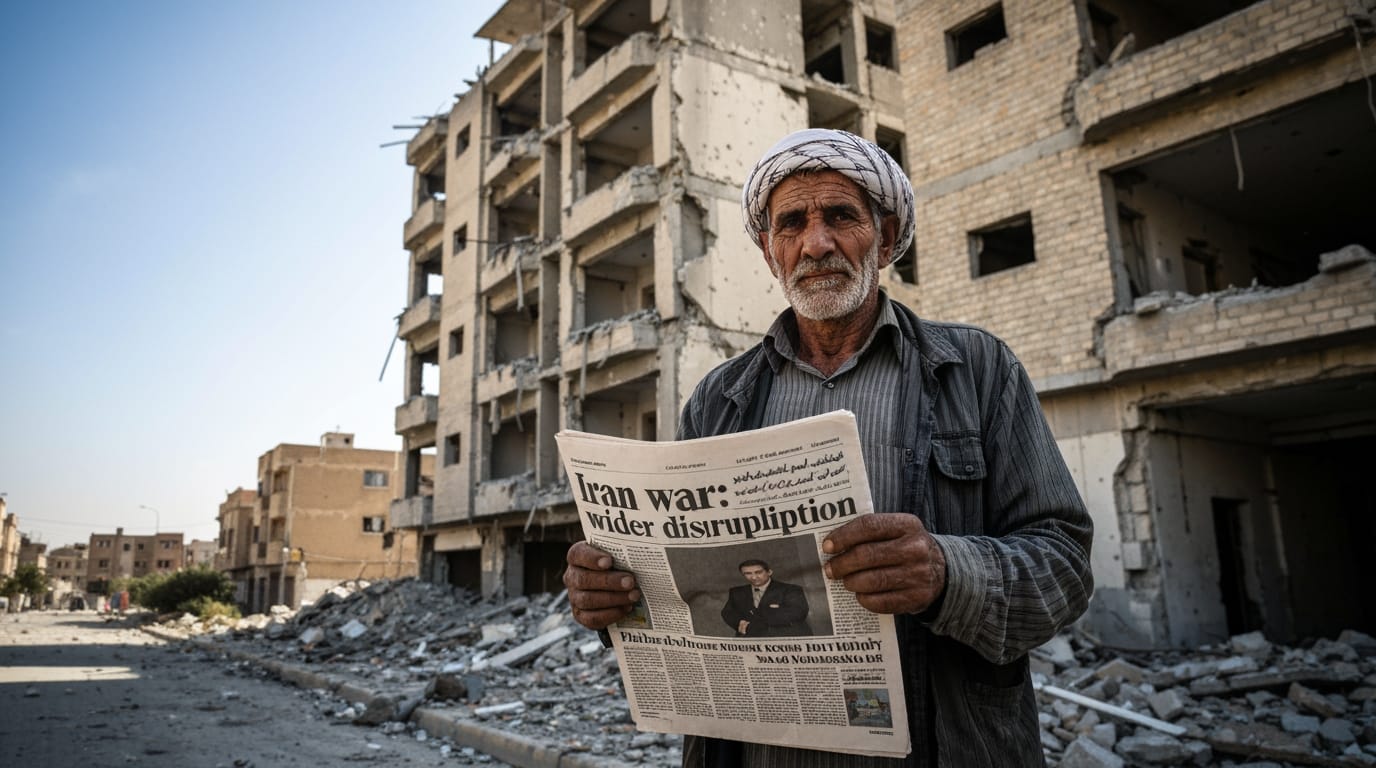
The Middle East finds itself teetering on the brink of an expanded conflict as the United States intensifies its military operations against Iran, reimposing a naval blockade and conducting strikes on Iranian territory. Tehran has responded with a stark warning, threatening wider regional disruption and retaliatory attacks against American interests and allied nations if Washington continues its military pressure. The escalating confrontation, which has seen critical maritime chokepoints declared "red lines," signals the collapse of previous attempts at de-escalation and has sent tremors through global energy markets and supply chains.
Escalation at Sea and in the Air
Recent days have witnessed a significant uptick in military engagement from both sides. The U.S. Central Command confirmed multiple waves of strikes against Iran, targeting coastal defense systems, missile and drone sites, maritime capabilities, command centers, and air defense facilities, including areas near Tehran and in crucial port cities like Bandar Abbas. These operations, which began as early as February 28, 2026, and intensified in July, are reportedly aimed at degrading Iran's ability to attack commercial shipping and safeguard freedom of navigation. Concurrently, the United States has reinstated a naval blockade on Iranian ports and coastal areas, deploying more than two dozen warships and hundreds of aircraft to the region.
Iran has not remained passive. Its Islamic Revolutionary Guard Corps (IRGC) announced the closure of the strategic Strait of Hormuz, a vital passageway for a fifth of global oil and gas exports, until the United States ceases what Tehran describes as its "illegal military intervention" in the region. In direct retaliation for US strikes, Iran has launched missile and drone attacks against American military facilities in allied nations such as Bahrain, Jordan, and Kuwait. The IRGC claimed a successful strike, dubbed Operation Nasr-2, against a US Navy's Fifth Fleet facility in Bahrain, reportedly destroying an NSA management center, command-and-control infrastructure, military equipment warehouses, and fuel storage tanks.
"Red Lines" and the Threat to Global Chokepoints
The Iranian warnings have explicitly highlighted the Strait of Hormuz as an "inviolable red line," asserting Iran's complete control over the waterway and its readiness to resist any attempts to forcibly reopen it. Tehran has also broadened its threats, stating that if the United States persists in its efforts to control the Strait of Hormuz, the IRGC "would seek to shut other export routes used by the United States and its allies," declaring that "regional energy shipments would either remain available to everyone or to no one".
Analysts suggest this warning implicitly points to the Bab el-Mandeb Strait, another critical maritime chokepoint connecting the Red Sea and the Gulf of Aden. Iran's Houthi allies in Yemen have previously demonstrated their capacity for disruption in this area. A senior Houthi official recently warned of shutting Bab el-Mandeb if Saudi Arabia continues its attacks on Yemen, a move that could send oil prices soaring to $200 a barrel. Such a dual closure of Hormuz and Bab el-Mandeb would place two of the world's most vital energy corridors under pressure simultaneously, profoundly impacting global trade and economies.
A Web of Proxies and Regional Instability
The current escalation is deeply intertwined with Iran's established network of proxy groups, often referred to as its "axis of resistance." Since October 2023, the Iran-backed Houthi rebels in Yemen have been actively attacking commercial vessels in the Red Sea, claiming solidarity with Palestinians amid the Gaza war and targeting ships purportedly linked to Israel. These actions have prompted a military response from the US and UK, including "Operation Prosperity Guardian" and "Operation Poseidon Archer," aimed at protecting international shipping and degrading Houthi capabilities. However, Houthi attacks have persisted, leading to significant disruption, with major shipping lines rerouting vessels around Africa.
Beyond the Houthis, Iran-backed militias in Iraq and Syria have also engaged in attacks against US military bases and assets, prompting retaliatory airstrikes from Washington. The interconnectedness of these conflicts means that actions in one arena can swiftly reverberate across the entire region, underscoring the fragility of existing ceasefires and the constant threat of a wider conflagration.
Deeper Implications and International Concern
The intensifying conflict carries severe implications for regional stability and the global economy. The current state has shattered an interim deal intended to pause fighting and reopen crucial waterways, raising fears of a "return to full-scale war". International bodies and numerous nations are expressing deep concern over the trajectory of events, with some Gulf states openly condemning Iranian strikes while others navigate the complex calculus of aligning with the US or risking Iranian retaliation.
Iranian military spokespersons have explicitly warned that if US President Donald Trump follows through on threats to strike Iranian power plants, bridges, or other civilian infrastructure, "all the infrastructure in the region will be crushed under the steel blows of the powerful armed forces of the Islamic Republic of Iran". Such threats underscore a preparedness for a devastating escalation that would have catastrophic consequences far beyond the immediate conflict zone.
The continued instability has already led to sharp gains in oil prices, and further disruption to shipping in the Persian Gulf and Red Sea could lead to unprecedented economic fallout. The precarious situation highlights the delicate balance between diplomacy and deterrence, a balance that appears increasingly strained as both sides escalate their military posture.
The current trajectory indicates a perilous period for the Middle East and global security. The breakdown of any previous detente and the explicit threats of expanded conflict underscore the immense challenges ahead for international efforts to restore stability. The risk of miscalculation, fueled by heightened rhetoric and military actions, remains alarmingly high, threatening to plunge the region into a devastating and prolonged war with global ramifications for trade, energy, and human lives.