Minneapolis Braves Arctic Blast to Decry Federal Immigration Crackdown
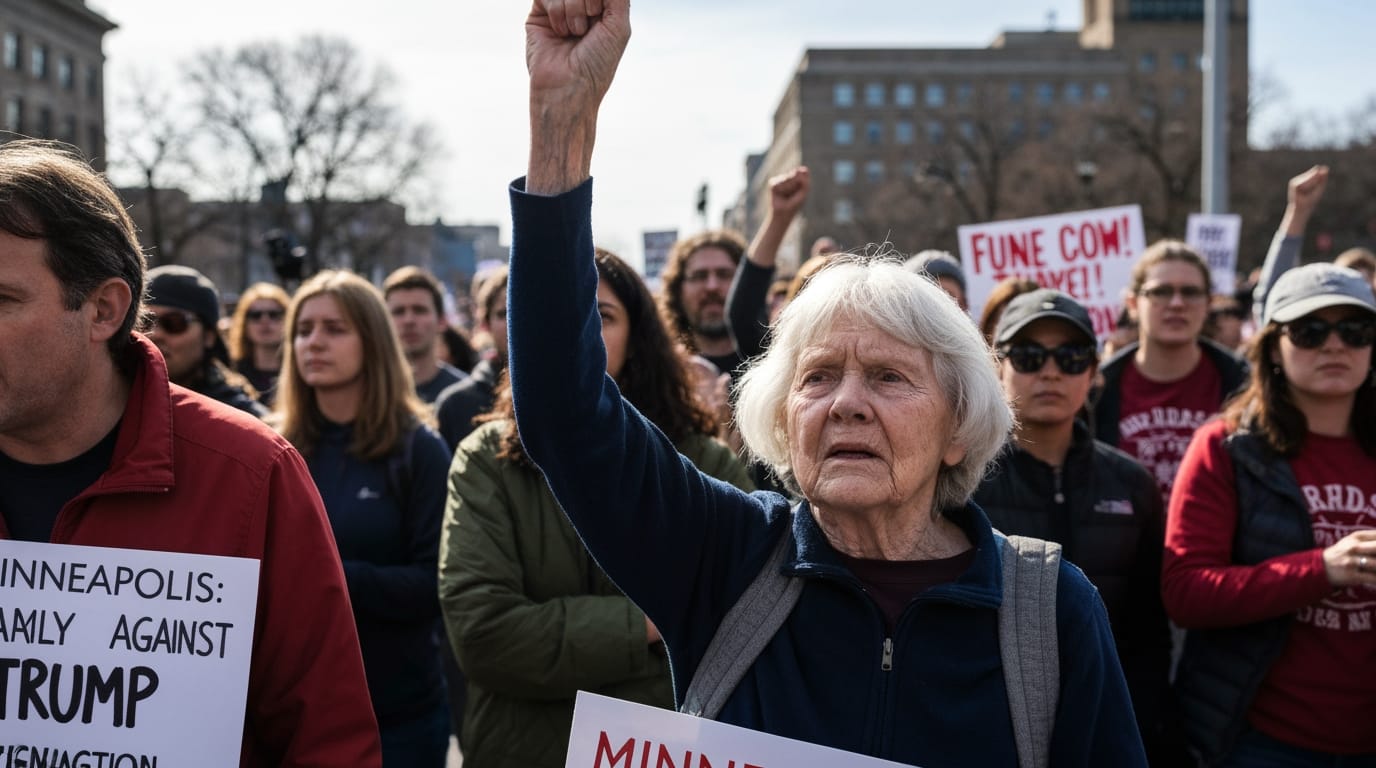
MINNEAPOLIS, MN – Thousands of protesters braved subzero temperatures in downtown Minneapolis on Friday, January 24, 2026, to demonstrate against what they termed an aggressive and far-reaching federal immigration enforcement operation by the Trump administration. The large-scale rally culminated a day of coordinated actions across Minnesota, which also saw the arrest of approximately 100 clergy members at Minneapolis-St. Paul International Airport protesting deportation flights. The protests underscore a growing public and political backlash against federal tactics that have deeply disrupted daily life across the state.
Downtown Minneapolis: A Frozen Front Line of Dissent
Despite an unrelenting Arctic cold front, a formidable crowd converged in Minneapolis, marching through the city streets towards the Target Center. Organizers, including groups like Indivisible Twin Cities, rallied attendees against the ongoing federal immigration operations, which have been characterized by an escalation in severity and impact. The demonstration was a vivid display of community resistance, further bolstered by hundreds of businesses across Minnesota that shut their doors in solidarity. This collective action aimed to highlight the profound economic and societal disruptions caused by the federal presence, signaling widespread defiance against the intensified enforcement efforts.
The frigid conditions did little to deter the resolve of the demonstrators, who voiced their opposition to policies they contend have led to the harassment and detention of residents, including U.S. citizens. The visible turnout in such harsh weather conditions emphasized the depth of public concern regarding federal actions that many critics view as an "occupation" rather than legitimate law enforcement.
Clergy Confrontation at the Airport
Earlier in the day, the Minneapolis-St. Paul International Airport became another focal point of protest, where approximately 100 clergy members engaged in an act of civil disobedience. The faith leaders gathered to directly challenge deportation flights and to urge airlines to cease their cooperation with federal agencies involved in the enforcement operations. Their demonstration, which extended beyond permitted areas and reportedly disrupted airline operations, led to their arrest. The clergy members were subsequently issued misdemeanor citations for trespassing and failure to comply with a peace officer before being released. This direct confrontation by religious leaders underscored the moral and ethical objections many hold against the federal government’s current immigration strategy.
The airport protest was specifically aimed at a Department of Homeland Security initiative dubbed the "largest-ever immigration enforcement operation". The clergy's actions drew a clear line, asserting that their moral imperative demanded intervention against what they perceived as inhumane practices.
'Operation Metro Surge': A State Under Siege
The protests in Minneapolis are a direct response to "Operation Metro Surge," an initiative launched by U.S. Immigration and Customs Enforcement (ICE) and Customs and Border Protection (CBP) in December 2025. Initially targeting the Twin Cities, the operation rapidly expanded across the entire state of Minnesota, with the stated purpose of apprehending undocumented immigrants for deportation. However, the scope and methods employed by the approximately 3,000 federal agents mobilized for the operation have drawn sharp criticism. These agents, whose numbers reportedly outnumber the Minneapolis police force five to one, have been observed making arrests in public spaces such as morning commutes, grocery stores, and outside churches.
The operation has profoundly impacted Minnesota's civil society and economy. Schools have transitioned to remote learning in some areas, and daily business activities have been disrupted due to the pervasive fear and uncertainty generated by the constant threat of arrests. Critics argue that the operation's tactics, including escalated severity and brutality, harassment, and threats against observers, have created an environment of widespread alarm.
Mounting Tensions and Tragic Consequences
The federal crackdown has been marked by several deeply disturbing incidents that have intensified public outrage and galvanized the protest movement. Among these is the detention of U.S. citizens and the arrest of approximately 3,000 individuals since the operation began. A particularly poignant event that fueled the protests was the detention of 5-year-old Liam Ko Ramos and his father, one of at least four children reportedly detained in the area that month.
The human toll of "Operation Metro Surge" has also included fatalities. Federal agents killed two civilian observers, Renée Good and Alex Pretti, both U.S. citizens, during the operation. Additionally, one person detained by ICE during the operation has died while in custody. Earlier incidents include an ICE agent shooting Julio Cesar Sosa-Celis in the leg in north Minneapolis. These events have ignited accusations of excessive force and a disregard for human life and civil liberties.
The controversial operation also follows a period of heightened rhetoric from the Trump administration, notably in December, when President Trump publicly called Somali immigrants "garbage" and discussed stripping some naturalized Somali Americans of their U.S. citizenship. This rhetoric is seen by many as providing a backdrop of prejudice against which the aggressive enforcement actions are being carried out.
The state's highest legal authorities have not remained silent. Minnesota's Governor and Attorney General have openly challenged "Operation Metro Surge," asserting that its primary purpose appears to be "retribution" rather than legitimate immigration enforcement. Further compounding the legal challenges, Minnesota Chief U.S. District Judge Patrick Schiltz found that ICE violated at least 96 court orders within Minnesota since January 1, 2026, alone. These official condemnations and judicial findings provide significant weight to the arguments of protesters and advocates for immigrant rights.
A State in Defiance
The rallies and coordinated actions across Minnesota represent a unified and forceful repudiation of the Trump administration's intensified immigration enforcement policies. From the thousands enduring harsh weather to voice their discontent to the clergy members risking arrest for their beliefs, the collective outcry in Minneapolis highlights a community deeply affected by and resistant to federal actions. As "Operation Metro Surge" continues, the confrontation between federal authorities and the people of Minnesota appears poised to escalate, underscoring a national debate on immigration policy, human rights, and the balance of federal power. The events of this week suggest that Minnesota has become a critical battleground in the ongoing struggle over the nation's immigration future.


