Modi Calls for Forgiveness Amidst Political Fray, Urges Guidance for Youth After Abusive Protests
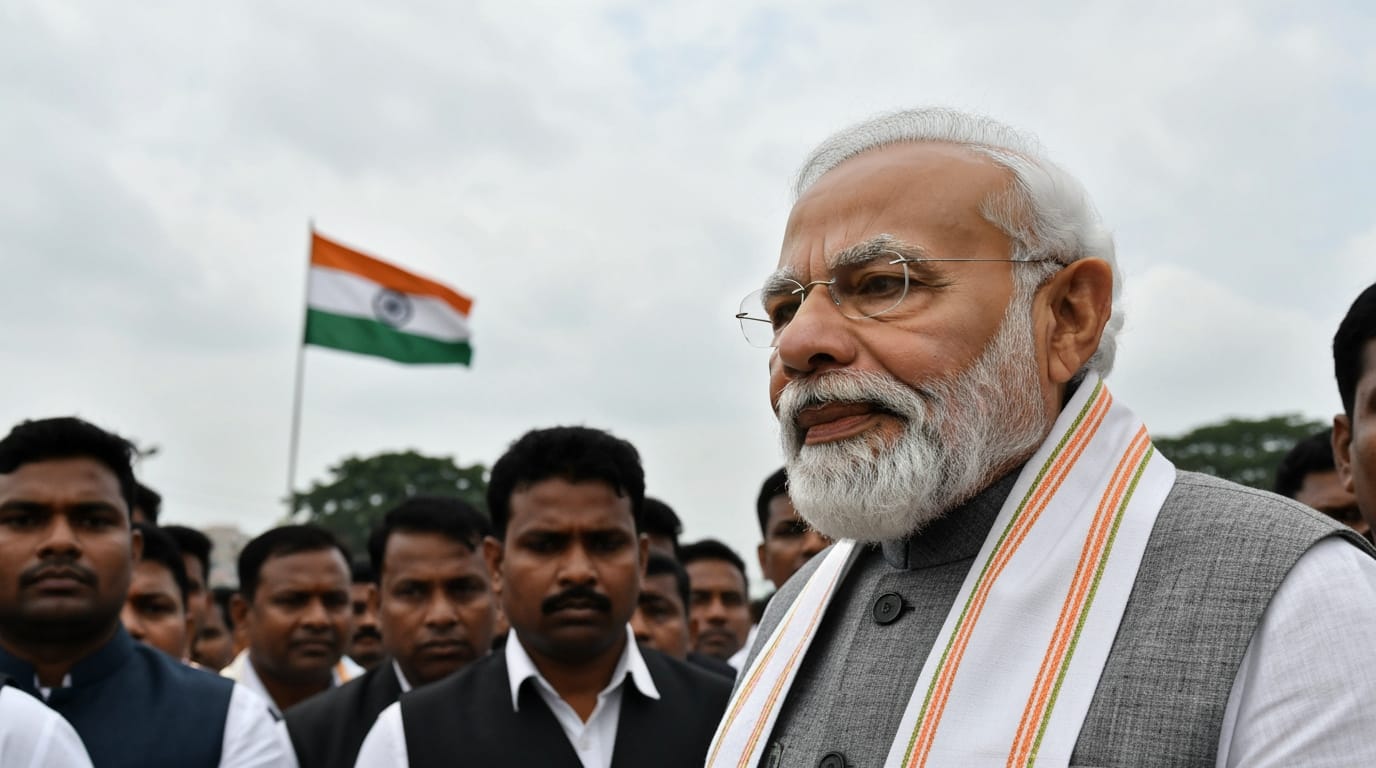
New Delhi, India – In a surprising turn that has sparked widespread debate, Prime Minister Narendra Modi declared he has forgiven the "children" who hurled abusive language at him and his late mother during recent student protests in Delhi. The Prime Minister, in a late-night video message issued Friday, emphasized a path of guidance and understanding over punitive action for those involved, even as police investigations and legal proceedings continue against individuals for derogatory social media posts related to the demonstrations. This gesture comes amidst a backdrop of increasingly acrimonious political discourse in India, prompting questions about its sincerity, strategic implications, and potential to recalibrate the nation's often-combative public sphere.
A Plea for Understanding Over Punishment
Prime Minister Modi's unexpected call for forgiveness was delivered on Friday, July 31, 2026, via a video message disseminated across social media platforms. Speaking directly to the nation, Modi addressed the inflammatory rhetoric that characterized recent student protests at Jantar Mantar in Delhi, particularly those concerning alleged irregularities in the National Eligibility cum Entrance Test (NEET). He revealed that not only he, but also his late mother, had been subjected to "vulgar abuses" and language "that do not behoove any civilised society" during these demonstrations.
Despite the gravity of the personal attacks, Modi asserted his desire to pardon the individuals responsible, whom he characterized as "misguided children." He posited that subjecting them to prolonged legal battles or making them "run around courts" would not yield a constructive outcome. Instead, the Prime Minister advocated for a societal approach centered on guidance and mentorship, stating, "mistakes happen in childhood but it also provides the opportunity for change. This is what childhood is about". He further underscored this philosophy with an analogy, remarking, "Sometimes, our tongue gets caught between our teeth and it bleeds, yet we do not break our teeth; after all, both the teeth and the tongue belong to us. These children are ours, too. It is our duty to show them the right path". Modi also posted on X, stating, "Abuses never solve anything. Let's guide the misguided. Let's work together. Let's work for Bharat".
The Provocation: Jantar Mantar and Derogatory Rhetoric
The Prime Minister's statement directly responded to a series of events that unfolded during student protests at Jantar Mantar. These demonstrations, primarily driven by concerns over alleged discrepancies in the NEET examinations, saw participants expressing their dissent vocally and, in some instances, resorting to highly offensive language targeting the Prime Minister and his deceased mother. Media reports indicated that the abusive comments were not limited to physical protests but also proliferated across social media, leading to ongoing police investigations and the registration of First Information Reports (FIRs) in several jurisdictions, including Delhi, Noida, and Telangana. Modi himself described the verbal attacks as a "cultural shock," particularly noting his concern over "our daughters" using such language, reflecting a broader societal discomfort with the escalating harshness of public discourse.
The nature of these protests and the specific targets of the abuse – including the Prime Minister's personal and familial life – ignited a significant public outcry. The police action that followed, involving notices and cases against individuals, highlighted the legal ramifications associated with crossing the line from dissent to defamation and personal attacks. Modi's intervention now suggests a potential pivot in the official response, emphasizing reconciliation over retribution, though the legal actions initiated prior to his statement remain in motion.
India's Increasingly Fractious Political Discourse
Prime Minister Modi's call for forgiveness is particularly salient against the backdrop of India's increasingly polarized and often toxic political landscape. For years, the nation's political discourse has been characterized by a noticeable decline in civility, with personal attacks and sharp rhetoric becoming commonplace across party lines. Critics and political analysts have frequently lamented this trend, noting that it often overshadows substantive policy debates and fosters an environment of animosity.
Leaders from various political affiliations, including members of the ruling Bharatiya Janata Party (BJP) and opposition parties, have been both perpetrators and targets of derogatory language. Historically, Prime Minister Modi himself has been a frequent recipient of harsh criticism and personal abuse from political opponents. Instances range from being labeled with various pejorative terms to his mother being targeted in political rallies. In 2024, he noted that he had become "gaali-proof" (abuse-proof) after being continuously abused for over two decades, listing more than a hundred insults hurled at him. Similarly, opposition leaders have also faced severe personal attacks. This established pattern underscores a deeply entrenched culture of confrontational politics where language often veers into personal denigration. The current situation, involving student protestors, further extends this pattern beyond established political figures to younger, activist demographics, raising concerns about the future tone of public debate in the world's largest democracy.
Strategic Nuances and Societal Implications
The Prime Minister's gesture of forgiveness carries multiple layers of interpretation and potential strategic implications. On one hand, it can be viewed as a statesmanlike move designed to de-escalate tensions, particularly with the youth, who represent a crucial demographic. By positioning himself as a magnanimous leader willing to overlook personal affronts, Modi might aim to garner sympathy and project an image of maturity and national unity. His emphasis on guiding youth rather than punishing them could resonate with many who believe in offering second chances and fostering a less adversarial environment for young citizens. The acknowledgement of a "cultural shock" regarding the abusive language, especially from young women, also highlights a societal concern that his statement attempts to address.
However, the statement also invites scrutiny regarding its timing and broader political strategy. Coming amidst ongoing police actions against protestors, some analysts might interpret it as an attempt to soften the government's image or to manage public perception. It could also be seen as a way to differentiate his leadership from the often-confrontational tactics employed by other political figures. The effectiveness of this approach will largely depend on how it translates into actual policy and how the ongoing legal proceedings are handled. Will the call for forgiveness lead to a withdrawal or leniency in the cases filed? This remains to be seen and will likely shape public and political reactions in the coming days.
Charting a Path Towards Reconciliation
Prime Minister Modi's unprecedented call to forgive those who abused him and his late mother during student protests marks a significant moment in India's often-turbulent political landscape. By advocating for guidance over punishment, the Prime Minister has introduced a dimension of reconciliation into a discourse typically dominated by aggression. While the immediate impact on ongoing legal cases and the broader political climate remains to be fully observed, this gesture has opened a conversation about the nature of dissent, the responsibilities of leadership, and the urgent need for a more constructive public dialogue in India. The challenge now lies in translating this sentiment into tangible actions that can bridge existing divides and foster an environment where disagreements are handled with respect, ensuring that future generations can engage in civic discourse without resorting to personal attacks.


