Modi Visits Sri Lanka, Cementing Defense and Energy Ties Amidst Regional Balancing Act
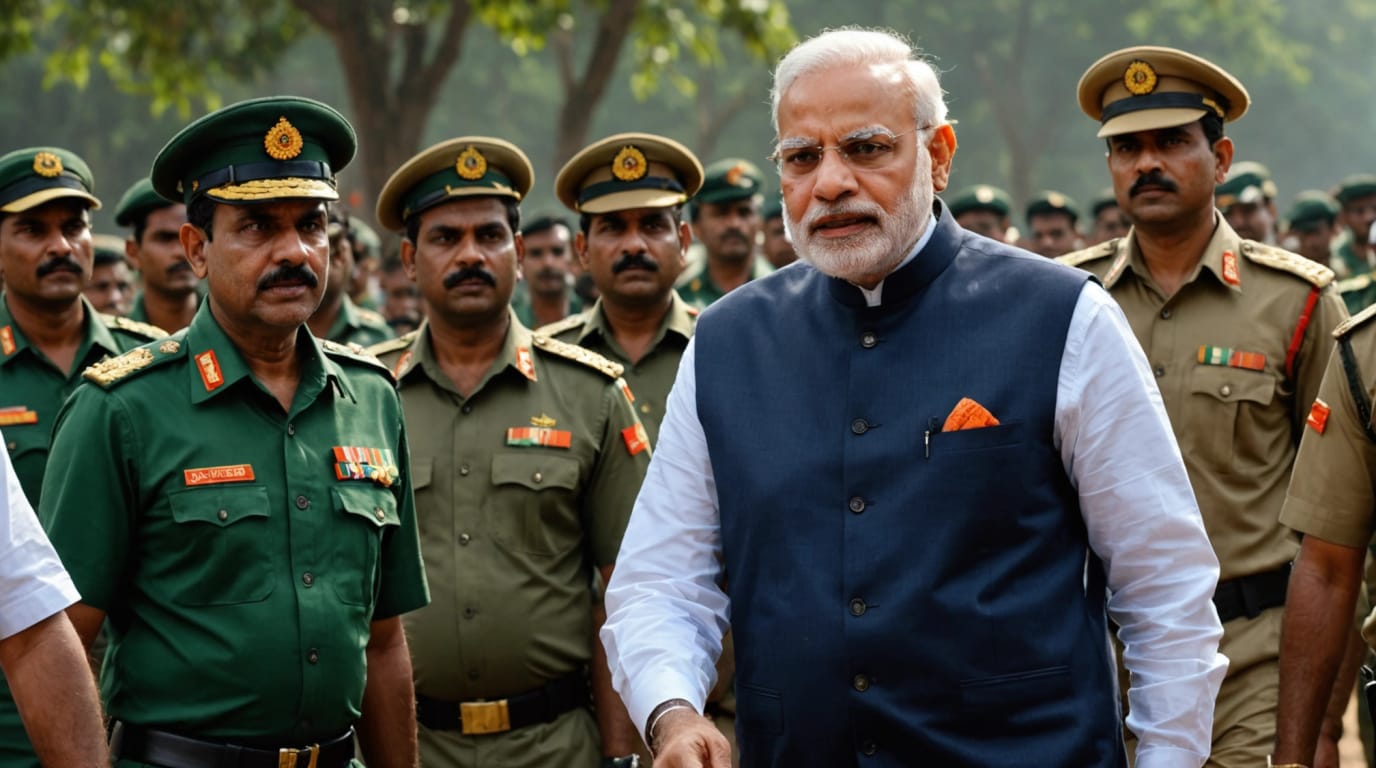
COLOMBO, Sri Lanka – Indian Prime Minister Narendra Modi concluded a three-day state visit to Sri Lanka on Saturday, marking a significant step in bolstering defense and energy cooperation between the two nations. The visit, the first by a foreign dignitary since President Anura Kumara Dissanayake's election last year, saw the signing of a landmark defense cooperation agreement and several other key MoUs, signaling a deepening of strategic ties amidst China's growing influence in the Indian Ocean region.
Defense Pact Signals New Era of Cooperation
The centerpiece of Modi's visit was the signing of a five-year defense cooperation agreement. This pact aims to enhance the training of Sri Lankan military personnel in India, facilitate information and technology sharing, and foster a more structured approach to ongoing defense collaboration. Foreign Secretary Vikram Misri described the agreement as an "umbrella framework" that will make existing cooperation "more structured" and facilitate more high-level visits, joint exercises, capacity building in various areas, and exchanges for humanitarian assistance and disaster relief operations.
President Dissanayake assured Modi that Sri Lanka would not allow its territory to be used in any manner that could threaten India's security interests, a statement welcomed by the Indian Prime Minister. Modi emphasized the interconnectedness of the two nations' security, stating, "We believe that our security interests are aligned. Our security is interdependent and interconnected."
This defense pact is particularly significant as it comes nearly four decades after the Indian Peace Keeping Force's intervention in Sri Lanka, which had strained relations between the two countries. The agreement signals a clear effort to move beyond past tensions and forge a stronger, more cooperative security partnership.
Energy Cooperation Takes Center Stage
Beyond defense, energy cooperation was a major focus of Modi's visit. The two leaders launched the 120-megawatt Sampur solar power plant in Trincomalee, a project that had been stalled for years but was revitalized with India's backing as a joint venture. Modi stated that the Sampur Solar Power Plant will help in Sri Lanka's energy security.
India and Sri Lanka also finalized their debt restructuring process, with Sri Lanka owing approximately $1.36 billion in loans to the EXIM Bank of India and the State Bank of India. Furthermore, India, Sri Lanka, and the United Arab Emirates agreed to develop Trincomalee as an energy hub, including the construction of a multi-product pipeline and the potential use of a World War II-era tank farm partly held by the Sri Lankan subsidiary of Indian Oil Corp.
These energy initiatives are expected to significantly contribute to Sri Lanka's energy security and economic development, while also strengthening India's strategic presence in the region.
Balancing Act Amidst Regional Rivalry
Modi's visit and the agreements signed come at a time when Sri Lanka is carefully balancing its relationships with both India and China. India has historically been concerned about China's growing influence in the Indian Ocean, particularly its investment in strategic ports and the docking of Chinese submarines and research vessels in Sri Lankan waters.
In response to India's concerns, Sri Lanka has taken steps to address these issues. Since 2014, Sri Lanka has not allowed Chinese submarines to dock in its ports, and last year, Colombo imposed a ban on foreign research vessels following accusations that Chinese ships were being used to spy on India.
President Dissanayake's assurance to Modi that Sri Lanka will not allow its territory to be used against India's security interests underscores Colombo's commitment to addressing New Delhi's concerns. However, Sri Lanka also maintains strong economic ties with China, including a recent agreement with a Chinese state-owned company to invest $3.7 billion in an oil refinery in the island's south.
Other Key Agreements and Initiatives
In addition to defense and energy, India and Sri Lanka signed agreements on power grid connectivity, digitalization, security, and healthcare. India also decided to reduce interest rates on loans extended to Sri Lanka and convert loans totaling over $100 million into grants.
Modi and Dissanayake also addressed the long-standing issue of fishermen from Tamil Nadu allegedly encroaching into Sri Lankan territorial waters. Modi called for a "humane approach" to resolving the issue.
Furthermore, Modi was conferred with the Mithra Vibhushan, Sri Lanka's highest civilian honor, in recognition of his leadership and role in strengthening bilateral ties.
Looking Ahead: A Stronger Partnership
Prime Minister Modi's visit to Sri Lanka has solidified the strategic partnership between the two nations, with a focus on defense, energy, and economic cooperation. The agreements signed during the visit are expected to enhance Sri Lanka's security and economic stability, while also strengthening India's position in the Indian Ocean region.
As Sri Lanka navigates the complex dynamics of regional geopolitics, its strengthened relationship with India will be crucial in maintaining its sovereignty and promoting its national interests. The coming years will be critical in further developing this partnership and ensuring a stable and prosperous future for both countries.


