Moldova's Sandu Voices Personal Support for Unification, Prioritizes EU Accession
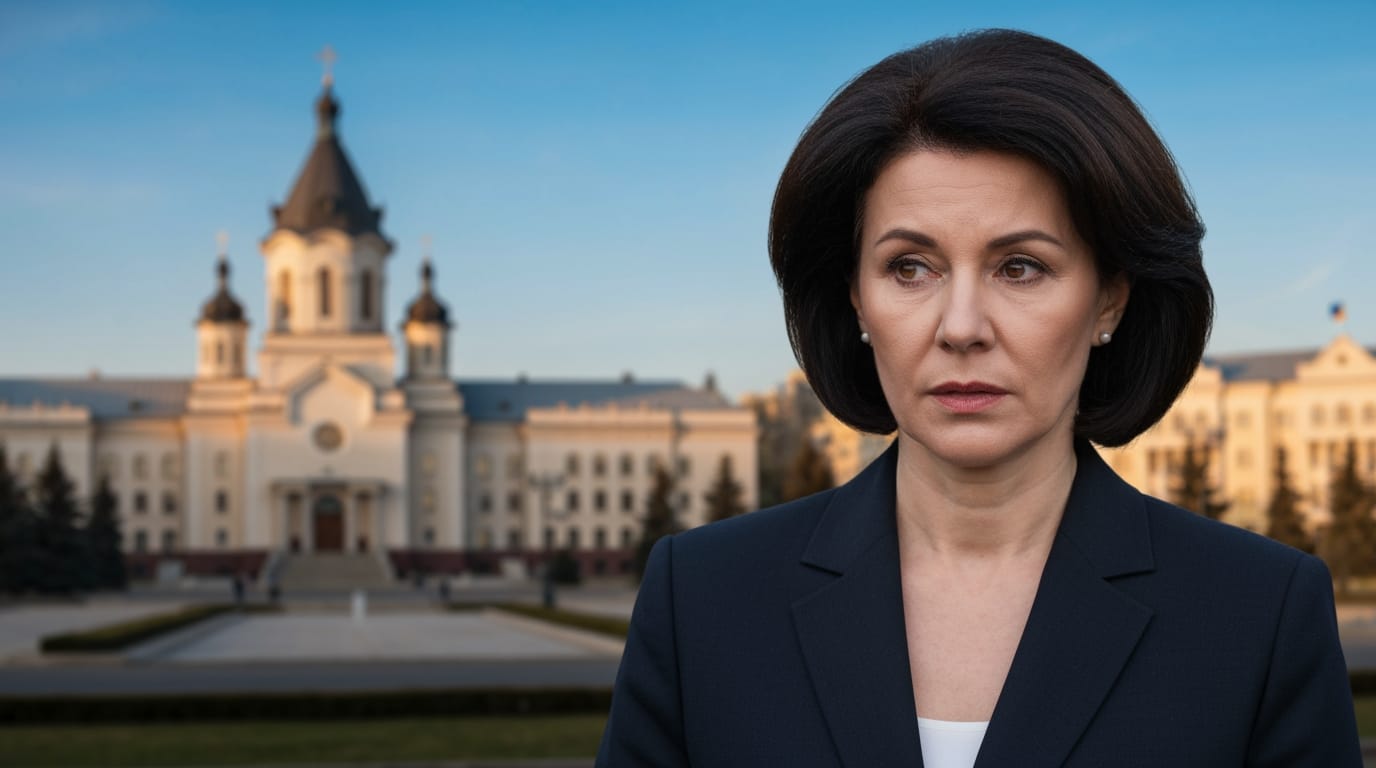
CHIȘINĂU — Moldovan President Maia Sandu has publicly stated her personal inclination to vote in favor of unification with neighboring Romania should such a referendum occur. This declaration marks the first explicit endorsement of reunification from a sitting Moldovan president, yet it arrives with a significant caveat: Sandu underscores that European Union (EU) accession remains Moldova's paramount and most realistic strategic objective, given the current lack of majority public support for a merger with Romania. The sensitive topic, deeply rooted in historical ties and contemporary geopolitical dynamics, continues to navigate complex public sentiment and regional pressures.
President Sandu's remarks were made during a recent podcast interview, where she directly addressed the long-standing question of unification. She indicated that in a hypothetical referendum, her personal vote would be for reunification with Romania, citing the increasing difficulty for a small country like Moldova to "survive, to exist as a democracy, as a sovereign country," particularly under Russian influence. This perspective highlights the profound security and existential concerns facing Moldova amidst ongoing regional instability. However, Sandu immediately tempered her personal stance by emphasizing that as president, she recognizes there is currently no majority support among Moldovans for unification. Instead, a clear majority backs the path of EU integration, which her administration actively pursues as a more achievable goal to safeguard the nation's sovereignty.
Historical Bonds and Divided Sentiments
The historical narrative between Moldova and Romania is one of shared heritage, separation, and intermittent calls for reunification. The territory known today as the Republic of Moldova, largely corresponding to Bessarabia, was part of the historical Principality of Moldavia. It was annexed by the Russian Empire in 1812 and later unified with Romania in 1918 following the collapse of the Russian Empire. This union was short-lived, as the Soviet Union annexed Bessarabia in 1940 under the Molotov-Ribbentrop Pact, creating the Moldavian Soviet Socialist Republic. Following the dissolution of the Soviet Union in 1991, Moldova declared its independence.
Despite these deep historical and cultural ties, public opinion in Moldova regarding unification remains complex and largely divided. Recent polls consistently indicate that a significant portion of the Moldovan population opposes unification with Romania. For instance, a poll found 61.5% of respondents against the idea, with only 31% in favor. Other data suggest an increase in support for reunification from approximately 20% in 2015 to 44% in 2022, though more recent surveys often show lower figures. Support is notably weaker in regions such as Transnistria and Gagauzia. In stark contrast, support for Moldova's accession to the European Union garners stronger backing, with over 57% of respondents in favor. Meanwhile, in Romania, historical support for unification has been high, though a March 2022 survey indicated that only 11% supported an immediate union, with over 42% believing it was not the right time, partly due to concerns about the economic costs and the unresolved Transnistrian conflict.
Geopolitical Crossroads and the European Path
The discussion of Moldova's potential unification with Romania carries substantial geopolitical weight, particularly in the context of Russia's ongoing aggression in Ukraine. Moscow has historically viewed Moldova as within its sphere of influence, and any move toward unification with Romania, a NATO member, would likely be perceived as a significant strategic shift and a potential provocation. The breakaway region of Transnistria, heavily backed by Russia, remains a critical flashpoint. Should Moldova unite with Romania, the Transnistrian conflict would directly involve a NATO and EU member state, potentially escalating regional tensions.
President Sandu's emphasis on EU accession as Moldova's main strategic objective is deeply intertwined with these geopolitical realities. EU membership is presented as the cornerstone of Moldova's reform agenda and foreign policy, offering robust guarantees for democracy, economic development, and security. For many, integration into the EU is seen as a "soft integration" or a necessary precursor, where the border between Moldova and Romania could become largely symbolic within the larger European framework. This approach allows Moldova to pursue closer ties with the West and secure its sovereignty without immediately tackling the contentious issue of full political unification, which lacks broad public consensus.
Economic Realities and Integration Challenges
Beyond the political and historical dimensions, the economic disparities between Moldova and Romania present a practical challenge to any potential unification. Moldova's GDP per capita is significantly lower than Romania's, suggesting that integration would require substantial financial assistance and careful planning to manage the economic impact. Some analysts view calls for unification, particularly in the face of economic difficulties, as an "economic cry for help." Moldova has faced recent energy shocks, transitioning from relying on free Russian gas via Transnistria to purchasing more expensive electricity from Romania, which has considerably increased costs for households and industries.
Integrating a much poorer economy, even one with cultural and linguistic similarities, poses significant operational and fiscal responsibilities for Romania and the European Union. While a unified state could present a stronger front against external pressures and offer a more robust economic future in the long term, the immediate challenges of harmonizing economic systems, legal frameworks, and social policies would be immense. The significant number of Moldovans holding Romanian citizenship also points to a human element of the connection, yet it does not translate into a definitive majority for political unification.
The nuanced position articulated by President Maia Sandu reflects a pragmatic approach to Moldova's future, balancing deep-seated national aspirations with the immediate political and economic realities. While she acknowledges the personal appeal of reunification with Romania, her administration's strategic focus remains firmly on securing Moldova's independent path toward European Union membership. This dual perspective navigates the country's complex historical identity, diverse public opinion, and the volatile geopolitical landscape of Eastern Europe. The future of Moldova, whether as a sovereign EU member or potentially one day integrated with its historical kin, continues to be shaped by these evolving internal aspirations and external pressures.


